A job title is a wonderfully efficient thing. It can fit on a badge, a payroll line, a conference lanyard. It can also conceal almost everything interesting. Aditya Viswanadha's title at Findem is “Software Engineer Founding Team,” five words that compress a route through electronics, computer science, hospital information systems, enterprise software, application delivery, and finally the unruly mathematics of human careers.
The route begins in Visakhapatnam, where he studied electronics and communications engineering at GITAM. A 2016 placement record puts him in that graduating cohort. Electronics is a discipline of signals: information sent, received, distorted, recovered. It is tempting to make too much of the metaphor, but the habit endured. Viswanadha's later work would keep returning to the same practical concern. How do you turn scattered signals into something useful?
His early internships gave the question several settings. There were summer stints at Bharat Sanchar Nigam Limited and Electronics Corporation of India Limited, institutions built around communications and technical infrastructure. After moving into computer science at the University of North Carolina at Charlotte, he spent the summer of 2017 as an information systems intern at Memorial Sloan Kettering Cancer Center. Telecom, electronics, and a complex institutional data environment do not look like a tidy specialization. They look like an engineer learning how different organizations make information behave.
The small archive before the large problem
Graduate school left a more revealing trace than a diploma line. Viswanadha's public code archive, much of it from 2017 and 2018, has the pleasing untidiness of a workbench. There is an anagram game, a Play Nine game, Angular and React exercises, a relational database for a shoe store, a car tracker, and a tutorial involving the FHIR standard for health information. The projects are modest, often educational, and sometimes built from course material. Together they show an appetite broader than a single stack.
Two projects stand out because they anticipate the intellectual shape of his later work. One implements PageRank over a processed Wikipedia corpus. Its instructions describe extracting links, iterating rank calculations, and comparing consecutive outputs to see whether the values settle. Another is a book recommender built with PySpark. It tests item-to-item and user-to-user collaborative filtering, using patterns in ratings to suggest what a reader might want next.
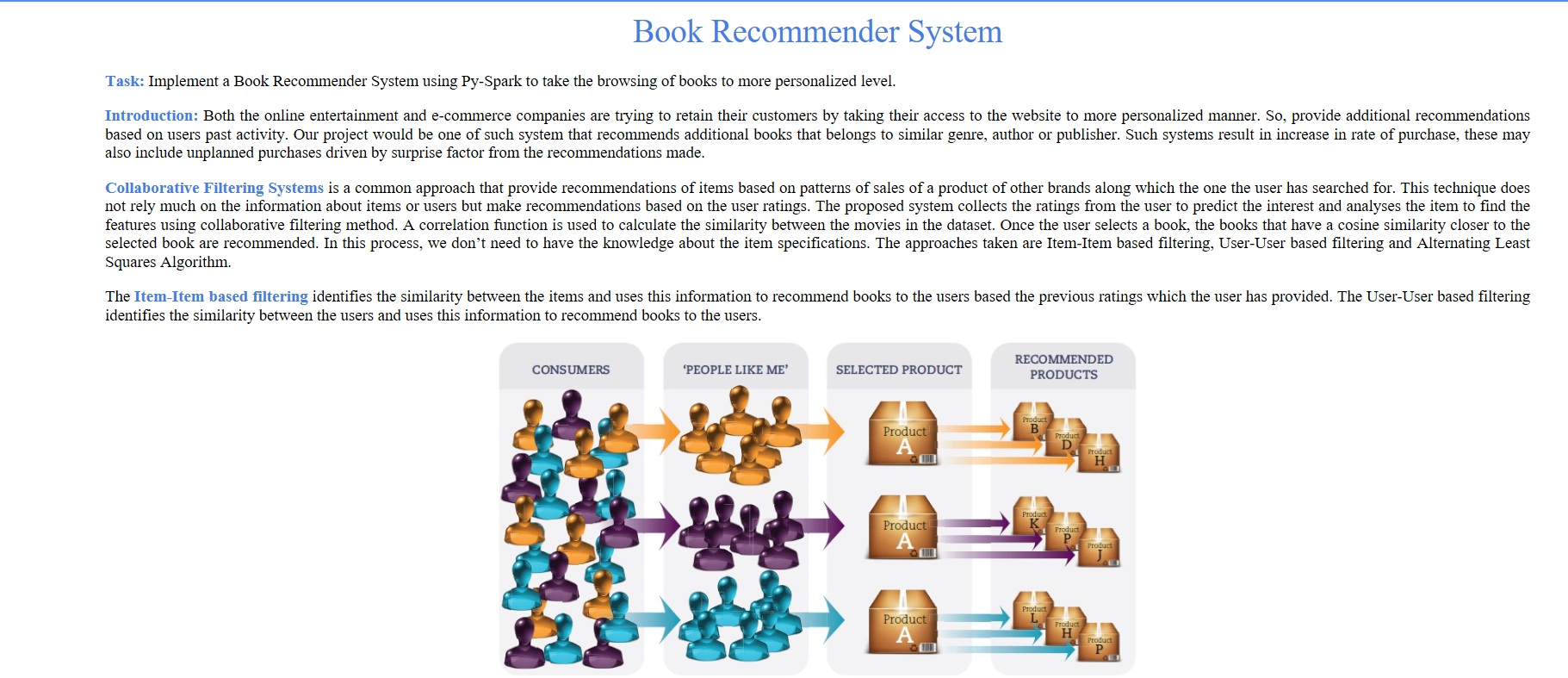
Ranking and recommendation systems perform a little social magic. They take a collection too large for one person to inspect and arrange it around a question. Which page is authoritative? Which book belongs beside this one? Which people behave similarly? The answer is never hiding in one row. It lives in the relationships among many rows.
“UNC Alum, Software Engineer.”Aditya Viswanadha's public GitHub bio
That four-word biography is almost comic in its restraint. It is also evidence of an engineer's instinct for compression. By then, the résumé behind it was already lengthening. Viswanadha worked as a software developer at Cerner, a large enterprise environment, and then crossed into startup life at Instart Logic. He first appeared there as a monetization engineering intern and later as a member of technical staff.
Instart matters because it was more than a line between jobs. Findem's founders, Hari Kolam and Raghu Venkat, had also built Instart. When they turned toward people intelligence, Viswanadha became part of the next company's early engineering group. Startup careers often move through trusted working relationships long before they move through polished recruiting funnels. The network was already doing what recruiting software later tried to make legible.
A career in changing information problems
Electronics and communications engineering at GITAM
Computer science, recommendation systems, and hospital information systems
Enterprise software at Cerner and application delivery at Instart Logic
Founding-team software engineering at Findem
When the rows contain lives
Viswanadha joined Findem in February 2020. Eight months later, the company emerged from stealth with a people-intelligence platform and $7.3 million in Series A funding. Its founding argument was easy to recognize and hard to operationalize: keywords are poor substitutes for context. A title tells you what someone was called. It does not tell you how a company changed around them, whether they stayed through difficulty, what scale they encountered, or which experiences prepared them for a role with a different name.
Findem called its generated signals attributes. Early examples ranged from straightforward skills to labels such as “patent holder” or “loyal employee.” The system combined public information with a customer's internal records, then used those attributes for search, market mapping, candidate matching, and outreach. The software had to reconcile identities, order events through time, update changing records, and present the result in a form a recruiter could challenge rather than merely obey.
This is where the old book recommender becomes an instructive artifact. Recommending a book from patterns in ratings is a bounded problem. A mistaken suggestion costs a reader a few minutes and perhaps seven dollars. Candidate matching carries livelihoods, organizational bias, and legal obligations. Similarity can be useful, but a hiring system must make room for difference, nontraditional paths, and the inconvenient fact that potential has no single historical label.
Findem's public language has shifted with the market. People intelligence became a Talent Data Cloud. Attribute search acquired generative-AI interfaces. By 2025 the company described “Success Signals,” expert-labeled patterns intended to preserve the judgment of skilled recruiters, and said its data covered more than 800 million profiles. A $51 million financing announced that October was earmarked for more labeled data, domain-specific AI, and agentic workflows.
The 2023 arrival of a conversational interface changed the front door to that machinery. Instead of assembling every filter by hand, a recruiter could describe a combination of geography, seniority, company type, skill, and experience in ordinary language. Behind the friendly prompt sat the less glamorous work: resolving records, maintaining time order, respecting permissions, translating a vague request into defensible criteria, and returning enough evidence for the user to inspect the result. A chat box can make a product feel weightless. The engineering underneath grows heavier, because natural language introduces ambiguity precisely where hiring demands clarity. For an early engineer, each new interface also has to coexist with years of prior assumptions. Search still has to work. Integrations still have to work. Campaigns, analytics, and internal candidate records do not disappear because a model can draft a query. The modern layer succeeds only when the older layers remain dependable.
The numbers belong to the company, not to one engineer. Viswanadha's more telling achievement is duration. He remained on the founding engineering team as the product crossed several technical eras: structured search, automation, generative interfaces, and agents. Startup years are not normal years. Six of them can contain enough architectural revisions, customer demands, and rewritten assumptions to age a respectable codebase several times over.
A résumé can identify the stops. Engineering has to model what happened between them.
The dignity of the connective tissue
Founders receive origin stories. Engineers more often receive release notes. This makes it easy to mistake a scarce public persona for a scarce contribution. Viswanadha has not built a visible career out of conference keynotes or personal manifestos. His available biography is spare. The work, however, sits inside a company whose central promise is to recover meaning from spare biographies. There is a nice fairness in that.
His trajectory also resists the tidy doctrine that every successful engineer must have announced a lifelong obsession at fourteen. Electronics became computer science. Health information systems gave way to enterprise software. Application delivery led to talent intelligence. Old repositories moved from PageRank to book recommendations to web interfaces. The continuity lies less in the industries than in the structure of the problems: many signals, uncertain relevance, a person waiting for the system to become useful.
That final person matters. Recruiting technology can accelerate the mechanical portions of hiring: assembling a market map, rediscovering candidates, organizing a pipeline, preparing outreach. The dangerous temptation is to confuse acceleration with judgment. Findem's own leaders describe AI as assistance for recruiters rather than an autonomous hiring authority. The distinction is technical, ethical, and product-defining. A system can surface evidence. Someone still has to read it with care.
Viswanadha's story has no theatrical pivot. It has something more characteristic of engineering: accumulated fluency. An undergraduate learns signals. A graduate student learns ranks and recommendations. An intern watches information move through a consequential institution. A developer encounters enterprise constraints. A startup engineer sees a system change while customers are already using it. Then the same engineer spends years helping software describe other people's accumulated fluency.
The title remains efficient: Software Engineer Founding Team. The career behind it is the better data set.
Editorial note: Company metrics describe Findem's publicly announced platform and financing. They are included as context for Viswanadha's role and are not presented as individual performance claims.