An oil tank is a peculiar customer. It does not complain when it is nearly empty. It waits for the household to discover the problem, preferably at an inconvenient hour. Deliver too late and the house goes cold. Deliver too early and a truck makes an expensive journey to pour a disappointingly small amount of fuel. Between those two mistakes sits a software company called ADD Systems.
- Its customers move fuel and sell convenience. Think propane dealers, heating-oil distributors, HVAC businesses and store operators.
- Its software follows the work. From forecasting and dispatch to delivery, service, inventory and billing.
- The lesson travels. Fix the handoffs, keep the inputs honest and give the people doing the job a say.
A truck driver’s question
Bruce A. Bott knew the delivery business from the driver’s seat. During college breaks, he drove an oil truck for Dixon Brothers in New Jersey. He trained as a civil engineer and worked in other industries, but a conversation with Bill Dixon in 1972 brought him back to an old problem: how to automate the fuel business. Advanced Digital Data was incorporated in 1973.
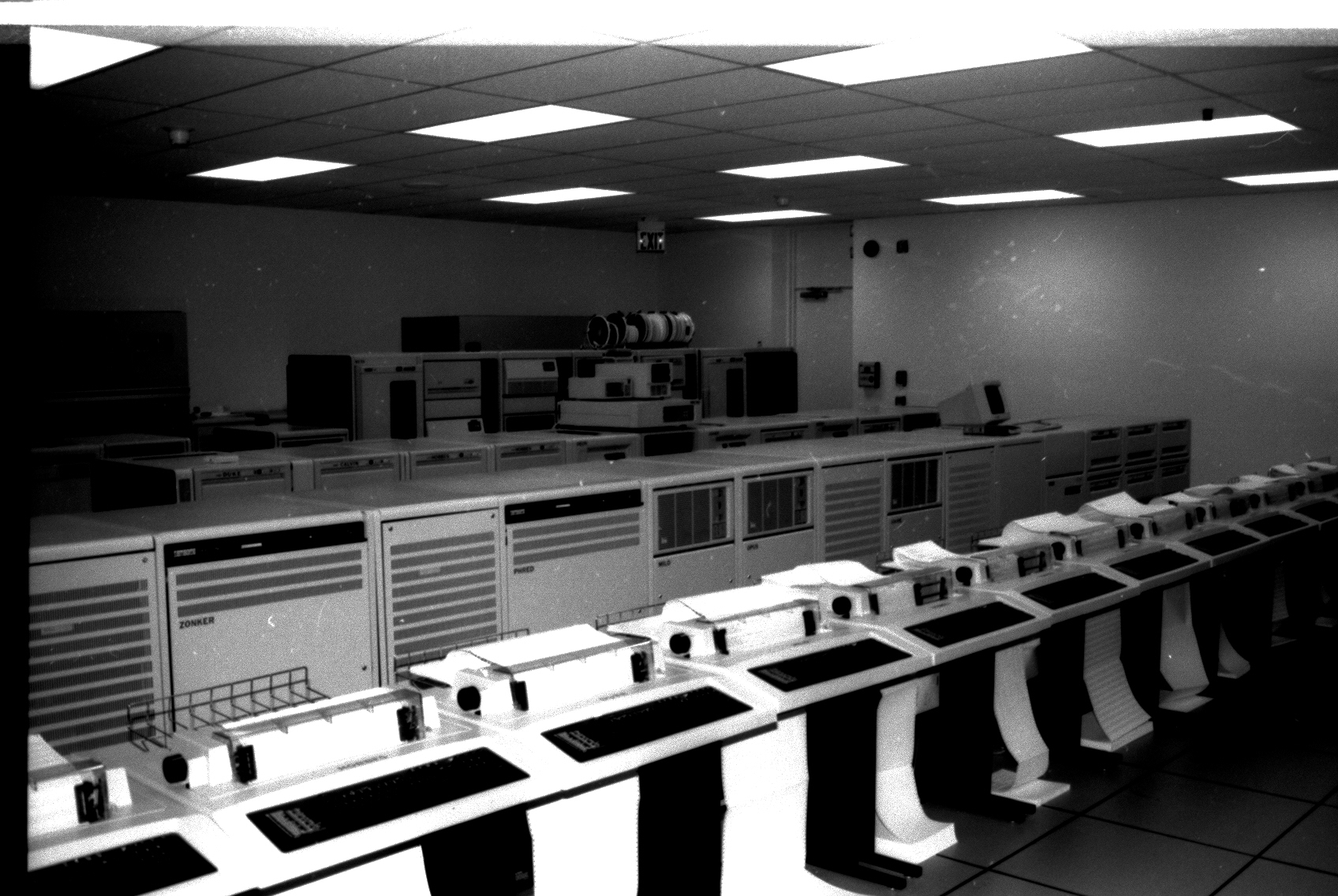
The early ambition was specific: software that helped predict fuel deliveries. The company’s history describes a family business taking shape around that work. Its first customer was Dixon Brothers. A business built around one dealer’s headache eventually became a supplier to more than 500 clients in the United States and Canada, according to ADD.
There is a business lesson here, provided we resist dressing it up. Bott had seen the work. His starting point was a recurring operational decision with consequences for both customer and supplier. Plenty of software begins with an idea of what people might want. This began with a truck route.
The money is in the handoffs
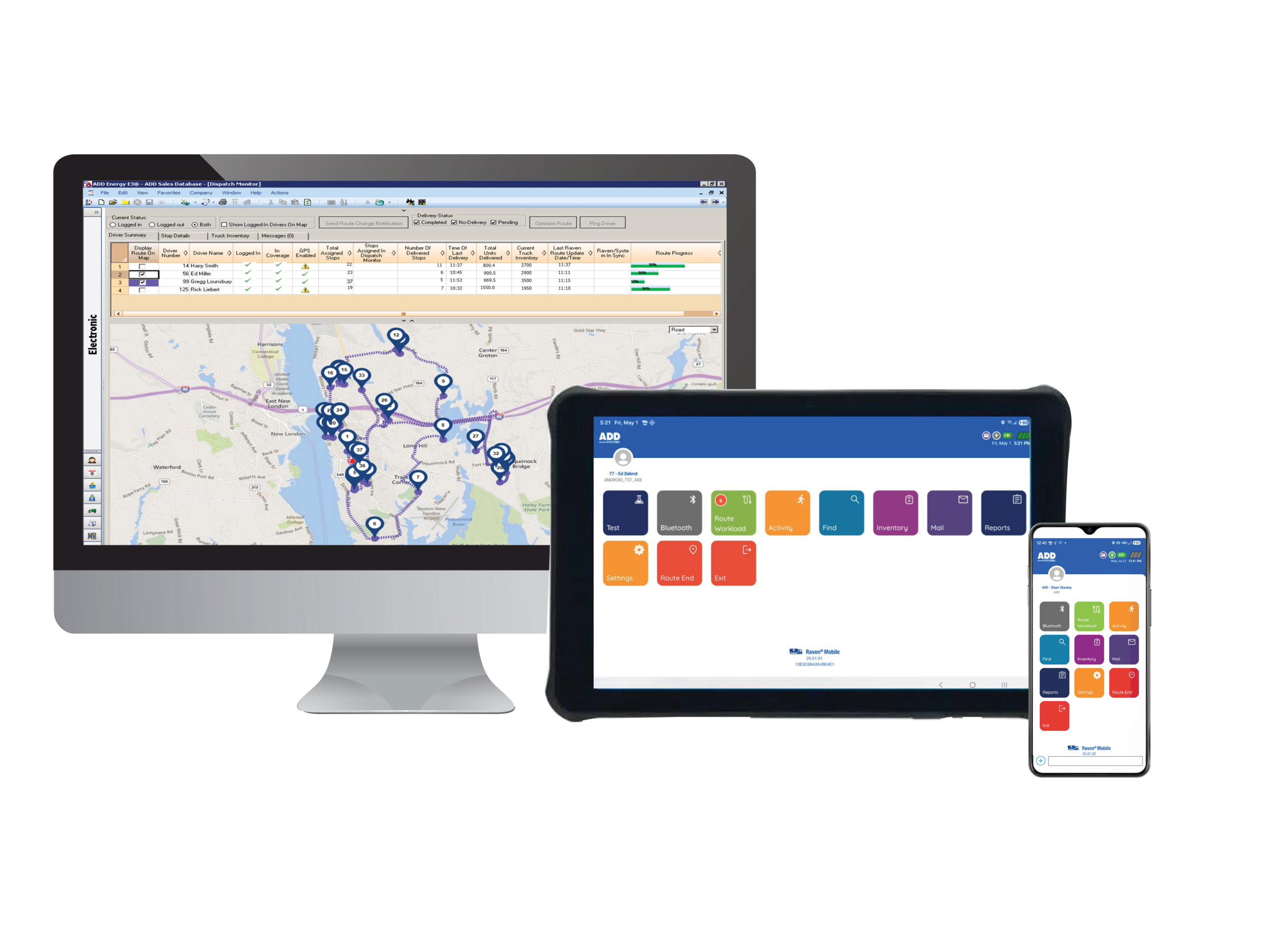
ADD’s main energy platform, ADD Energy E3, brings together customer accounts, credit, delivery, service and inventory. E360 adds a customizable browser interface. That range sounds ordinary until you follow an actual transaction: an order becomes a route, a route becomes a delivery, a delivery becomes a bill. Each handoff is an opportunity to lose time or enter the same information again.
Raven Mobile carries the delivery side into the cab. Dispatch sends work to a driver’s device; the office can follow progress. SmartConnect supplies APIs that connect the back-office system to outside applications, including customer portals and tank monitors. A customer ordering online and a tank reporting its level can therefore feed the delivery workflow through integrations.
- 01KnowCustomer order / tank data
- 02PlanE3 + E360 / dispatch
- 03DeliverRaven / driver device
- 04RecordBilling / analytics
An illustrative workflow, not a promise that every integration comes in every installation.
Some of the revealing features are tiny. Raven Companion uses QR codes to verify tank identity before pumping. Its fleet-fueling tools record gallons against individual pieces of equipment. These are the details of a company selling into a trade: the customer needs to know which asset received which fuel, and a wrong answer has consequences beyond a messy spreadsheet.
Pegasus handles the service technician’s day: work orders, dispatch, inventory updates, photographs, invoices and onsite payment. A repair visit need not end with another person deciphering paperwork before sending a bill. The financial offering includes integrations with Microsoft Dynamics GP and Business Central. ADD also supplies implementation, training, support and managed hosting. Buying the software is the beginning of installing a way of working.
Raven units deployed across North America, as reported on ADD’s product page.
A snack shelf belongs in this story
Fuel distributors and convenience stores often appear in the same business portfolio. ADD serves both. Its eStore product covers the home and back office of convenience-store operations, including a centralized pricebook, purchasing, inventory, promotions and sales analysis. Its interesting design choice is to manage by exception: identify the discrepancy that deserves attention.
A vendor invoice can arrive with an unexpected cost. A product can stop moving. A cashier can record an unusual number of voids. eStore lets operators set rules and thresholds for alerts rather than inspect every record with equal suspicion. It integrates with major POS providers, including Gilbarco/Veeder-Root, Verifone and NCR. The back office gives the till’s data a second job.
ADD’s customer examples show the breadth of the fit. Nolan Energy used E3, Raven, Pegasus, SmartConnect and Atlas while serving 18,000 New York accounts in a July 2024 company feature. Mirabito’s operations span retail and wholesale fuels, transportation and convenience stores. Swezey Fuel described improved deliveries with Raven; D.F. Richard discussed service and reporting. These are named customer accounts, not controlled experiments, but they explain why connected departments matter.
ADD occupies the specialist business-software market. Cargas Energy also serves fuel delivery and HVAC operations. ADD’s proposition is the combination of energy distribution, field service and convenience retail, with hardware and support around it. For a buyer running several of those activities, the relevant comparison is how well the whole system fits the business’s actual work.
The cloud was once a phone bill
ADD’s cloud history contains a pleasing reversal. In the 1970s, it hosted software for time-share customers who connected by telephone or leased lines and paid a monthly fee. Owning the hardware could be daunting. Hosting solved that problem, until distance made the communications bill painful.
Then hardware became cheaper, more powerful and less temperamental. Some customers brought their computing home. Later, communications costs fell while hardware and networking became more complicated, and hosted computing regained its appeal. The same customer could make opposite deployment choices at different times and be perfectly sensible on both occasions.
“He was working from the house”
Gale Bott, recalling the company’s beginnings
Today, ADD Cloud takes responsibility for server maintenance, backups and hardware upgrades. Public discussions also describe on-premises installations. ADD sells configured business solutions with user licenses, hardware and services; the mix depends on the operation. The financial question for a buyer includes devices, conversion, training and who will maintain the system, alongside the software itself.
The cost of keeping a working fleet working
In July 2026, ADD announced Android hardware options for Raven. Its September discussion explained why Windows and Android devices can coexist: replacing every truck’s equipment at once would be awkward. A mixed fleet permits a gradual rollout. Buyers can choose rugged hardware or bring their own device, balancing purchase cost against durability and the conditions in the cab.
Compatibility deserves close attention. In that September interview, ADD said the Android Gas Check and Wholesale modules were still being completed. An operator’s rollout has to follow the functions it needs, not merely the arrival of a new operating system. Familiar hardware and trained drivers have value, too.
Older technology eventually makes its own demands. Reviewing 2025, ADD’s leadership reported roughly 100-plus migrations from Sybase to SQL and said some older products were being retired because they exposed customers and ADD to vulnerabilities. In July 2026, Atlas Intelligence added reporting modules and connections to Microsoft Power BI and Copilot. The company’s newer tools still depend on the less fashionable work of maintaining operational records.
Let the dispatchers argue
The ADD User Group began in late 2008. Users collect and prioritize enhancement requests, then discuss them with ADD. Committees examine specific problems such as tank-monitor integration and acquired customer data. This is a practical feedback mechanism: people who live with the software can help decide which irritation deserves engineering time.
It also keeps the story honest about automation. In an August 2026 discussion, ADD energy consultant Jim Gillis explained that poor consumption assumptions can generate deliveries too early or too late. Dispatchers must review unusual values and changes in customer usage. A forecast cannot make stale information fresh by treating it confidently.
A reader can copy the discipline without buying the product: trace an order through every department, examine where information is retyped, and assign someone to review exceptions. Invite the people handling those exceptions into the development conversation. ADD’s enduring subject is a very concrete coordination problem. The tank will empty. The interesting question is whether the business knows what to do before it does.