At MEDITECH, a request to move to a different job could spend two weeks collecting approvals. This was a software company. It made electronic health records. Yet its own internal transfer proposal still had to negotiate the geography of people working in different places. A form can be remarkably well travelled without accomplishing much.
In a 2016 account, MEDITECH described putting that request into Access Passport. Reviewers received it electronically, signed in a browser and passed it along. The reported turnaround fell to two days. The modest subject of this story is a form. The larger subject is the waiting hidden between perfectly ordinary tasks.
- Access connects forms, signatures and document routing to hospital records.
- Its customers include hospital teams and, unusually, an EHR vendor itself.
- Integration and version control matter as much as collecting a signature.
- Phreesia acquired the business in August 2023.
01The form with an itinerary
Access dates its founding to 1999. Founder Tim Elliott was still CEO when Phreesia announced the acquisition more than two decades later. Its specialty was electronic forms management: helping organizations capture information, obtain signatures and send the resulting documentation where it belonged.
Healthcare supplied a particularly demanding setting. A registration form has to correspond to a patient. A clinical consent needs the appropriate signatures. A completed document has to be available to the people treating that patient. Each requirement is reasonable. Together they create a surprising number of opportunities for a piece of paper to go missing, become outdated or wait in a queue.
“Our biggest challenge with forms is geography.”
Scott Radner, MEDITECH · 2016
MEDITECH selected its internal transfer request by looking at the number of approvals and the paperwork accumulating on an executive’s desk. That is a useful diagnostic habit. Count where the form waits. The slowest part of an approval may have very little to do with how quickly anybody reads it.
02A library can be a control system
At University of Louisville Hospital, the difficulty included old versions of forms remaining in circulation. A 2012 announcement described the hospital consolidating its documents into a 1,200-form library. Generating a current form from one place gave version control a practical meaning: fewer competing editions of the document somebody was about to sign.
The hospital also used patient identifiers to associate documents with the correct record in Siemens Soarian EDM. Its admissions workflow went further, mapping patient data onto electronic packets, obtaining electronic signatures and sending completed forms into the repository without scanning or indexing.
This is the less glamorous side of forms software, and much of its value. A beautiful screen does little for a hospital if it presents yesterday’s document or files today’s signature under the wrong patient. The library, the identifiers and the destination need to agree.
03The signature is only one stop
Freeman Health’s published customer account describes a familiar circuit: print forms, ask the patient to complete and sign them, then scan them into an electronic chart. With Access connected to MEDITECH, registration generated the required forms with information already filled in. Patients completed and signed them electronically; documents then went into their charts automatically.
Freeman had used another eForms provider. Its CIO, Skip Rollins, described the Access implementation as less stressful during a time-sensitive IT project. The case is a reminder that a hospital buys a working transition as well as a software interface. Support and coordination can decide whether the promise reaches the registration desk.
Access’s 2018 Passport 8.17 release pushed this approach into the staff member’s existing EMR screen. The announcement named Epic, Cerner, MEDITECH and athenahealth integrations. Forms could be launched, signed on tablets and delivered into the record directly or through a content management system. Its EFR Mobile release that month extended forms and signature functions to portable devices.
- 01LaunchOpen the form from the EHR.
- 02SignCollect patient and clinician signatures.
- 03RouteMove through required approvals.
- 04FileReturn documentation to the record.
Today Phreesia markets Access eForms for hospital consent workflows, including patient and clinician signatures collected at different times, departmental routing and a central library of current forms. The product’s appeal rests on following the document through the entire process. A buyer should ask to see that whole trip in a demonstration.
04The bill behind the paper
UTMB Health offers a concrete example. As the academic health system expanded, forms stored across different systems made standardization difficult. It implemented Access eForms connected to Hyland OnBase, with automated data prefill and an audit trail. Phreesia’s customer story reports two to three minutes from signature to availability in Epic.
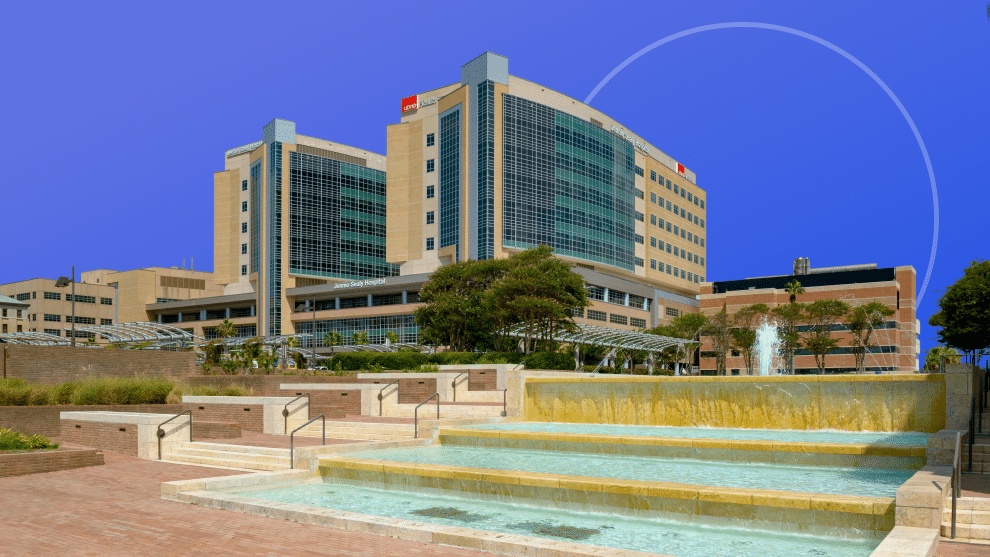
Those are reported UTMB results, published by its vendor. They give the administrative problem a price, but they are not a quote for buying Access or a forecast for another hospital. Savings in printing and handling belong on one side of a purchasing calculation; software, integration, equipment and implementation belong on the other.
Access sells to organizations through a sales conversation. Its company profile invites pricing requests. The customers doing the buying need a deployment plan alongside the demonstration: which forms move first, which record system receives them and who will maintain the library after launch.
05The tablet has to survive the ward
Some of Access’s most useful advice concerned objects outside its software. In a MEDITECH-hosted article, its marketing executive acknowledged gaps in the company’s knowledge about tablet cases and device security. Customers at Halifax Health and Parkview Medical Center helped inform a practical tablet playbook.
The advice included checking wireless coverage, making room for charging stations, securing devices and letting clinicians try a small selection before committing to a large purchase. Bright cases made tablets easier to spot at busy workstations. A device can be wonderfully mobile right up to the moment nobody knows where it went.
The implication for a buyer is straightforward. A bedside signature workflow depends on charged devices, usable connections and staff willing to use them. Pilot one department and watch what happens during a real shift. A successful demonstration in a meeting room cannot settle those questions.
06A specialist joins a larger platform
Phreesia closed its acquisition of Access eForms on August 11, 2023, announcing it three days later. Its fiscal 2024 annual report recorded $37.411 million in consideration, including cash and shares. The earlier quarterly disclosure had put the figure at $38.374 million, subject to purchase-price adjustments.
The buyer said Access would extend its acute-care capabilities and client and partner network. It pointed to Access’s forms catalogue and integration expertise. In May 2024, Phreesia joined the MEDITECH Alliance as an Innovator Partner, describing Access as the starting point of that relationship.
Access occupies an established market rather than an empty one. Interlace Health, formerly FormFast, also offers EHR-connected forms and consent workflows. Native EHR functionality and general signature tools may enter a purchasing discussion too. Access’s documented pitch is hospital-specific forms experience and integrated delivery; the sensible comparison is how each option handles the buyer’s actual documents and systems.
07Start with the longest wait
Lawrence Memorial’s 2014 account adds a useful wrinkle. Its move to Access prompted a review of admissions paperwork and a consolidated packet. Demographic prefill helped shorten completion. The hospital reported meeting an ambitious three-month implementation target. Changing the software created an occasion to question the paperwork itself.
That is the part another organization can copy: choose a troublesome packet, retire redundant questions, name its owner and map every handoff. Measure the time until the finished document is available to its next user. If reviewers still leave requests untouched, electronic routing alone will not resolve the delay. If old forms remain elsewhere, a central library will need enforcement.
Access’s examples make a persuasive case for attending to these small administrative journeys. The work is specific: an approval that stops travelling, a current consent, a chart with the document already inside it. For the patient waiting nearby, such details are hardly small.
Follow the form
Explore the product, customer accounts and company channels.