The Prison-Doc Shop That Made 40 Years of Payroll Selling Stories Nobody Else Would Touch
For four decades, Rasha and Stephanie Drachkovitch have run toward the subjects most producers avoid - prisons, night shifts, grief - and turned them into shows that networks keep ordering.
There is a number Rasha and Stephanie Noonan Drachkovitch bring up when people ask how a small independent studio survives four decades in television: they have had a show on the air every year since 1984, and they made payroll every week for more than thirty-five of those years. In an industry where production companies rise on a single hit and vanish when it ends, that streak is the whole story. 44 Blue Productions, based in Burbank, California, did not build it by chasing the easy commission. It built it by walking into rooms other producers would not enter.
Those rooms include state prisons, overnight emergency shifts, homicide squads and the private grief of strangers. The company's best-known franchise, the MSNBC series Lockup, spent well over a decade taking cameras inside American correctional facilities. Its portfolio also runs to A&E's Emmy-nominated Wahlburgers, Netflix's Jailbirds, NBC's LA Fire & Rescue and A&E's Homicide Squad New Orleans. The connective tissue is not a genre. It is access, and the trust required to earn it.
A company named after a football play
The origin is almost too neat. Rasha and Stephanie, a married couple, started the company in 1984 out of Stephanie's Los Angeles apartment. The name "44 Blue" came from a good-luck play from Rasha's high-school football days - a huddle call carried into a business plan. Stephanie had developed primetime series at Warner Bros. and Disney; Rasha came out of sports and action-adventure programming. Their first decade leaned on that athletic, adventure-driven work before the slate widened into the harder, quieter subjects the company is now known for.
That widening was deliberate. As Stephanie has put it, the company is drawn to "stories that have either never been told before or we can tell in a different way." It is a simple editorial filter, and it explains a slate that can hold a burger-chain family comedy and a maximum-security prison series at the same time.
We're attracted to stories that have either never been told before or we can tell in a different way. Stephanie Noonan Drachkovitch, Co-Founder

The access business
Most of what 44 Blue sells is not footage. It is permission. Getting a network to greenlight a prison series is the easy part; getting a corrections department, its officers and its inmates to agree to be filmed honestly, over months, is the actual product. The same is true of a fire station or a homicide unit. That trust is slow to build and easy to lose, which is one reason a long track record functions as a moat: institutions that would never hand keys to a first-timer will open the door to a company that has done it responsibly for decades.
Rasha frames the payoff in mission terms rather than commercial ones. "Giving voice to the voiceless is extremely rewarding," he has said of the prison work - a line that also happens to describe a repeatable content strategy. The subjects are underserved on screen, the demand from viewers is real, and few competitors have the relationships to supply it.
What they actually make
The catalog is broad by design, which spreads risk across genres and buyers. A short tour:
Lockup (MSNBC) - the franchise that put prison in primetime and ran for years across multiple correctional facilities.
Wahlburgers (A&E) - the two-time Emmy-nominated series produced in association with Mark and Donnie Wahlberg.
Nightwatch (A&E) - first responders working the overnight shift, a sub-genre 44 Blue helped popularize.
Jailbirds (Netflix) - a county-jail docuseries that carried the company's non-fiction to a global streaming audience.
LA Fire & Rescue (NBC) - a first-responder series with Dick Wolf as executive producer.
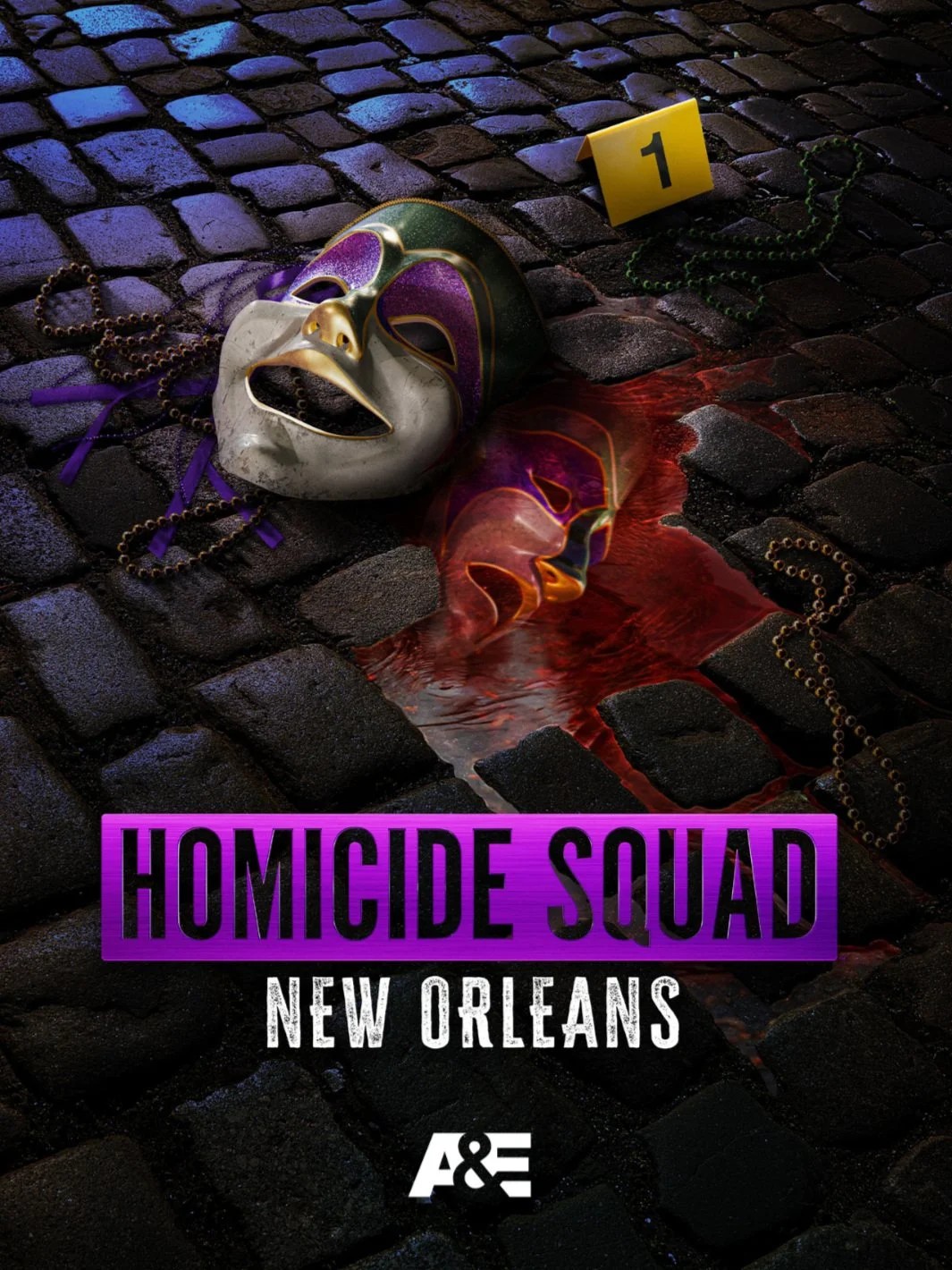
Homicide Squad New Orleans (A&E) - embedded with the detectives working the city's murder cases.
The company has also worked with talent well beyond the Wahlbergs: an HBO documentary, Rock and a Hard Place, produced in association with Dwayne Johnson, and Netflix non-fiction featuring medium Tyler Henry. Stephanie is careful about the celebrity-reality lane. "Talent is definitely an important element in the creative," she has said, "but it has to be the right talent and the right project." The reason the partnerships hold, she adds, is that the talent "trust us as experts in the genre."
We've had a show on the air every year for 35 years, and we've made payroll every week. Rasha Drachkovitch, Co-Founder & Co-CEO
A reach most people never notice
For a company whose name rarely appears on a magazine cover, the footprint is large. 44 Blue's series have aired on more than 20 US networks and in over 120 countries. The bars below put the scale in rough terms.
The business model, and who keeps buying it
44 Blue is a production studio, not a broadcaster. It develops and produces series, then licenses them to networks and streamers in exchange for production and license fees, with back-end participation where deals allow. Its customers are the buyers - NBC, Fox, A&E, MSNBC, Netflix, HBO, PBS and others - and, through them, non-fiction audiences worldwide. Estimated annual revenue sits near $52.8 million.
The ownership itself tells you how the market values that machine. 44 Blue was independent for its first three decades. In 2016, Germany's Red Arrow Entertainment Group took a majority stake, reported at 65 percent. In 2022, the company joined Peter Chernin's The North Road Company, alongside Chernin Entertainment and Words + Pictures. In January 2026, France's Mediawan entered advanced talks to acquire North Road. Three global buyers circling the same Burbank studio inside a decade is a fair proxy for what a durable, access-rich non-fiction library is worth.
Where it fits, and where the model strains
In the unscripted market, 44 Blue competes for slots against much larger labels - ITV America, the Banijay stable, Lionsgate Alternative Television, Warner Bros. Unscripted and All3Media America among them. What sets 44 Blue apart is less scale than specialization: a reputation, built over 40 years, for handling sensitive institutional access and difficult subject matter without burning the relationships that make the next season possible.
The approach has limits worth naming. Access-based production is slow and relationship-dependent, which does not scale like a format that can be franchised into a dozen territories overnight. Prison and first-responder access can tighten with a single policy change or news cycle. And a studio that lives inside a larger parent is exposed to that parent's fortunes - a reality underlined by the fact that its corporate home has changed three times since 2016. The 2015 move into virtual reality, via the Ovrture studio, was an early attempt to diversify into formats less dependent on institutional permission; it was ahead of its market more than it was a new revenue engine.
Still, the core lesson is portable well beyond television. 44 Blue found a supply of stories that audiences wanted and competitors could not easily reach, then spent decades protecting the relationships that guaranteed that supply. The genres rotated - sports, then prisons, then celebrity families, then first responders - but the underlying asset, hard-won trust, stayed the same. For operators in any field, that is the more useful takeaway than any single show: durability came from owning the access, not the airtime.
We are fearless about tackling tough but important subjects, and our storytelling inspires audiences to take action. 44 Blue Productions