Zohar Einy took the table out of his board meetings. The people stayed. They sat in a circle, with less furniture between the founder and the investors. It is an unusually literal way to reconsider corporate structure. Most companies settle for moving a few boxes on a slide.
He described the arrangement while explaining how he works with investors at Port, the company he co-founded and leads as CEO. He wants them to function as an extension of the team. A circle gives that idea a physical form. Everyone can see everyone else; nobody has a polished slab of wood to defend.
The detail offers a useful entrance into Einy’s working life. Again and again, his attention returns to the things that stand between capable people and the work they intend to do. A ticket. An unfamiliar tool. A process that requires someone else’s permission. Port began with those small obstructions, the sort that rarely get a dramatic name but can consume a perfectly good afternoon.
“We sit in a circle and it changes the dynamic.”
Zohar Einy, in conversation with IsraelTech
First, he was the person waiting
Before he sold developer autonomy, Einy experienced its absence. He began his career as an engineer in the Israeli military’s Unit 8200. His future co-founder, Yonatan Boguslavski, led a team that built an internal developer portal used by more than 2,000 developers. Einy was among the people using it.
That distinction matters. The two founders knew the problem from different positions. One had helped create the system that let developers help themselves. The other knew what it felt like to need that system. Between them sat a fairly complete picture of an engineering organization’s daily negotiations.
A developer might understand the code and still need help finding the right infrastructure, working out ownership or performing a routine operation. Every request sent another piece of work to the platform team. The portal offered a different arrangement: make the necessary tools and processes accessible through a common interface.
For Einy, the experience supplied a problem worth carrying into civilian life. Port, founded in 2022, would offer other organizations a way to give developers that kind of self-service. The underlying proposition was pleasantly practical. People hired to build software should be able to get on with building it.
An engineer learns the other half of the job
His route to Port included several views of the technology business. At TLV Partners, he worked with developer-focused companies. He was an early employee at Rookout, and he co-founded Aporia, which developed machine-learning monitoring tools. Engineering, venture capital and startups gave him different places from which to examine the same broad question: what makes technical work useful to the people doing it?
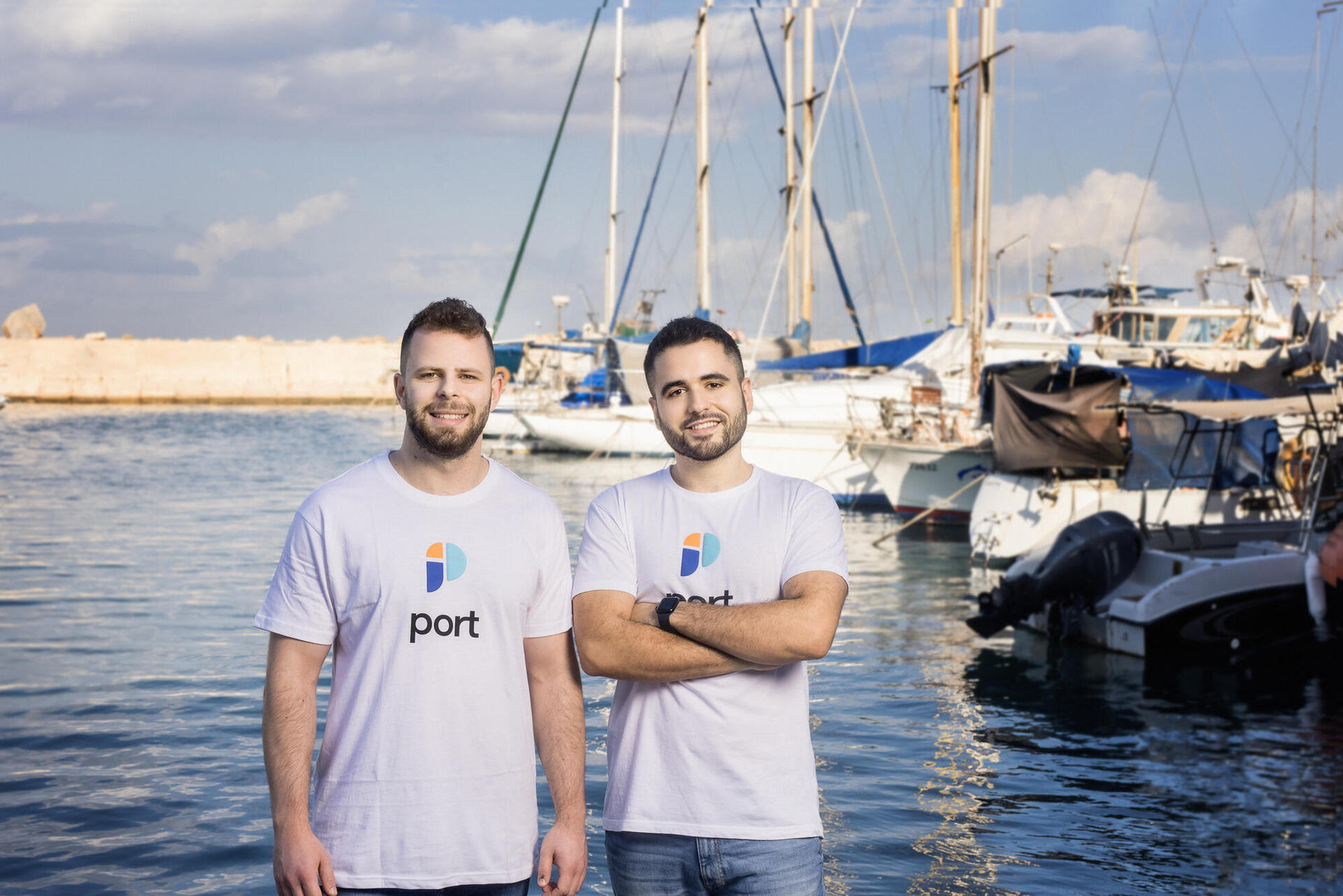
With Port, his responsibilities widened. Boguslavski took responsibility for technology and product as CTO; Einy took the marketing side, with the pair setting product strategy together. A founder who understands a technical problem still has to explain why someone should buy the solution.
Einy has spoken about learning to approach go-to-market work with the seriousness he brought to engineering. That is a recognizable adjustment for a technical founder. The product can be precise while the explanation remains vague. A working feature cannot introduce itself to every potential customer.
He also brings a background far removed from the software catalog. Einy grew up on a moshav with horses and chickens. The public outline of his life moves from that agricultural setting into military engineering, then into the rooms where products and companies get built. His ambition now includes building a lasting developer-tools business, with an IPO among the goals he has discussed.
The queue becomes a company
Port announced a $7 million seed round in November 2022, led by TLV Partners. Investors included JFrog co-founder Yoav Landman and technology entrepreneur Shlomo Kramer. The company had more than 20 people. Einy was making a specific commercial argument: many organizations could benefit from an internal portal but could not spare the effort to build and maintain one themselves.
In October 2024, Port announced a $35 million Series B led by Accel and Bessemer Venture Partners. Einy reported that its user base had grown eightfold over the preceding year. GitHub, LG and British Telecom were among the customers named in the announcement.
By December 2025, Port was announcing a $100 million Series C led by General Atlantic and an $800 million company valuation. Einy put cumulative funding at $158 million. Those figures describe the business around him. The original question remained on a smaller, more human scale: how much of an engineer’s day disappears into getting ready to do the job?
Selected announced rounds, not a cumulative total. Port reported $158M raised in December 2025.
The roadmap had an audience before sales did
One of Einy’s more revealing decisions came while Port was still small. He says its product roadmap became public when the company was six months old, before it had a sales team or more than one product manager. Users could see plans, propose features and vote on requests.
For a young company asking engineers to trust it, that was a way to make the conversation visible. Port also opened its integrations framework, offered an ungated demo and created a Slack community. Einy’s account describes a company trying to earn access to technical teams by letting those teams inspect and influence the work.
The requests were sometimes delightfully ordinary. Dark mode mattered. Custom icons mattered. A feature called “View as,” which lets builders see the experience as their users would, attracted more than 150 votes before shipping. People living inside a tool notice its daily inconveniences with a precision no strategy presentation can supply.
There is a modest theory of leadership in that choice. The founder has an idea of where the product should go. The users have evidence about what gets in their way. Giving that evidence a public address makes it harder to overlook.
The answer was hiding in the chat
In February 2026, Einy described another instance of looking past the formal picture. He regularly reviewed developer productivity reports at Port. He was drawn to numbers and analytics, yet wondered whether delivery metrics captured how engineers experienced their working day.
An engineer offered a suggestion: look at the conversations in Slack. Einy credited him for the idea, then wrote about using AI to examine those conversations for signs of friction. A report could show software moving through the system while the people moving it still felt confused or blocked.
The appeal of the exercise is its proximity to everyday work. Questions appear when people need an answer. A conversation can reveal where expectations and reality have parted company, before the disagreement becomes a measurable delay. The evidence arrives in ordinary language, complete with all the untidy detail that a neat metric leaves behind.
For a CEO selling a better developer experience, it was a useful act of looking inward. Port’s own engineers could show him where the experience needed attention. The company making the tool still had to listen to the people using it.
New workers, familiar questions
AI agents have given Einy a new version of the coordination problem. Port’s direction now extends beyond a portal for human developers toward a platform where agents can carry out engineering workflows. He has described a future in which people direct and review more of the work that software performs.
The attraction is easy to understand. An agent might help move a ticket toward production or investigate an incident. The difficulty begins with the surrounding organization. It needs to know which service matters, who owns it and which actions are permitted. An agent with access to tools still needs a coherent account of the place it has entered.
In his writing about Shopify’s AI practices, Einy argues for shared infrastructure beneath the tools individual teams choose. He pays attention to usage, spending and the connections to company data. His emphasis suggests the same instinct that shaped the early portal: prepare a usable environment, then let people act within it.
environments
runs a workflow
review, audit
A conceptual reading of Einy’s platform argument, not a product performance chart.
The portal’s audience is changing. Its organizational questions remain recognizable. Who can do this? What do they need to know? Where should they stop and ask? Even an automated workplace has to work out whose turn it is.
The factory after the demo
By autumn 2026, Einy was writing and speaking increasingly about AI software factories. His September newsletter examined what happens when a promising set of workflows has to operate across a whole company. He called for shared context, accountable ownership of agents and skills, and a platform to which engineering teams can contribute.
On October 6, he appeared on The Engineering Leadership Podcast to discuss software factories, organizational change and hiring. On October 21, his newsletter listed a collection of examples from engineering teams building their own factories. The emphasis had moved toward how a system holds together as more people depend on it.
That gives the story a certain circularity. Einy began as a developer inside an organization large enough to need a better way of coordinating work. Now he is trying to help other organizations coordinate a new set of workers. More can happen automatically. Someone still has to make the arrangement intelligible.
His boardroom experiment offers a small image to carry away. Remove a familiar object. Let people see each other. Find out whether the conversation improves. A founder can raise money for an ambitious future and still spend his time asking what, exactly, is in the way.
Continue the conversation
Read Autonomous Engineering and Einy’s Port essays. Follow him on LinkedIn or X, or explore Port.
Watch: Einy in conversation with IsraelTechDeveloper work, investors and autonomous engineeringThe Techstrong TV interview ↗
The Engineering Leadership Podcast, episode 271 ↗
Port’s 2022 beginnings in CTech ↗
The founders’ Forbes Israel profile ↗