Consider the takeout bowl. It is the object a restaurant customer notices only when something goes wrong: a leak, a collapsing edge, a second container needed to carry lunch home. In 2018, Zao Asian Cafe and packaging supplier Eco-Products introduced a bowl intended to handle both eating in and taking out. Sugarcane fiber below. A custom snap-on lid above. One small decision removed a little complication from two different meals.
That is a useful way into Zao. The Utah-born restaurant chain sells Asian-inspired food assembled to order. But look closely at its bowls, its ordering system and its catering menu, and another product emerges: a series of manageable decisions. Choose a format. Choose a protein. Choose a sauce. Lunch acquires a structure. For someone returning on a hurried weekday, that familiarity matters: the meal can change while the method of getting it stays recognizable. There is less to relearn before the first bite.
- Custom bowls, tacos, wraps, salads and soup, with options for meat eaters and vegans.
- A Mountain West footprint spanning Utah, Idaho and Colorado.
- A 2026 growth investment, plus a separate $12.5 million development debt facility.
The appeal is easy to picture. An office group needs lunch. One person wants steak, another tofu, another rice noodles. Zao lets those differences coexist inside the same ordering routine. The interesting question is how much variety a restaurant can offer while keeping the experience legible.
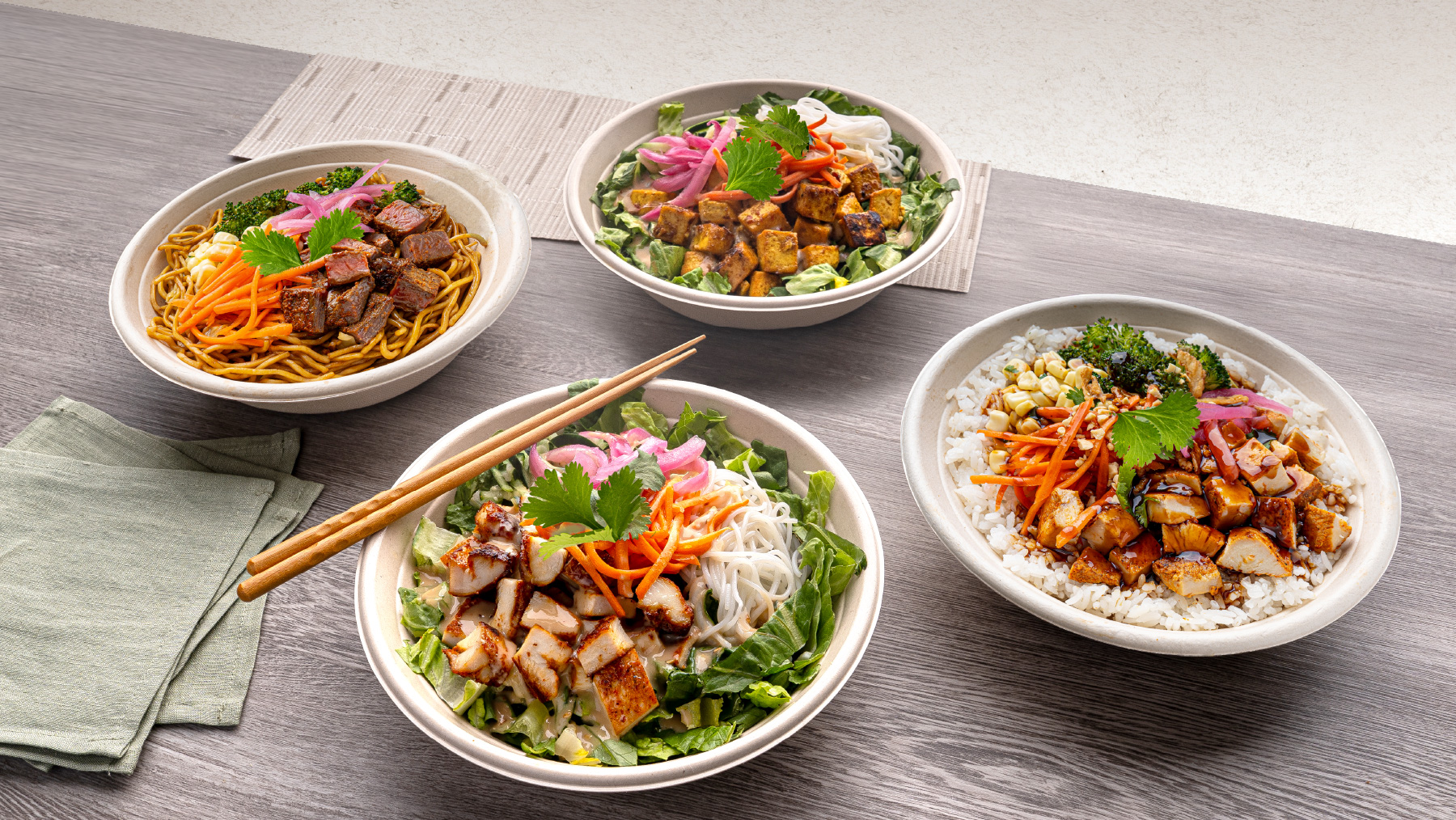
The menu is a set of instructions
Start with the bowl. The current menu offers white rice, brown rice, rice noodles or yakisoba noodles. Proteins include seasoned chicken, steak and Thai-spiced organic tofu, alongside glazed chicken and beef options. Sauces move from teriyaki to green curry, yellow curry and chili lemongrass. Corn, carrots, cilantro and pickled onions supply further choices; peanuts and crispy onions finish the job.
The same general logic carries into other formats. A customer can order Zao tacos or a banh mi wrap rather than a rice bowl. The menu borrows across Asian cuisines and puts those flavors into familiar handheld and bowl formats. Its market position sits between a conventional quick-service lunch and a meal with more decisions about ingredients.
Chipotle is a useful comparison for the ordering logic; Panda Express is an alternative for a quick Asian-inspired meal. Zao's particular offer is the combination of customizable bases, curry sauces, tofu and several meal formats. The distinction is visible in what the customer can assemble.
An experienced founder, a familiar queue
Dave Duffin had already founded Zuka Juice and Rumbi Island Grill before Zao. Savory Fund dates Zao's founding to 2013; local restaurant coverage documented its Salt Lake City opening in 2014. In a September review that year, the Salt Lake Tribune's Stuart Melling described food arriving with unusual speed. His verdict included the wonderfully economical phrase, “Fast with a capital whoosh.”
The early restaurant already offered the pattern recognizable today: move along a counter, pick a meal, add a protein, finish with toppings. Chicken and organic tofu meals were listed at $6.95 in that review. Those are historical prices, a snapshot of the original proposition rather than a promise about today's bill.
Zao's own careers page connects the founder's search for balance after years in restaurants with a mission of simple, fresh, energizing meals. Its recruiting pitch emphasizes flexible schedules, promotion opportunities and benefits for eligible full-time roles. That is the culture the company advertises; the daily work of delivering it belongs to the restaurant teams.
“One bowl that does double-duty keeps life simple for our guests and for our employees.”Nathan Williams, Zao project manager, 2018
The register became the bottleneck
By December 2019, Zao had ten locations, according to a PAR Technology announcement. Its next obstacle was specific: the existing point-of-sale system could not support the online ordering it wanted to introduce. Zao selected PAR's cloud-based Brink software and EverServ terminals, working with Better My POS on implementation.
The announcement says installation and online ordering took two weeks. Zao vice president Charles O'Grady also reported more efficient reporting, while PAR reported an increase in average check size after deployment. No percentage was given. The lesson is concrete enough without one: a restaurant's next sales channel can depend on the unglamorous system sitting beside the register.
The present-day business offers web ordering and an app with rewards and special offers. Customers buy meals, drinks and extras; groups buy catering. Technology supports those transactions. The business remains a restaurant operation, with food preparation and service at its center.
One lunch order becomes a roomful
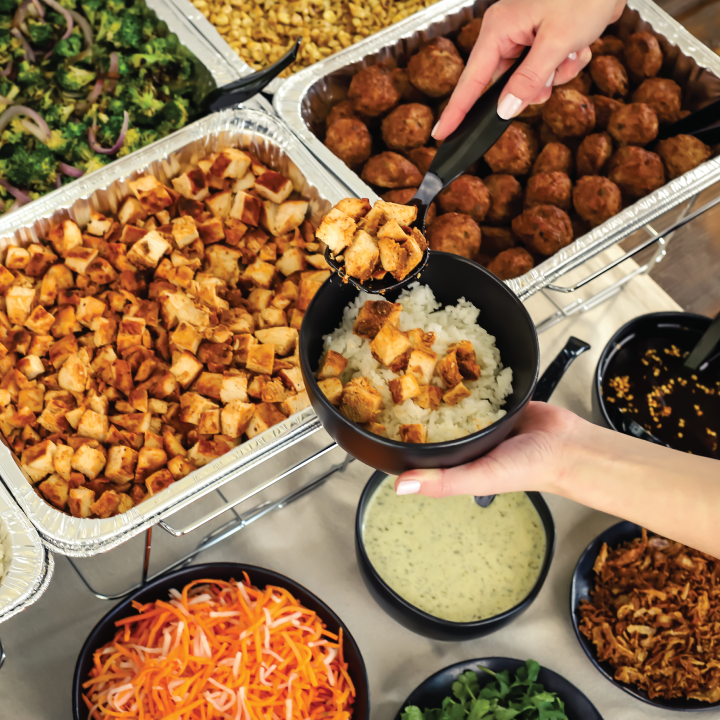
Catering stretches the same proposition across a bigger table. Zao offers rice and noodle bowl bars for office lunches and events, and a big bowl advertised to feed six to eight people. The organizer can choose a format while guests retain some control over what reaches their plates.
There are practical boundaries. Zao's catering page says orders over $100 can be delivered between 11 a.m. and 8 p.m., Monday through Saturday; large orders require 24 hours' notice. Its nutrition page also warns that shared equipment prevents a guaranteed allergen-free experience. Customization helps accommodate preferences, but a serious allergy requires a different level of scrutiny.
For another business, the useful move to copy is this separation of decisions: let the buyer settle the broad format, then let each user make a few meaningful choices. It depends on reliable preparation and clear options. If every variation demands a separate production process, the tidy ordering sequence can conceal a very untidy kitchen.
More stores change the question
In August 2026, Savory Fund announced an investment in Zao, describing a 23-location chain with recently reported same-store sales growth of 18.2%. The announcement linked growth to catering, demand for its food positioning and limited-time menu offers. It did not specify the comparison period for that sales figure.
A separate $12.5 million debt facility from Columbia Bank supports new location development, with more than ten openings projected through 2027. The equity investment's terms were undisclosed. Those figures describe financing capacity and plans, rather than a construction budget per restaurant or completed openings.
Duffin's stated reason for choosing Savory was its experience expanding restaurant brands while preserving their identity. That moves Zao into a harder version of its original problem. A counter can make many ingredients feel orderly. A growing chain must make many kitchens behave consistently. The bowl is still simple. Keeping it that way becomes the work.