Zack Parisa wanted a job in the woods. His father was a NASA engineer, and a desk looked like an excellent place to avoid. At 13, he decided on forestry. The career would eventually require satellites, cloud computing, and a considerable amount of time looking at numbers on a screen. Childhood plans sometimes have a dry sense of humor.
The woods remained the point. Parisa grew up in Alabama, studied forestry at Mississippi State University, and earned a master’s in forest science at Yale. He became a forester and biometrician: someone concerned with both the living landscape and the mathematics needed to understand it. Trees offer shade. They also offer a sampling problem.
Today, Parisa is NCX’s co-founder and chief economist, following years as its CEO. His career has revolved around a question that sounds simple until someone has to write a check. Forests provide timber, store carbon, shelter wildlife, and help manage water. How do you give landowners useful information about those competing values, then make the economics work?
A forest with the wrong paperwork
In Armenia, that question arrived before the useful information did. During his graduate work, Parisa helped the Armenia Tree Project with community forest management. The available records were old handwritten field notes. They were a poor foundation for the quantitative planning he wanted to do. A landscape could change while its paperwork sat perfectly still.
Community forestry asks practical questions with long consequences. People need fuel and building materials. Wildlife needs habitat. A harvest changes what the next generation inherits. Before choosing among those demands, a forester needs to know what is growing, where it is growing, and how much of it there is. Otherwise, an elegant management plan can amount to beautifully typeset uncertainty.
Parisa began developing a way to combine information gathered on the ground with remotely sensed imagery. The appeal was efficiency: use a limited number of direct measurements to learn more about a much larger area. The technical problem was tied to a human one. Better information could help communities make decisions about resources they actually depended on.
The computer scientist and the forester
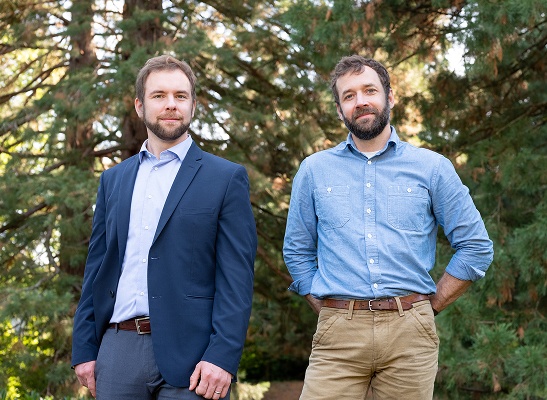
At Yale, Parisa met Max Nova, a computer science student. They started working together on the business that became SilviaTerra, later renamed NCX. Parisa dates the start of their collaboration as a company to 2010. Forestry supplied the questions; computing offered a way to ask them across many more acres.
The first years were spent making research useful to customers. The founders tested their approach in different forests, learned what landowners needed, and built a largely bootstrapped business. Parisa later described the early operation as closer to consulting than the neatly repeatable product they hoped to create. It was profitable, but narrowly so.
That distinction matters. Selling a national vision is one activity. Sitting with a customer and finding out whether an inventory helps with an actual management decision is another. Parisa’s route involved years of the latter. By his 2021 account, the business had worked with 20 of America’s 25 largest forest landowners by size.
The early products had more cheerful names than the problems they solved. Timber Scout used satellite information to help model forests. Plot Hound let foresters record observations on smartphones instead of paper. The hound, happily, required no feeding. These tools addressed familiar work: measuring assets, planning harvests, and understanding what a property might become.
A map big enough to change the question
Working with Microsoft’s AI for Earth program gave the company access to computing resources for a national forest inventory. Basemap combined satellite imagery, ground measurements, and machine learning to estimate forest composition at acre scale. By 2021, the map covered more than 92 billion trees. That figure refers to the modeled inventory, rather than 92 billion individual field visits.
Large numbers can obscure the useful achievement. A landowner’s decision still happens on a particular property. A national inventory matters because it can bring comparable information to places that previously required separate, expensive studies. The ambition was to lower the cost of knowing what was on the land, so access to information would depend less on the size of a forestry budget.
The work also supplied an unusually good computing anecdote. During the national mapping effort, the team spent a confused weekend investigating strange output. Some high-resolution aerial images had been blacked out over military bases. An algorithm looking for trees had encountered a government preference for discretion. Even a forest map has to contend with things that decline to be photographed.
Getting paid for something that stays in the woods
Parisa wanted the measurements to support markets for forest benefits beyond timber. Timber has a convenient commercial habit: it can be cut, transported, and weighed. Carbon stored in a growing forest stays on the property. The buyer therefore depends on a credible account of what changed, what caused the change, and how long the benefit lasts.
“At its heart, forestry is about balance.”
Zack Parisa, 2021
NCX’s early forest carbon marketplace offered landowners payments for delaying harvests through one-year agreements. Short commitments and remote assessment were intended to make participation accessible to owners who could not accept the cost or duration of traditional projects. The company’s approach asked whether a year of additional growth could be measured and paid for at scale.
In 2022, Parisa discussed that model alongside NCX sustainability leader Jennifer Jenkins. Small properties were central to the pitch: carbon revenue had often been easier for large owners to access. For a family with forestland, another possible income stream could change the timing of a harvest. It could also bring a new contract whose obligations needed careful reading.
Parisa’s argument for offsets included a sequence. Companies should first reduce emissions in their own supply chains. Offsets addressed emissions they could not readily eliminate. He also emphasized quality: buyers needed confidence that a credit represented the change, duration, and magnitude they expected. A market for an invisible benefit has very little room for a vague receipt.
The market declined to follow the script
In March 2022, NCX announced a $50 million Series B led by Energize Ventures, with participants including J.P. Morgan and TIME Ventures. The funding was intended to support international expansion and additional natural capital markets. The company had attracted capital for a broader future. The next chapter was considerably more difficult.
That November, Parisa and Nova announced a 40 percent reduction in the team. Their explanation acknowledged mistaken expectations about the carbon market, including the belief that buyers would become more confident about nature-based credits. They also said NCX had been too slow to expand its offerings. The statement put their own decisions alongside the external pressures.
In May 2023, another 40 percent reduction followed, affecting 15 people. The founders announced a change in focus: helping landowners discover and compare opportunities, while stepping back from developing new forest carbon projects. They described confusion as a major obstacle. Owners needed help with eligibility, prices, and tradeoffs among timber, carbon, and biodiversity.
It was a change in where the company stood in a transaction. Creating a project and helping a landowner evaluate several projects require different incentives and different work. The founders’ stated aim became helping owners find a fair deal across available options. The trees remained in place; the business built around them had to move.
- $50 millionSeries B financing announced
- 40% reductionTeam cuts announced
- A new focusAnother 40% team reduction; shift to landowner comparison tools
Optimism, with room for the awkward questions
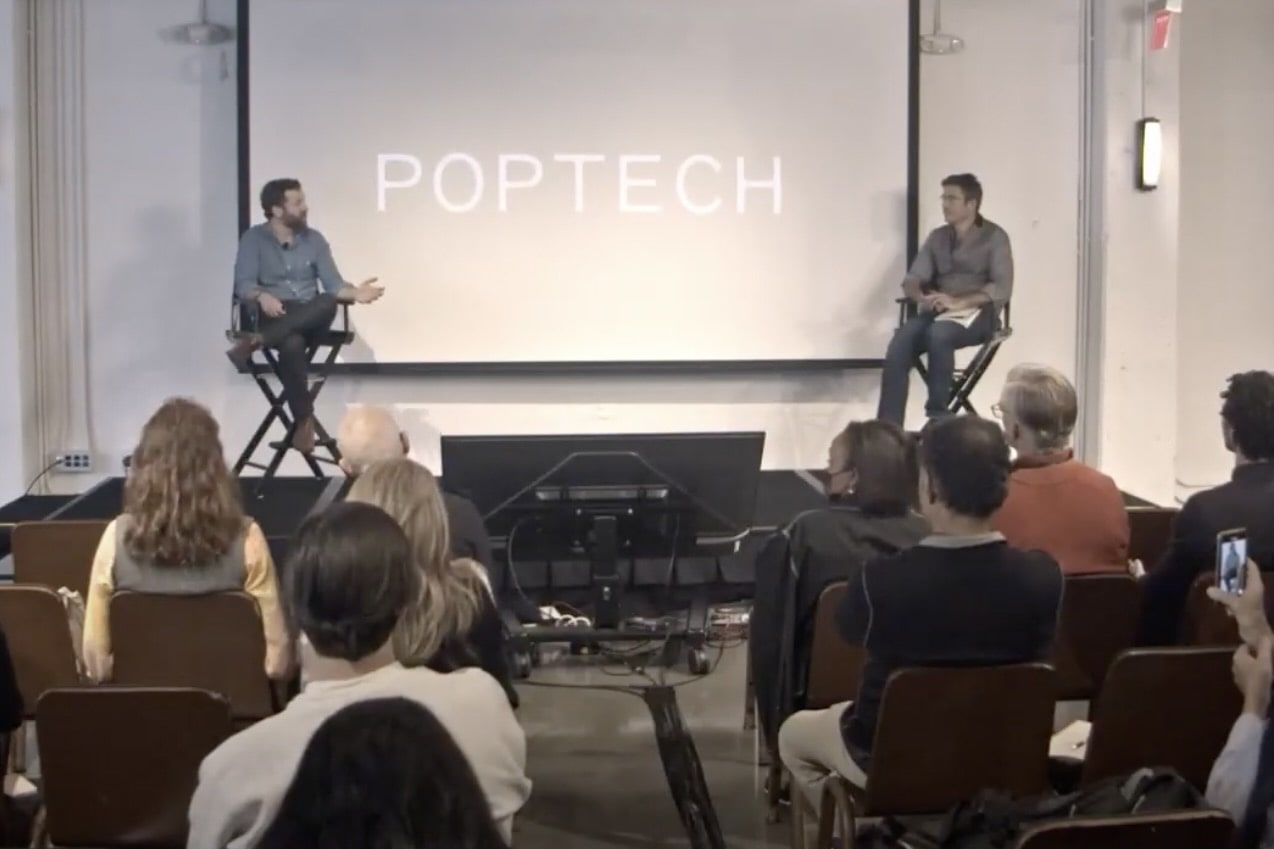
Parisa has taken the subject to rooms far removed from a timber cruise. At COP27 in 2022, he discussed nature’s role in climate action. At PopTech, he spoke about carbon offsets with climate journalist Michael Coren, his former Yale forestry classmate. Their conversation brought a familiar professional relationship into a public argument about an unsettled market.
“I’m an optimist,” Parisa said in the PopTech discussion. He argued that the need for natural capital markets would help drive their development. The sentence expresses his belief rather than a guarantee. His company’s subsequent refocus gives that optimism a practical test: how much can change in the approach while the purpose stays recognizable?
Recognition has accompanied the work. Parisa was a 2021 nominee for UCLA’s Pritzker Emerging Environmental Genius Award. Mississippi State named him its College of Forest Resources Alumni Fellow in 2022. Both honors connect the entrepreneur back to the forestry education and institutions that helped shape his work.
NCX’s founders also went back on the road in February 2024, meeting landowners in Alabama, Georgia, Mississippi, Ohio, and Pennsylvania. The conversations covered new revenue streams, inherited properties, and whether a program made economic sense. A national platform still needed to hear what people wanted from individual pieces of land. Acreage alone could not answer that.
Back to the pine, and the pencil
Parisa’s recent writing is concerned with the numbers a landowner can actually use. In February 2026, he published an analysis of how collapsing Southern pulp markets altered the economics of existing pine plantations. A second article examined whether to plant pine on cleared land, considering the cost of establishment and what else the money could do.
In March, he considered a further option for mature pine: retaining seed trees to regenerate a stand, rather than automatically clearcutting and paying to replant. The analysis compared cash flows and capital requirements. These are choices made under local conditions, with different goals and uncertain future markets. His scenarios are illustrations, rather than promises about a particular property.
There is a recognizable continuity here. The graduate student needed better records before recommending what to do with a forest. The founder built measurement tools before trying to create new markets. The economist now asks whether a familiar planting decision still earns its place in the budget. In each case, the usefulness of the answer depends on the assumptions beneath it.
At 13, Parisa chose a profession because he wanted to spend time among trees. Years later, the work includes software, contracts, and investment calculations. The desk has caught up with him. But the question on it still belongs outdoors: given this land, these trees, and the people who will inherit them, what is worth doing next?