He built a machine to catch poachers by the sound of a gunshot. Then he pointed the same instinct at the carbon market: catch the people gaming nature.
FOUNDER & CEO · RENOSTER · AUSTIN, TEXAS
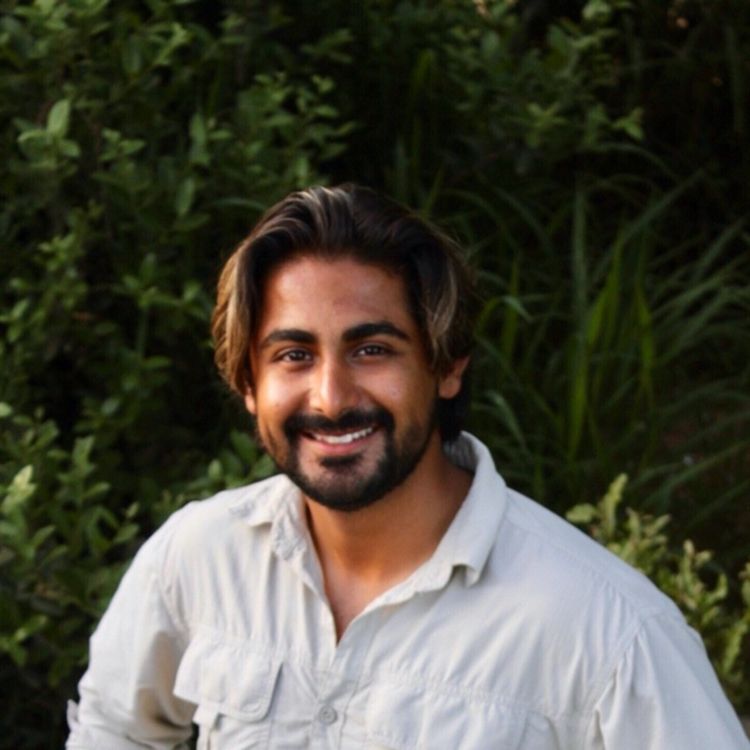
Today Saif Bhatti runs Renoster, a small company in Austin with an unusually large job: deciding whether the carbon credits the world is buying are real. Renoster is a ratings agency for nature-based carbon projects - forests, mostly - and its whole pitch is independence. It keeps its distance from the people who develop and sell the credits, because a number you can buy is a number you can't trust.
The voluntary carbon market is built on a promise. A company pays for a credit, the credit says a ton of carbon was kept out of the sky, and everyone goes home feeling lighter. Renoster's job is to ask the rude question at the dinner party: did that actually happen? It answers with satellites, remote sensing, and open science instead of vibes. In its early stretch it ran the numbers on 170 forestry projects representing more than 400 million credits, then crossed half a billion reviewed.
Bhatti calls the flagship tool Mercury Rubric. The name is dry. The output is not. When Renoster publishes a deep-transparency report, project developers feel it.
Engineer and philosopher builds anti-poaching tech, names it after a rhino, then turns it into a lie detector for carbon credits.
Role: Founder & CEO, Renoster
Based: Austin, Texas
Studied: Industrial Engineering + Philosophy, Northwestern
Co-founder: Dr. Elias Ayrey, Chief Scientist
Stage: Seed
Figures from public company materials and Crunchbase. Credit-review totals grow over time.
As a senior at Northwestern's McCormick School of Engineering, Bhatti ran into a fact that wouldn't leave him alone: rhinos could go extinct in his lifetime. South Africa holds most of the world's remaining rhinos, and after 2007 a surge in demand for horn turned the bush into a shooting gallery. Thousands of animals were killed over a decade.
So he built a thing. A smart bioacoustic device that sits in the landscape, listens for the crack of a rifle, and pings a ranger station so patrols can move toward the shot instead of stumbling onto it. He flew to South Africa to field-test it at Thornybush Game Reserve, went back again the same year, and the reserve started talking about a long-term partnership.
He named the company Renoster. It is the Afrikaans word for rhinoceros. The name survived the pivot. The mission, oddly, did too.
I see the value of making connections with people.- Saif Bhatti, on building Renoster out of Northwestern
Anti-poaching and carbon auditing look like different jobs. They aren't. Both are about catching people who profit by gaming nature - and proving it with data they can't argue with.
A carbon credit is a story about trees that didn't get cut down. Renoster checks the story against the satellites.
Property development internship at Land Securities in London.
Environmental strategist at XL Catlin, working on city and climate risk data - including modeling with Lloyd's.
Data science and mechatronics research at Northwestern: mapping snow cover with Google Earth Engine, optimizing EV charging.
Founds Renoster as anti-poaching tech; field-tests a gunshot-detecting device at Thornybush, South Africa.
Graduates Northwestern with a double major in industrial engineering and philosophy.
Renoster joins Techstars Sustainability; pivots toward carbon credit transparency.
Signs an MOU with DeepMarkit; builds out the Mercury Rubric review platform.
Raises a seed round; publishes the Kariba Deep Transparency Report.
Crosses 500M nature-based credits reviewed.
In May 2023, Renoster published a deep-transparency report on the Kariba REDD+ project in Zimbabwe - one of the largest carbon projects on earth. Reports like it are why developers read Renoster's verdicts carefully.
Engineering taught him to measure. Philosophy taught him to distrust a tidy answer. Renoster is what happens when neither one blinks.
The small details usually explain the big ones.
Bhatti's bet is simple and hard. If buyers can see which projects truly remove or protect carbon, money flows to the real ones and dries up around the rest. Fraud and greenwashing lose their cover. Credible projects - including smaller ones that were locked out - get a fair shot. The carbon market stops running on faith and starts running on evidence.
Reporting compiled from public sources. Figures and quotes attributed to their original publishers.