In 1997, Yuval Lirov had 3,200 UNIX workstations to worry about. They served sales, trading, research and development at Lehman Brothers. Behind each screen sat someone who expected a complicated collection of systems to behave as one. A trader does not become more patient because the explanation for a delay contains the word “distributed.”
Lirov was a senior vice president responsible for UNIX support, overseeing systems, databases and parallel batch processing. That same year, he published Mission Critical Systems Management. The title has the plain confidence of a door marked ELECTRICAL: something consequential happens behind it, and you would prefer that the person responsible knows what he is doing.
Today he is the founder and CEO of ClinicMind, a business he started with his son Erez. The scenery has changed since Wall Street. The recurring interest is still recognizable: how to make separate pieces of work cooperate, and how to prevent the person using a system from becoming its unpaid interpreter.
A doctorate before the buzzword
Artificial intelligence was already part of Lirov's work in the 1980s. He earned a master's in operations research at the Technion in 1984, then a doctorate in systems science and mathematics at Washington University in St. Louis in 1987. His doctoral research concerned AI methods in decision and control systems, including simulations of air combat.
These subjects have a common difficulty: decisions have consequences beyond the immediate move. A choice that looks sensible in isolation can make the next choice harder. Operations research gives that difficulty mathematical form. Control systems add the inconvenience of a world that keeps moving while the calculation is being made.
At Bell Labs, where he worked from 1987 to 1991, Lirov developed expert systems for troubleshooting and scheduling. His published research included work with On-Ching Yue on acquiring network-troubleshooting knowledge. In this chapter of computing, AI meant teaching a system something useful about a particular problem, then finding out whether the teaching survived contact with reality.
One patent makes the preoccupation especially tangible. Filed in 1991 and granted in 1994, it describes an automated resource-allocation method using a learning arrangement. The underlying problem is familiar even to people who have never read a patent: several demands, one limited resource, and no possibility of satisfying everybody by wishing harder.
- 1987Bell LabsTroubleshooting & scheduling
- 1991Salomon BrothersArtificial intelligence
- 1993Lehman BrothersDistributed systems support
- 1999ClinicMindA business with Erez
How does work get from one step to the next?
The unglamorous end of Wall Street
After Bell Labs came Salomon Brothers, where he managed artificial intelligence from 1991 to 1993. Then came Lehman. The sequence took him from research into an environment where an elegant idea had to coexist with production schedules, users and the business day. A technical result could be correct and still arrive too late to be useful.
His 1997 book grew out of that operating world. Its subjects included reliability, availability, support and the management of distributed systems. It addressed consolidation, outsourcing, insourcing and automation. Those are organizational decisions as much as technical ones: who owns the work, who answers when something fails, and which responsibilities can sensibly be combined.
There is an appealing lack of romance here. The machinery behind a functioning business rarely gets an ovation. Its reward is that other people can continue their work. Supporting thousands of workstations means accepting that the quiet day, the day with nothing dramatic to report, can represent a substantial accomplishment.
This is a useful way to read Lirov's subsequent career. His background did not stop at building algorithms. It included running the conditions in which algorithms, databases and people had to be dependable together. That distinction helps explain why the handoff between tasks occupies so much space in his later thinking.
A father, a son, and the space between tools
In 1999, Lirov and Erez founded the company now known as ClinicMind. Yuval brought his experience of AI and Wall Street transaction processing. Erez, who studied computer science at Princeton, wrote the software. The division of labor is refreshingly concrete. Many founding stories offer a revelation. This one also offers somebody who could make the program run.
The first emphasis was financial operations. Over time, the business widened into a connected software platform. Its founding history describes a deliberate sequence, beginning with the financial engine and adding other workflows afterward. Read as a business decision, that order puts the survival of an independent enterprise ahead of the appeal of a longer feature list.
In a May 2026 interview, Lirov returned to the problem of organizations logging into several separate systems to accomplish one day's work. Each tool may perform its own task. The owner still has to manage the gaps. His complaint concerns the structure of the work: effort spent in one place fails to help the work happening somewhere else.
“Treating problems in isolation.”
Yuval Lirov, on a common operational mistake
That was his succinct answer when asked about a recurring mistake in improving operations. It is an engineer's criticism of a very human buying habit. A problem appears; a tool is purchased. Another problem appears; another tool arrives. Soon the organization has acquired an impressive collection of solutions and a new occupation connecting them.
The lesson extends beyond software procurement. A founder can add capable people and still leave them working across poorly defined boundaries. Integration asks for more than a common login. It asks whether information, responsibility and feedback travel far enough for the next person to act without rebuilding the previous person's work.
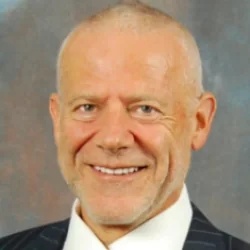
A different kind of family business: Yuval brought the systems experience; Erez wrote the software. Photograph: ClinicMind.
The family extends beyond the founding pair
The organization remains privately held and founder-controlled. Erez is chief technology officer. Another son, Reuven, is chief operating officer, with a background in Lean Six Sigma. Roy is also on the leadership team. The family connection is visible in named operating responsibilities, making the company an ongoing collaboration rather than a founding anecdote preserved for anniversary speeches.
Lirov's writing has run alongside that work. After Mission Critical Systems Management came Practicing Profitability in 2007 and another book on billing networks and processes in 2009. Across the titles, the emphasis moves from technical infrastructure toward the economics of running a business. The interest in networks remains.
He has also been willing to credit people outside the family. In a public endorsement of fractional marketing leader Samantha Paperin, he singled out her decision to take newsletters seriously as a channel for retention and additional business. His account acknowledged that the company had not been giving that channel the same attention before she made the case.
It is a small detail, but a useful one. The founder known for integration still needed someone else to notice an overlooked connection inside his own business. A company can sell a coherent system and remain a collection of habits in need of revision. Recognizing the useful intervention is part of running it.
The other place the family practices
There is another family institution in Lirov's story: the dojo. His martial-arts involvement began with Sambo in Lithuania, continued through Judo, and later included Aikido. While building his career and raising a family in New Jersey, he trained with his three sons. In 2014, he helped establish Pinellas County Aikikai by securing its first location.
He remains a board member and continues practicing. Reuven is the dojo's chief instructor and board chairman. The father's contribution included a very practical prerequisite: a place where the institution could exist. Before anyone can discuss the finer points of a technique, somebody has to obtain the room.
It would be easy to turn martial arts into a convenient explanation for every subsequent business decision. The actual connection is more modest and more interesting: a family has maintained a shared practice through changes of country, career and generation. That requires returning to something after the first burst of enthusiasm has passed.
A doctorate, a production system, a book and a dojo make different demands. Each also offers repeated opportunities to discover that a satisfactory first attempt was only the beginning. In Lirov's life, the continuity comes through that repetition: studying, building, operating, returning. The story is less dependent on a single dazzling afternoon than on the years surrounding it.
The next handoff
By 2026, Lirov was still publicly arguing for connected operations and the independence they can support. The language has changed with the software market. His early AI work now belongs to a much longer history than the current enthusiasm for the term might suggest. The old problem of making separate components cooperate has survived every new vocabulary.
The 3,200 workstations are a useful place to end because they restore scale to the abstraction. Thousands of people depended on infrastructure that most had little reason to contemplate. Lirov went on to build a company around other people's operational dependencies. Along the way, he helped a dojo find its first home. Sometimes the consequential contribution is a better algorithm. Sometimes it is making sure there is a room.