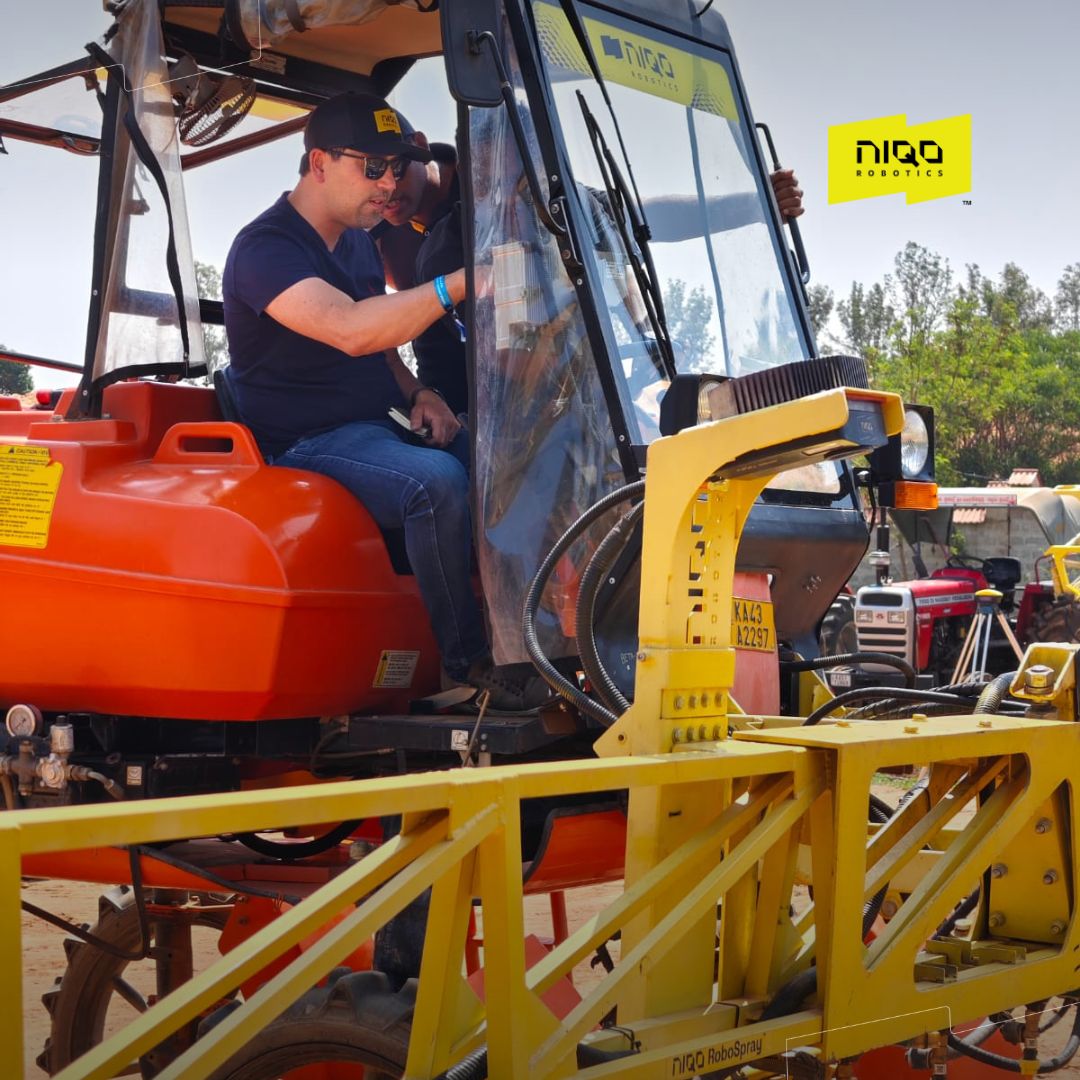
On a Sunday morning in May 2025, Yassine Cherkaoui went to see the machinery. Niqo Robotics was demonstrating its RoboThinner and RoboSpray equipment for visitors from Bidra Innovation Ventures and OCP Group. In one photograph, Cherkaoui sits in a tractor cab, wearing sunglasses and a cap, with bright yellow spray equipment across the foreground. Venture capital occasionally benefits from a change of upholstery.
The visit offers a useful introduction to Bidra’s founding member and chief executive. His working world includes investment committees and research institutions, but it also reaches into the places where machines, materials and farmers must perform. A company can describe its technology beautifully. Eventually, somebody has to climb aboard and see what it does.
Cherkaoui oversees a $250 million global investment mandate. The number is substantial; the purpose is more specific. Bidra connects young companies with an industrial ecosystem built around Morocco’s OCP Group and Mohammed VI Polytechnic University, known as UM6P. Its interests include agriculture, mining, water, materials and energy. These are businesses in which a good idea must survive contact with pipes, soil, factories and purchasing departments.
Before the cheque, the infrastructure
His route into venture investing began in the institutions that finance and study the physical economy. He worked on utilities development and financing at the European Investment Bank and the World Bank, then held corporate strategy and business development roles within OCP. His education joined strategic management at HEC Paris with international affairs at Columbia University’s School of International and Public Affairs.
One early piece of work has a particularly apt subject: connections. In May 2010, Cherkaoui was among six Columbia students on a World Bank client project examining the collapse of trade through global supply chains. The study considered automobiles and services across India, Mexico, Morocco, South Korea and South Africa. It explored how production spread across borders could transmit an economic shock from one country to another.
It was a study of what happens between the boxes on an organisation chart. Parts cross borders. Orders disappear. A change in demand travels backwards through a network of suppliers. Years before his current investment mandate, Cherkaoui was working on the question of how apparently separate economies depend on one another.
By 2014, he was named as an infrastructure specialist on the World Bank team behind the Cairo Traffic Congestion Study. The project examined the costs, causes and possible responses to congestion across Greater Cairo. Traffic makes a stern editor: a proposal can be elegant on paper and still leave everyone sitting exactly where they were.
The Cairo work also puts a useful scale on the word infrastructure. Its subject was a metropolitan transport system, with many causes of delay and many possible interventions. A single improvement had to be considered alongside the behaviour of the wider network. That is an exacting context for anyone learning to assess proposals: the benefits depend on what happens outside the proposal as well as inside it.
The continuity in his career is striking. Trade, transport, utilities and industrial strategy all concern systems with many participants and very real constraints. Venture capital changes the instrument, bringing equity investment into the picture. The underlying questions about access, cost and execution remain familiar.
A seed fund acquires industrial proportions
Bidra was founded in 2022, initially with $50 million committed by OCP and UM6P. In April 2023, an additional $200 million was announced, widening the investment scope beyond agriculture to energy, water and mining. The name comes from the Arabic word for seed. By then, the seed had acquired quite a substantial irrigation budget.
For Cherkaoui, the platform brings an unusual combination of institutions into the same conversation. OCP supplies the industrial setting. UM6P supplies an applied research ecosystem. The startups supply technologies and the urgency that comes with building a young company. Bringing them together takes more than a shared photograph and a congratulatory announcement.
The practical offer includes access to customers, expertise and opportunities to test products. A startup selling into an industrial company needs people who understand both the technology and the route through the organisation. The investment is one relationship; a pilot project or commercial engagement is another. Each needs someone willing to do the connecting.
This is where Cherkaoui’s experience inside OCP becomes relevant. His career crosses the institutional boundaries that Bidra now asks founders to navigate. The proposition is attractive precisely because those boundaries can be difficult. A large potential customer is useful. An actual route to working with that customer is more useful still.
The farmer gets a vote
Niqo makes Cherkaoui’s investment interests tangible. Its technology uses computer vision to identify plants and apply agricultural inputs selectively. The equipment can work with existing farm machinery. Instead of asking a grower to admire artificial intelligence in the abstract, it gives the technology a job in the field.
In May 2024, Bidra led Niqo’s $13 million Series B, alongside Fulcrum Global Capital and existing investor Omnivore. Cherkaoui described the importance of “Farmer-first solutions” when discussing the investment. That brief phrase establishes a useful order of operations: begin with the person who will use the equipment, then consider the sophistication of the equipment itself.
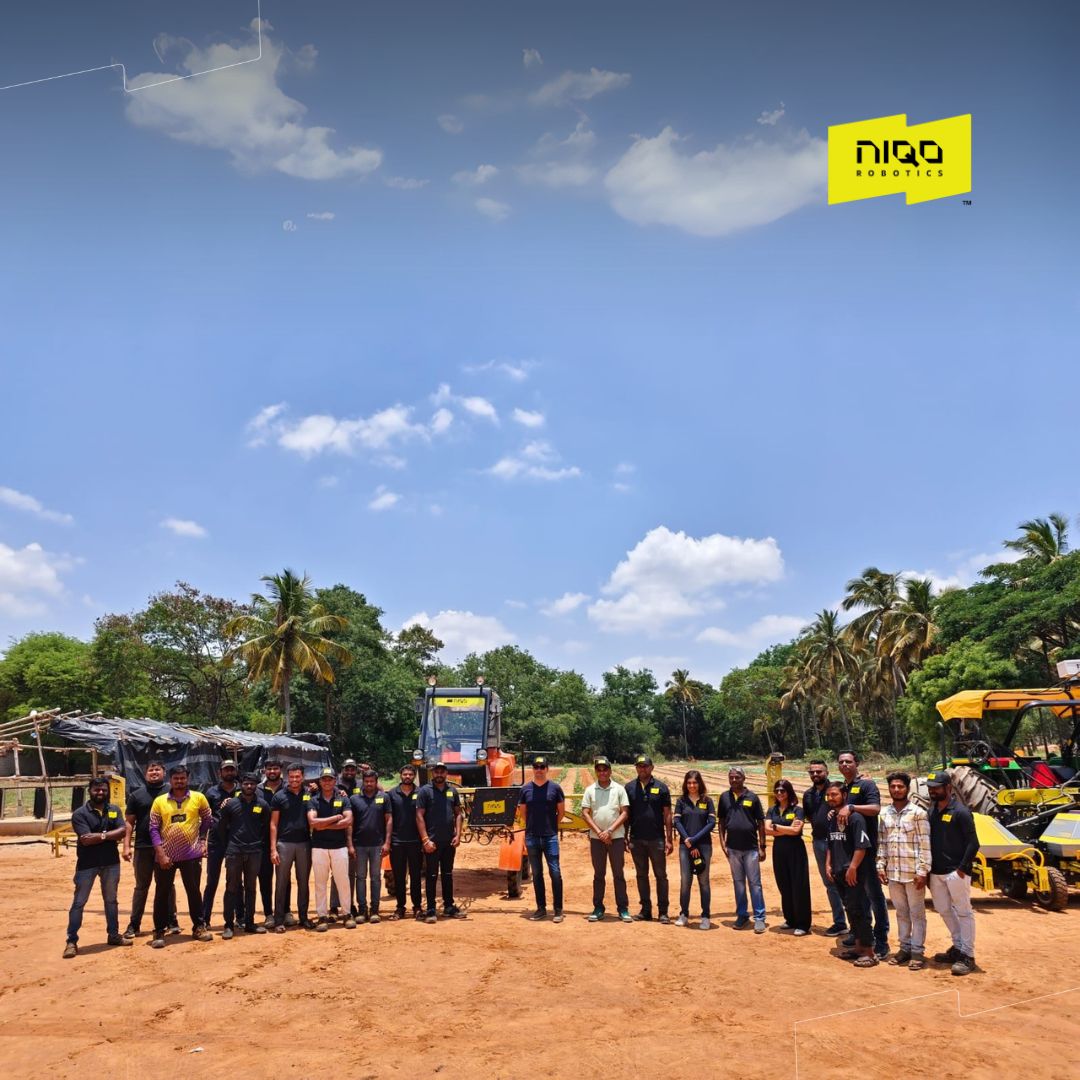
The following year’s demonstration brought him back to the physical product. Niqo thanked Cherkaoui and OCP’s Sujit Kumar Sarkar for attending on May 4, 2025, as it prepared for India’s Kharif season and commercialisation in North America. The photographs show a group gathered around yellow machinery on reddish ground. The scene has the welcome specificity that an investment thesis often lacks.
His comments about BigHaat, an Indian agricultural platform in Bidra’s portfolio, follow the same logic. What caught his attention was its ability to provide farmers with dependable access to inputs, with clearer information and a convenient way to buy. He also praised the company’s ability to connect brands and distributors directly to farmers while building its business with disciplined use of capital.
Robotic spraying and an agricultural marketplace are different products. They meet at the farm gate, where technology has to justify the money and effort spent on it. Cherkaoui’s public explanations repeatedly return to that practical relationship. A model can be clever; the farmer still needs a reason to use it.
Water refuses to stay in its own department
Water is another revealing part of his approach. In a 2025 discussion of water investment, Cherkaoui encouraged investors to “look beyond what you might think of as the water sector”. His point was that useful innovations can arrive from neighbouring fields, including mining, biotechnology and artificial intelligence.
“look beyond what you might think of as the water sector”
Yassine Cherkaoui · 2025
For a platform connected to OCP, the overlaps are concrete. Water production, industrial reuse, mineral recovery and energy consumption belong in the same operational conversation. Separating them neatly may make a presentation easier to follow. The equipment has no obligation to respect the presentation.
Bidra’s portfolio includes Aqua Membranes, which develops reverse osmosis membranes for desalination and industrial reuse, and Tidal Metals, which works on recovering magnesium from brine. One approaches water through filtration. The other looks at the material carried within it. Together, they illustrate why an investor might follow a technical problem across several industry labels.
The same portfolio reaches into battery materials through Mitra Chem and hydrogen production through Verdagy. These investments place Cherkaoui in conversations about the substances and processes beneath the energy transition. His remit gives him reason to look across industries, while the industrial connection supplies a demanding test: where might a technology actually fit?
The space between research and a purchase order
A research university and a mining and fertiliser group make an interesting pair of neighbours for a venture platform. One setting develops knowledge. The other operates at industrial scale. A startup between them must turn a technical possibility into something that can be made, bought and used.
Cherkaoui’s job sits in that space. The investment platform he leads can introduce founders to research and operational teams, but an introduction is only the beginning. Technical promise, a viable product and a workable commercial relationship are separate achievements. A useful corporate investor has to take each seriously.
There is a distinction here between studying a connection and having to make one work. The Columbia project analysed production networks across several economies. At Bidra, a connection can mean a founder meeting an operational team with a particular requirement. The scale is different, but the question is recognisable: what needs to move between the participants, and what might stop it getting there?
There is also a geographic dimension. Bidra is headquartered in the United States, has Moroccan institutional roots and invests globally. Its portfolio includes companies in India, Kenya, Nigeria and Indonesia as well as the United States. Cherkaoui’s career has already moved through international development, corporate strategy and investment; his current remit gives those connections a commercial purpose.
In June 2026, he was named to Global Corporate Venturing’s Powerlist of 100 corporate venturing professionals. Recognition supplies a convenient milestone. The more revealing image remains the tractor cab: a financier looking at machinery built by a company his firm has backed.
The photograph brings his working life down to scale. There is the capital mandate, the university, the industrial group and the global portfolio. Then there is a seat, a machine and a field. For Yassine Cherkaoui, that distance between the investment and the thing it is meant to do is where much of the work begins.