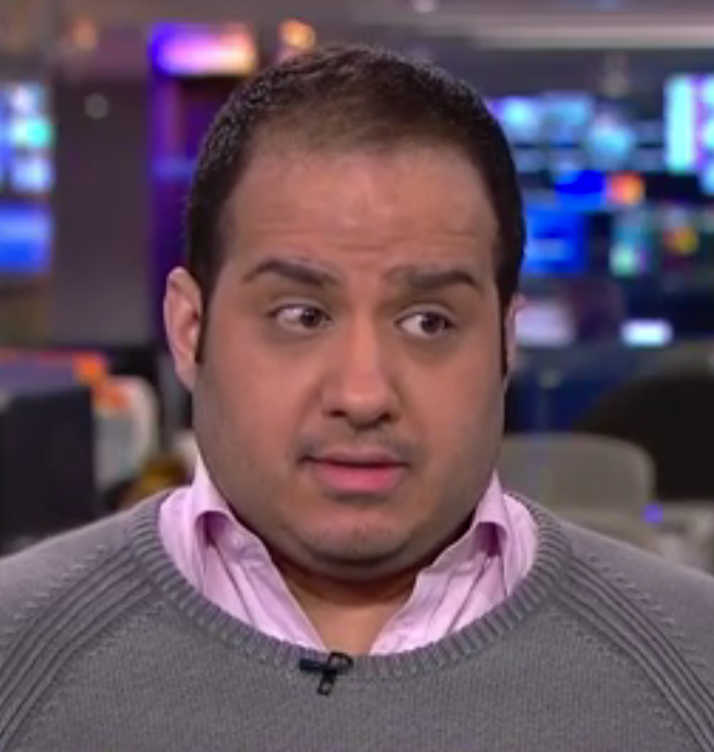
The Man Who Made @yashar One of the Scariest Handles in American Media
Iranian-American. Openly gay. Former political operative. One-time personal cook to Kathy Griffin. And now - somehow - one of the most feared investigative journalists in the country. The story of how Yashar Ali got here is the kind editors used to say couldn't happen.
Yashar Ali does not have a journalism degree. He did not intern at the Washington Post. He did not cut his teeth covering city council meetings in some mid-size American city. What he has, instead, is a Twitter handle that reads like a one-word threat to powerful people: @yashar.
In an era when media brands are crumbling and trust in journalism hits new lows every quarter, Ali built something unusual: a personal media empire with a devoted audience that actually reads what he publishes. His newsletter, The Reset, clears 61,000 subscribers. His Twitter account is the place where consequential stories land first, before any editor has touched them, before any PR team can spin them. The result is something between a newswire and a public service.
The career trajectory alone should not be possible. Born in Chicago to Iranian immigrant parents on November 23, 1979, he grew up in Oak Park, Illinois. He worked as a production assistant on the sets of ER and Chicago Hope. He was Kathy Griffin's personal cook. He became a political operative inside Hillary Clinton's 2008 presidential campaign, eventually rising to Deputy Chief of Staff in Gavin Newsom's California office. Then, in an act that most political staffers would consider career suicide, he walked away from a future in government and started tweeting breaking news.
It worked. Spectacularly. By 2019, Time magazine named him one of the most influential people on the internet.
Ali converted from Shia Islam to Roman Catholicism - an identity arc as unlikely as his journalism career. He is openly gay, candid about living with ADHD and depression, and posts about elephants with the same frequency as political bombshells. The elephants are not a brand exercise. They are just who he is.
The conventional wisdom about journalism says you need the right credentials, the right internships, the right masthead. Ali assembled none of these. He assembled something more useful: an intimate understanding of how power actually operates in American media, entertainment, and politics - gained by working inside all three before he ever filed a story.
As a TV production assistant in the late 1990s, he watched how television institutions protect themselves. As Kathy Griffin's cook and personal assistant, he observed celebrity media from the inside - a vantage point that is simultaneously mundane and illuminating. As a campaign operative who rose to Deputy Chief of Staff under Gavin Newsom, he learned how political institutions think about information control.
When he shifted to journalism, he brought all of that institutional literacy with him. He knew which sources to trust, which documents to request, which denials were genuine and which were stall tactics. He had been on the other side of the microphone. That changes how you ask questions.
His transition to Twitter-native journalism was not a strategic pivot. It was a recognition that the speed of social media matched the way breaking news actually works - chaotically, with new information arriving faster than any print deadline could accommodate. He posted first, asked the institutional questions in parallel, and let accuracy be the filter rather than the gatekeeper.
Ali has a habit of breaking stories that powerful people do not want broken. Here is the scorecard.
The public figure and the private person are unusually consistent in Ali's case. He talks openly about ADHD. He talks openly about depression. He is candid about the financial and legal pressures of independent journalism in a way that most journalists, trained in institutional reticence, are not.
During the COVID-19 pandemic, when followers mentioned financial hardship in his replies, he quietly Venmo'd them money. It was not a publicity stunt - it was something he did and then people talked about. This is a particular kind of trust-building that no newsletter growth strategy manual covers.
His religious conversion from Shia Islam to Roman Catholicism is another data point in a life defined by non-linear movement. He does not fit the category he was born into, professionally or personally. That pattern extends to the reporting: he does not cover the stories that journalism schools send everyone toward. He covers the stories that institutions would prefer stayed dark.
The controversies are real. A Los Angeles Magazine profile in 2021 raised questions about financial conflicts and journalistic practices. He sued the magazine for defamation in 2022 - and lost in 2025, with a judge ordering him to pay approximately $43,525 in defendant fees. Ariadne Getty sued him for $179,000 in unpaid loans. These are not small things. Ali discusses them publicly rather than hiding them, which is either admirable transparency or good instinct about what happens when you try to suppress unflattering information in the age of Twitter.
He grew up in Oak Park, Illinois, the son of Iranian immigrants. His full surname - Hedayat - is a reminder of roots he carries even as he has moved far from them in almost every other sense.
Ali's trajectory is a wager on independent media at exactly the moment when independent media is under the most pressure. The newsletter model works if the journalism is good enough to sustain subscriber loyalty. The Reset, at 61,000+ subscribers, suggests the bet is paying off.
The aspiration is not complicated. It is to continue doing accountability journalism on powerful institutions - media, politics, entertainment, organized religion - without the constraints that come with working for one of those institutions. No editor with advertiser relationships to protect. No corporate owner with competing interests. No institutional culture that makes certain stories too risky to pursue.
He broke international news in 2026 via The Reset. He published a story about CBS executives allegedly suppressing a 60 Minutes segment in 2025. The subjects of investigation keep getting larger. The platform keeps growing. The model keeps working.
The people who didn't expect a former Kathy Griffin cook to end up as one of America's more influential journalists probably didn't expect a lot of things about Yashar Ali. That's rather the point.