A research paper can be public, searchable and still feel locked. Its door is made of abbreviations, equations, omissions and the quiet assumption that the reader knows what happened in the previous hundred papers. Yannic Kilcher made a habit of opening those doors. He would pick up a machine learning paper, work through it, and explain it on YouTube. At first, he says, almost nobody watched. That suited the original purpose well enough: making a video forced him to read closely.
The habit grew into a channel about research papers, programming, machine learning news and the claims people make about AI. It also became an unusual companion to his formal work. Kilcher earned a doctorate at ETH Zürich, helped organize the volunteer project OpenAssistant, and co-founded DeepJudge, a company that helps legal teams find knowledge buried in their own documents. Each setting has its own stakes. All three ask a deceptively plain question: can useful information reach the person who needs it?
A route chosen one interesting class at a time
Kilcher grew up in northwestern Switzerland, in a family he described as far from academic or technical. Computers interested him as a child, but he has resisted presenting his entry into AI as a grand childhood plan. Computer science studies at the University of Basel put him in a pattern recognition class. At ETH Zürich, where he moved for a master’s degree, his choices began to cluster around computer vision, probabilistic models and data mining. He told interviewer Ken Jee that he had not set out to build a machine learning curriculum; the classes simply kept sounding interesting.
The dates tell the formal version: a computer science bachelor’s degree in Basel from 2010 to 2013, a master’s at ETH from 2013 to 2015, and doctoral work there from 2015 to 2021. The informal version is more useful. He followed questions that caught his attention until the questions became a field. His doctoral dissertation, Navigating the Latent Spaces of Deep Neural Networks using Adversarial Techniques, sits among research on neural network robustness, generative models and the ways learned systems represent information.
His first research projects ranged from optimization to generative models. On his personal site, the publication list includes work on adversarial examples and on the latent spaces of neural networks, as well as a study of identifying bird species from audio. The titles can sound remote from a person opening a legal file. Their shared concern is how a system represents evidence and how confidently someone should read the result. That concern would keep finding new places to land.
During the PhD, Kilcher spent two six-month internships at Google. Later, his work at Google AI Language gave him experience with large-scale machine learning systems. Those credentials could have supported a conventional research biography. His public work followed a less tidy path: a doctoral researcher turning the obligation to keep reading into a recording schedule.
The space between a tutorial and a conference talk
Kilcher dates his first paper videos to around 2017. They were simple: his voice, a paper on screen, and an explanation. He noticed a gap. Beginners could find introductions, and specialists could watch conference presentations, but someone moving from coursework toward current research needed a guide willing to spend time on the middle steps. He wanted the videos to do that work. The channel’s format stayed close to the material; a paper is treated as an argument to inspect, with the method and limitations along for the ride.
That approach requires a little friction. A paper can arrive decorated with impressive benchmark results and still leave hard questions about data, comparisons and the limits of a claim. Kilcher has argued that researchers and practitioners need to test what they read for themselves, particularly in a field where preprints travel quickly. He distinguishes research, which may spend years on a narrow question, from applied machine learning, where cleaning and organizing data can deliver the more immediate gain. The most fashionable model is a poor substitute for understanding what went into it.
“I just uploaded these videos because I thought ... it forces me to read the papers.”Yannic Kilcher, on the channel’s early years
There is comedy in the camera persona. When Kilcher began appearing on screen, he wore sunglasses because he worried about providing hours of face footage for early deepfake tools. The technology soon advanced enough, he said, that a few images might be sufficient anyway. The glasses stayed because viewers knew him by them. One mirrored pair made his screen visible in the lenses, which proved distracting; dark lenses worked better. He joked that the price of branding was having to code in sunglasses.
The channel also brought researchers into conversation with their readers. Kilcher began inviting paper authors for interviews, then found a problem with his own sequence. If he met an author first, he became less willing to criticize the work in a later review. He changed the order: review the paper, then bring on the authors and let them answer. It is a small editorial rule, shaped by the social awkwardness of asking tough questions of pleasant people. It also makes the critical part visible before anyone can smooth it over.
An experiment with a public consequence
In 2022, Kilcher trained a language model on posts from 4chan’s /pol/ forum, a place known for racist and other abusive material, and used a bot to post generated messages there. He called the model GPT-4chan and released code and model access. The project brought criticism for putting such text into a public forum and making the model available. In a discussion on Hugging Face, where the model was hosted, Kilcher questioned what distinct harm its availability caused. Hugging Face’s chief executive said the company did not support the posting experiment and called it inappropriate. The platform then introduced gated access for the model. The episode remains part of Kilcher’s record, and a pointed example of how an experiment can leave the lab before everyone agrees on its boundaries.
What a volunteer audience can make
When ChatGPT appeared, researchers outside the largest companies faced a familiar problem with a new urgency. Building a useful conversational model required human-written examples and judgments about responses. That data was difficult to gather and often held privately. OpenAssistant began in late 2022 as a collaboration among Yannic Kilcher, Andreas Köpf, Christoph Schuhmann, Huu Nguyen and their communities. Kilcher’s Discord and the LAION network supplied something a lab budget could not buy quickly: people willing to take part.
Thousands wrote and rated conversations. The resulting OpenAssistant Conversations paper reported 161,443 messages in 35 languages, 461,292 quality ratings and more than 10,000 fully annotated conversation trees. More than 13,500 volunteers contributed. A tree matters here because a conversation can fork: one prompt may lead to several candidate answers and several judgments. What looks like one chat window from the outside becomes a map of human preferences.
The dataset did not appear because a model generated a neat list of examples. Volunteers had to write turns of conversation and evaluate alternative replies. They had to decide which answers were helpful and which missed the point. This made the work slow and social in a way a demo rarely shows. Kilcher, accustomed to explaining AI as something people build and test, was now helping coordinate exactly that process at scale.
OpenAssistant later ended its active run. Kilcher and collaborators left the conversations, code and research record available. A running assistant was one outcome; a reusable collection of human work was another. The latter can travel farther than the original website. Kilcher’s YouTube audience had spent years learning alongside him. Here, some of that public interest became labor that other researchers could inspect and use.
From the paper pile to the firm archive
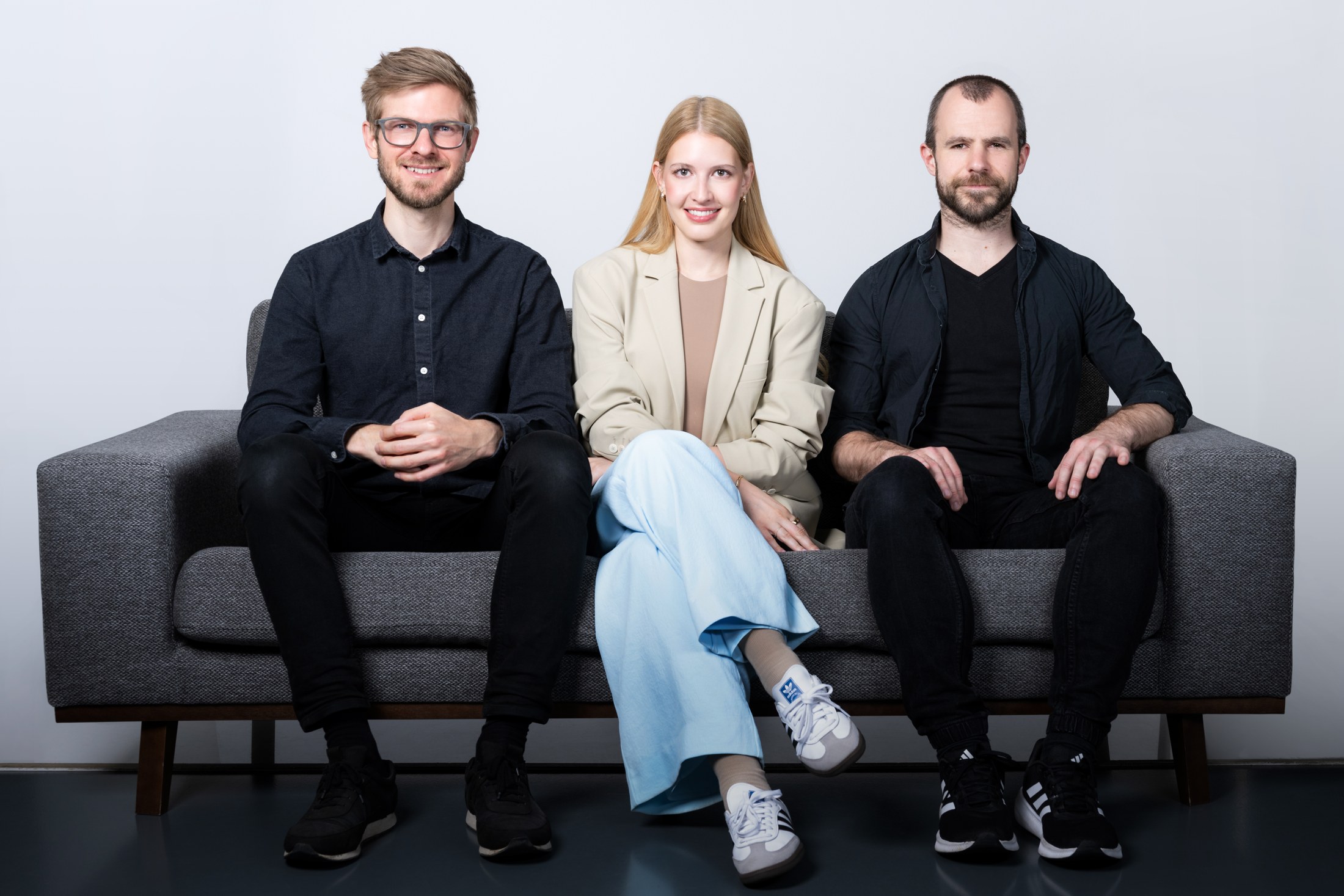
DeepJudge began in 2021 with Kilcher and fellow ETH researchers Paulina Grnarova and Kevin Roth. Grnarova is CEO; Kilcher is CTO and leads product and technical development. Their chosen problem has little of the theatrical appeal of a chatbot demo. Legal organizations produce contracts, correspondence, prior work and internal records, much of it spread across systems. A useful answer may already exist somewhere in that accumulation. Someone still has to find it, understand its context and have the right permission to see it.
Kilcher has said that the people inside law firms are often more open to new tools than the organizations’ structures might suggest. He argues that technology should help them do more substantive work. That is an aspiration with an engineering burden attached. Search has to retrieve relevant material; synthesis has to keep its bearings; access rules have to travel with the data. A system that gives everyone everything would fail the very people it was meant to assist.
His view of the problem fits the practitioner’s lesson he described years earlier: better data and better access to it often matter more than novelty for its own sake. DeepJudge combines search and AI tools around a firm’s existing knowledge. Kilcher’s public explanations now include the nuts and bolts of legal AI: how retrieval works, what an agent can do, and why context matters. The audience has changed, but the instinct to show the mechanism remains.
The useful question after the announcement
In February 2026, Kilcher explained DeepJudge’s connection to Claude Cowork. He described a flow in which Claude can call DeepJudge, DeepJudge searches a firm’s material with permissions in place, and the result returns for further work. In his telling, the connection protocol is a way for software to talk. It does not confer new intelligence by itself. The useful part comes from the capabilities on either end and the care taken when they meet.
That plain explanation is a good way to understand his wider career. He has worked with neural networks in a doctoral lab, built a public room for reading new research, helped volunteers assemble an open dataset, and tried to make legal knowledge usable inside organizations. The scale changes. The test does not: what information is available, what did the system actually do with it, and what can a person check?
Kilcher once described his route into AI as a slow progression rather than a strategic arrival. It seems a fitting account for a career made of close reading. His work begins with what is in front of him, whether a paper on a screen or a document lost in an archive. The next move is to make the path through it visible. For an industry fond of announcing destinations, that is a useful contribution.