The exam seemed final. Niki Parmar had hoped to enter one of India’s Indian Institutes of Technology and had missed the mark. In a later interview, she recalled thinking her life was over, then laughed at the memory. She chose the Pune Institute of Computer Technology and began making side projects. A single admission decision had felt like the whole story. It turned out to be an early chapter.
The next chapter began with a class that did not require an admissions office. While studying engineering, Parmar took early online courses in artificial intelligence and machine learning. She was drawn to the way data, patterns and optimization could work together. By 2013 she had gone to the University of Southern California for a master’s degree, where work in a computational social science lab let her use those ideas on questions about human behavior. There was a route into research after all, though it looked nothing like the one she had first imagined.
The side door into a new field
Parmar grew up in Pune with parents who encouraged her education. She has spoken about her father taking on debt to help make it possible. The practical stakes were plain when she moved to the United States. The financial arrangements for graduate school became uncertain soon after she arrived, and relatives helped bridge the gap. A professor later supported her studies, and an internship helped her repay loans. Those details give her early career a texture absent from the familiar phrase “self-taught.” She learned from classes and colleagues, but also from a family willing to carry the risk with her.
At USC, she worked with Morteza Dehghani’s computational social science group. After graduating, she joined Google in 2015 and worked on problems for Search, including how to judge when two text queries mean similar things. The work was applied, measured against actual needs, and close to products. It also put her among researchers testing new ways to make machines understand language. In her telling, the step from engineering toward research was gradual. Each project made the next question harder and more interesting.
At Google, a manager offered her a project on sequence-to-sequence models for translation. She took it. The team was looking for a way to handle language without relying on the sequential machinery that had dominated the field. Their 2017 paper, “Attention Is All You Need,” described the Transformer, an architecture built around attention mechanisms. In the paper’s experiments, it improved machine translation results while allowing more parallel computation. Parmar was one of eight authors, a fact that matters: the work was collaborative, tested, revised and argued over by a team.
The paper’s title sounds like a slogan, but its argument was technical. A sentence contains relationships between words far apart from one another. The Transformer gave the model a way to weigh those relationships directly. It opened up a different path for training and scaling language systems. Later models took that path much further. Parmar herself has said the authors knew they had found something interesting but did not immediately foresee the speed with which the idea would spread into products people could use.
“Every detail, every question, every choice seems relevant.”Niki Parmar on the daily work of research
That sentence explains more than a stack of citations. In a 2020 interview, she described a team beginning with a research question, forming a hypothesis and discussing incoming results every day. She also remembered feeling overwhelmed by the volume of work in machine learning when she started. Her solution was to focus on a specific problem with peers, and to learn from mentors who could help make connections. It is a modest account of scientific work: a lot of conversation, many tiny decisions, and no guarantee that a famous paper will follow.
Attention moves beyond words
The 2017 result was followed by a question that suited her curiosity: where else could attention work? In 2018 Parmar led “Image Transformer,” a paper applying self-attention to image generation. She later worked on attention in vision models and spoke publicly about generative models, perception and self-supervised learning. This matters because it keeps her story from narrowing to one landmark. She did not simply lend her name to a celebrated architecture. She kept testing its edges.
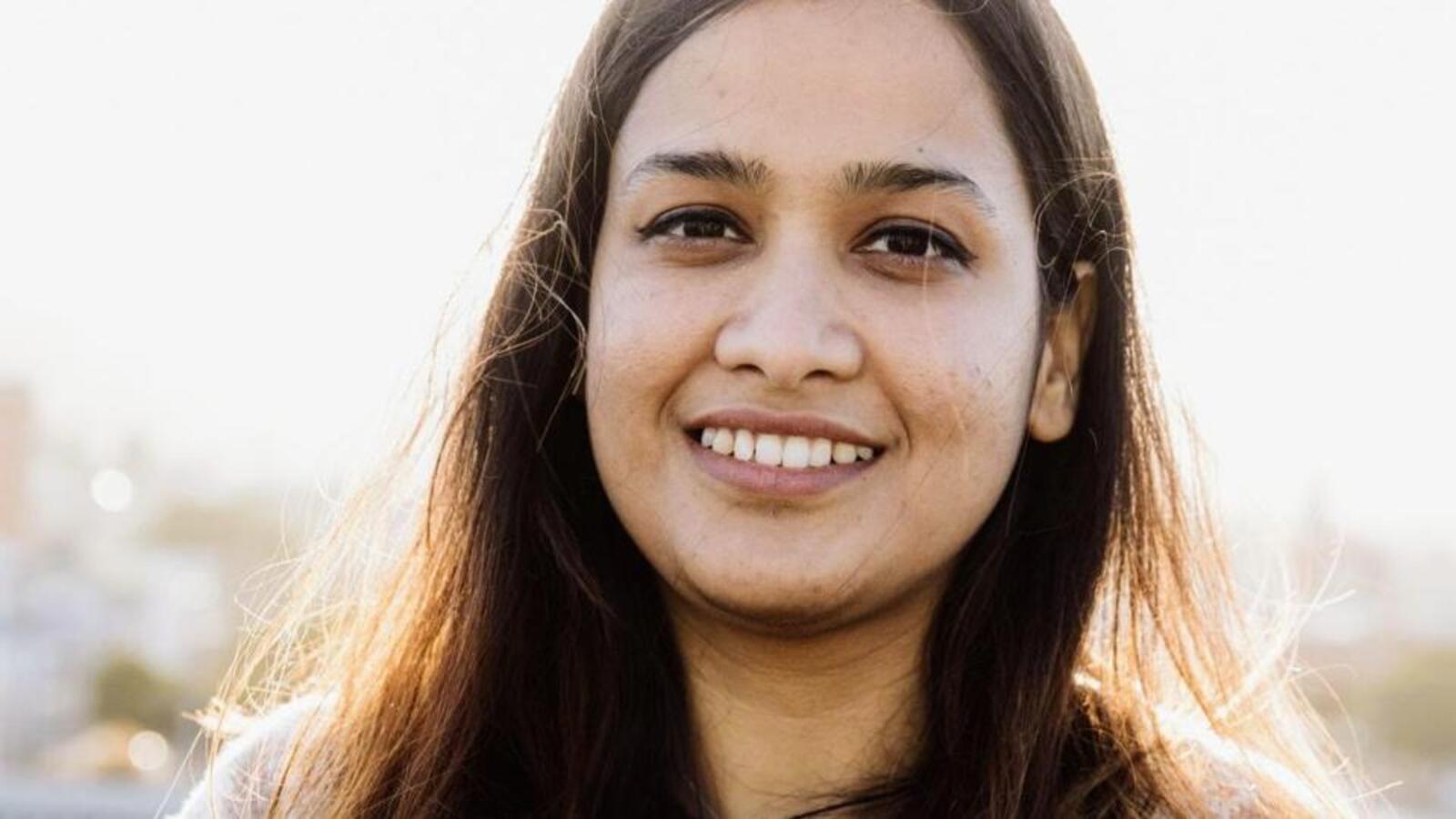
In 2024, the NEC C&C Foundation honored the eight Transformer authors as a team. The recognition arrived years after the original research, when the wider consequences of the architecture were easier to see. By then Parmar had also crossed from a research lab into company building. The question had changed again. A model might be powerful on a benchmark; could it also help a person do work inside the software they already use?
From the paper to the workday
Adept AI Labs grew from that practical question. Parmar left Google and co-founded the company with a team that included David Luan and fellow Transformer author Ashish Vaswani. In its public introduction, Adept described a universal AI collaborator that could work alongside knowledge workers. Parmar’s own launch note stressed humans and computers working together. It was a shift of setting as much as ambition: from papers and benchmarks to browsers, tools, tasks and users.
The idea sounded simple when reduced to a sentence. The underlying job was not. A useful assistant has to understand an instruction, locate the right part of a changing interface, and take a series of actions in the right order. A polished demo can make those steps look inevitable. Building a product that does them reliably is a different business. Parmar later reflected that Adept may have been early on the product side, when capabilities had not matured enough. That is a founder’s assessment, not a retreat from the original question.
She then started Essential AI with Vaswani. The two already shared the Transformer paper and years of research history; this time their company aimed to build AI products for enterprise work. In December 2023, Essential AI announced a $56.5 million Series A financing. It was a significant business moment, yet Parmar remembered the day after the funding for something smaller: the team opened their laptops and went back to work. The ceremonial champagne, it seems, lost to the backlog.
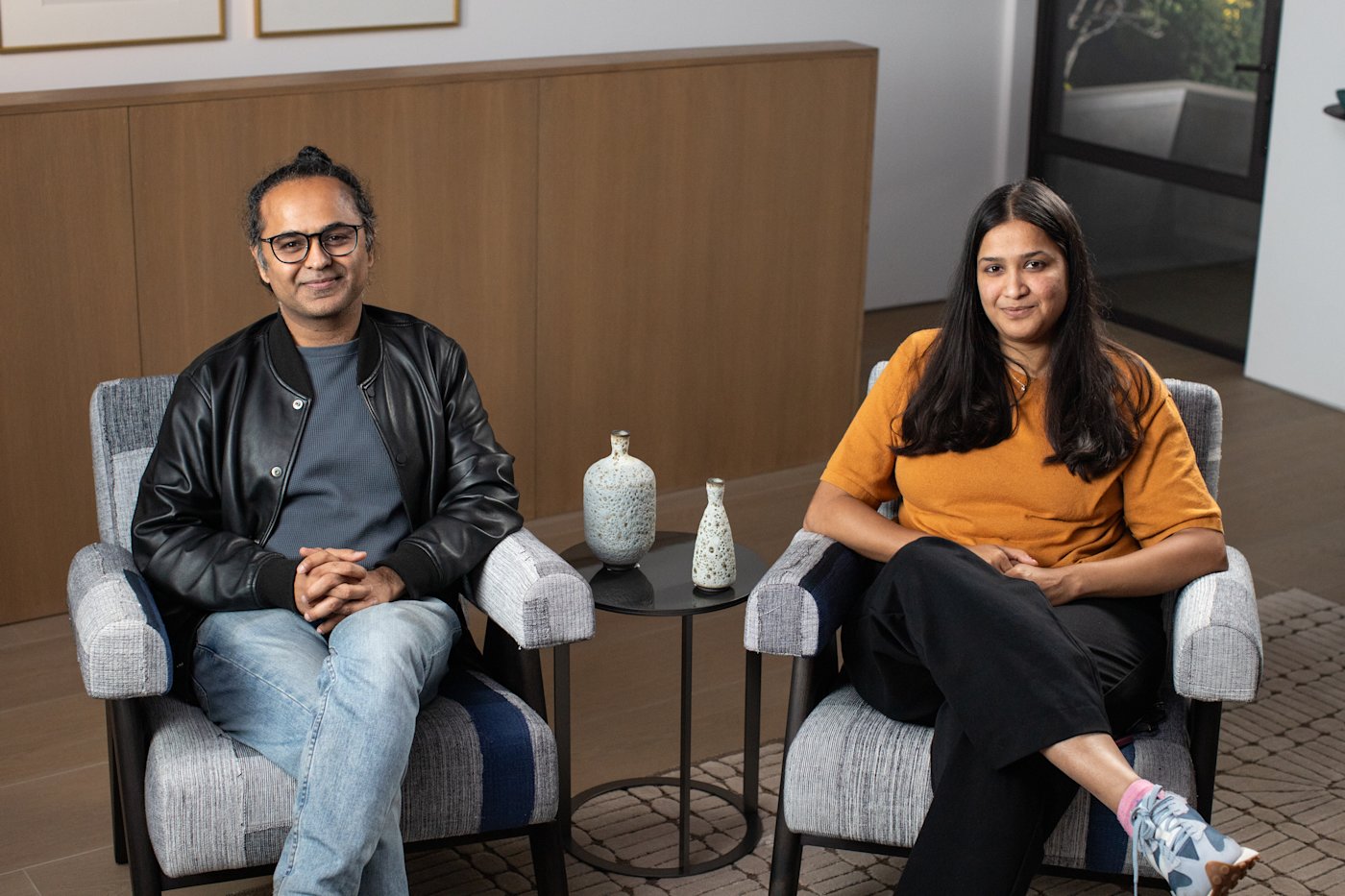
Company building also introduced a kind of difficulty a research paper cannot model. Employees need direction. Investors need a credible path. Users need a product that saves them time now, rather than an elegant result some day. Parmar has described the pressure of projecting clarity while still working through uncertainties. She has also said that leading a company gave her more confidence in her own capabilities. Those statements can live together. A person can find the work taxing and still be enlarged by it.
The decision to return
By late 2024, Parmar had moved to Anthropic as a member of technical staff. In a 2025 interview, she said the decision came from her own priorities and preferences: she wanted to return to research. She was working on post-training, the work that shapes a model after its initial large-scale training. She also described a field in which research and engineering increasingly overlap, with experiments, systems and product implications all moving on shorter cycles.
Her comments in that interview avoided the tidy language of a victory lap. She discussed how difficult it had become to find high-quality data for complex reasoning. Asked about more efficient model building, she acknowledged the value of doing the work faster and cheaper, without treating any one result as the end of the story. That is consistent with the researcher who, years earlier, said she did not try to read every new paper. She looked for work that endured and for questions deep enough to merit her own attention.
There is a geographical question in her life, too. In a 2024 conversation, she said the Bay Area gave her intellectual energy, while much of her family remained in India. She spoke of wanting, at some point, to contribute to India’s growth and widen learning opportunities, especially for girls. Those are aspirations she stated herself, not a neat plan with a date attached. They connect the child who found an opening through online courses with the scientist who understands how much an opening can change.
Parmar has also resisted being turned into a symbol at the expense of her work. She was the youngest and only woman among the Transformer paper’s eight authors, according to a 2024 profile, and she has spoken about the additional energy required to navigate gender expectations. Her preference was clear: she wanted to solve problems and build the product. It is a fair request of anyone reading her story. The facts of representation matter; so do the actual ideas, code, experiments and decisions.
Her career has now passed through three kinds of institution: a university lab, a large research organization and startups she helped create. Each has a different pace and different obligations. Yet the through-line is unusually easy to hear. Find a question that matters. Work with people who sharpen it. Follow what the experiment tells you, even if the next role surprises everyone who prefers a straight-line résumé. That first exam in Pune closed one door. It did not get the last word.
Explore further