Consider the graduating student with two tabs open. In one, a job offer. In the other, a half-built company. The first has a salary, a start date and something reassuring to tell the family. The second has possibility. Xfund has built part of its business around the distance between those tabs. A concrete investment commitment can make the second option easier to take seriously. That is a surprisingly practical mission for a venture firm whose public language includes poets, physicists and the virtues of wandering across intellectual borders.
- The bet: founders with technical skill and interests across disciplines.
- The offer: early capital, introductions and access to an academic advisory network.
- The route in: an open pitch application, plus selective competitions and a campus fellowship.
A university is already full of introductions
Xfund’s beginnings belong to the Experiment Fund, rooted at Harvard in 2011 and operating publicly in 2012. The later Xfund was co-founded in 2014 by Patrick Chung and Hugo Van Vuuren. Keeping those dates separate helps explain the enterprise: a campus experiment became a larger investment business.
The original problem was mundane. Universities put bright people beside one another, but the person with a useful invention does not automatically meet the person who can help build a company around it. The Experiment Fund tried to arrange those encounters. Early backing went to Tivli, the television startup later known as Philo, healthcare incubator Rock Health and apartment marketplace Zumper.
The ambition came with a filter. Harvard’s account of the first operating year records more than 1,500 proposals and support for three startups. Campus proximity could generate a crowded inbox. Choosing what deserved a check was a separate job.
The second subject on your résumé
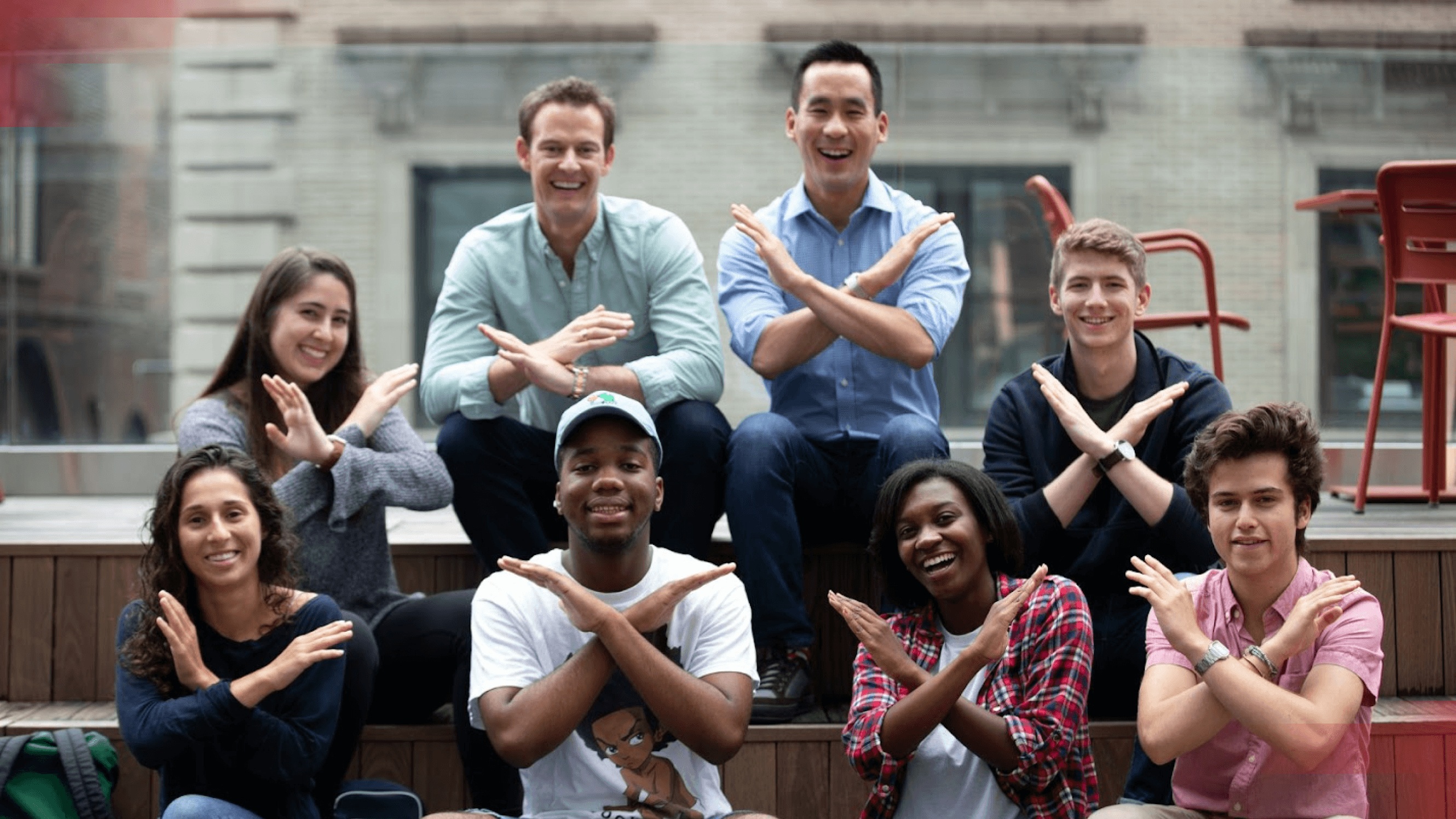
“You can be a poet and a physicist,” says Xfund’s About page. It is an unusually specific invitation. The firm wants technical competence alongside the ability to see beyond a technical specialty. A clever system still needs someone to understand who would use it, what they value and why they might change their habits.
Its current portfolio page ranges from AeroVect’s autonomous airport ground equipment to BoldVoice’s pronunciation app and Curebase’s clinical trial software. Those products inhabit different markets. Their variety illustrates why Xfund describes its preferred founder through a way of thinking rather than a single industry.
The people assessing that thinking bring different experience too. Chung previously led consumer and seed investing at NEA. General partner Brandon Farwell’s background includes DFJ and interests in enterprise AI, robotics and space. Their biographies include investments made before Xfund. A founder evaluating the firm should read that history as individual experience, rather than assign every familiar company name to one fund.
“You can be a poet and a physicist.”
Xfund’s invitation to founders
Put an offer beside the idea
Xperiment Stake makes the thesis tangible. Its first announced recipients in 2023 included Ream, a subscription platform for authors, and YouShift, which tackles hospital scheduling. Chung described giving selected teams signed term sheets that could sit beside employment offers. The mechanism matters: encouragement becomes a decision someone can actually make.
The following year brought a generative AI edition. On May 1, 2024, six finalist teams pitched to Sam Altman after 270 submissions. The competition offered a minimum $100,000 investment. A Harvard Business School case published in March 2025 examines that selection problem: how do you judge founders when the technology underneath their companies keeps moving?
In March 2025, Xfund advertised another $100,000 competition, this time with Perplexity CEO Aravind Srinivas and Perplexity Fund among the collaborators. Eligibility and terms belong to each edition. These are selected investment opportunities; a pitch competition is no promise that everyone who applies receives capital.
The money has two sides
Xfund’s current pitch page says it invests from its $120 million third fund, focused on pre-seed and seed companies. That number describes a pool of investment capital. It is not the management company’s revenue, its valuation or a financing round raised by a startup called Xfund.
The business is commercial. Private investors supply fund capital; startups receive financing intended to produce investment returns. A September 2026 filing for an Xfund special-purpose vehicle explicitly provides for a management fee. Founders bring an ownership bargain to this relationship, with terms negotiated in their investment documents.
In the funding market, founders can also approach angels, seed firms, university-linked investors and accelerators. Xfund’s distinctive proposition is the combination of early financing, academic connections and an explicit appetite for multidisciplinary founders. Its current site welcomes self-taught applicants as well as people inside universities.
The relationship problem came home
A firm built around connections also experienced a breakdown between its own founders. Chung and Van Vuuren’s partnership fractured, prompting litigation and disruption. Reporting describes disagreements over control and direction as the business expanded. The episode complicates the charming campus origin story: shared credentials cannot settle a dispute over who gets to decide.
By 2017, Farwell had joined Chung. For anyone copying the model, the useful lesson is organizational: agree on decision rights and ambitions while the partnership still works.
Bring the other thing. Bring the work.
The 2026 fellowship application offers two paths. Analysts help develop investment theses, find startups and examine deals. Builders pursue their own startup ideas or projects. Faculty advisers listed by the firm include people connected to Harvard, MIT, Berkeley, Oxford and Cambridge. The network extends beyond a single campus.
For a founder, the immediate route is straightforward: submit the company description through Xfund’s pitch page; add a deck or one-minute video if useful. Explain the problem in ordinary language. Then show what you have done to understand it.
Our reading of the model is that it fits founders pursuing companies capable of venture-scale growth, with enough substance to interest an investor. A small business designed to stay small may need a different kind of capital. Intellectual range earns attention here; customers still need a reason to care. The copyable idea is to connect disciplines around a specific problem, then build something that tests whether the connection matters.