A sleeping patient is an awkward customer for a technology company. They cannot tap a screen, adjust a strap or remember tomorrow’s measurement. Xandar Kardian has arranged its product around that inconvenience. Its radar sensor stays in the room, reading the small movements associated with breathing and the heartbeat. The person being measured can get on with the rather important business of being asleep.
- The prescription XK300 family measures adult heart and breathing rates without a wearable.
- Personal-baseline analysis helps care teams see changes worth investigating.
- Kardian Somily takes the technology into consumer wellness, with different claims.
The wall has a bedside manner
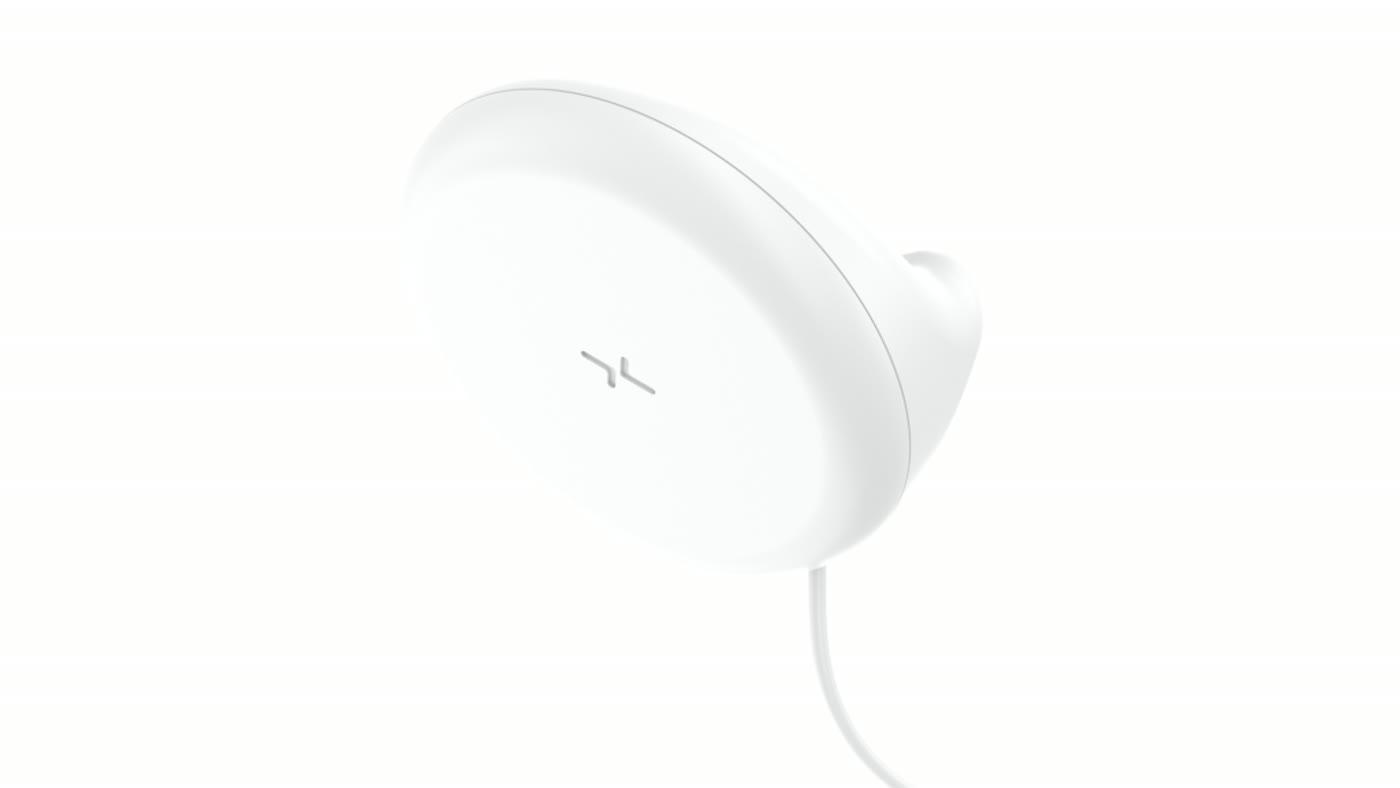
The device sends ultra-wideband radio pulses and analyzes their echoes. A chest moves with each breath; finer movements accompany the heartbeat. Signal processing separates useful patterns from the returning information. Bedding and clothing need not prevent the measurement. There is no lens, no microphone and no battery for the patient to remember to charge.
That last detail is the commercial proposition hiding inside the physics. A wearable makes cooperation part of the measurement system. A wall sensor removes several opportunities to forget. It still needs correct placement, power and a route for its data, but those become installation and service problems rather than recurring patient chores.
A room before a ward
The research began at Hanyang University in Seoul in 2012. Xandar Kardian was founded in 2017; its history records early commercial occupancy deployments in a Singapore serviced residence the following year. Before asking what a person’s breathing meant, the technology could answer a simpler question: was somebody there?
A motion detector has an obvious weakness in a room occupied by someone sitting still. Breathing offers another signal of presence. The same engineering can inform lighting and ventilation, or measure resting vital signs. Healthcare and building automation sound like odd housemates until one notices the chest doing useful work for both.
Co-founder and CEO Sam Yang leads the business. Current leadership materials name Glen Choi as CTO, with core engineering in Seoul and commercial and operational teams in North America. The expertise sits in radar signal processing, firmware and deployed medical hardware. An appealing plastic enclosure is merely where that work ends up.
Normal has a personal address
A vital sign becomes more informative when it has a history. The company’s baseline-change score compares recent resting measurements with the individual’s previous readings. A change can prompt an assessment even when a population reference range offers little drama. The company puts its philosophy plainly: “Normal is personal.”
“Normal is personal.”Xandar Kardian
The intriguing number is 75.6%. In a retrospective analysis reviewed by the Validation Institute, baseline-change scores identified that proportion of hospital transfers among 201 monitored patients who were transferred. The analysis examined the preceding seven days and included a comparison group of 2,525 monitored people without transfers.
201 transferred patients. A historical finding, not a guarantee or a demonstrated reduction in admissions.
That distinction matters. Seeing a pattern before a transfer does not establish that acting on it prevents the transfer. The FDA cleared XK300 in April 2021 for specified adult monitoring uses, including general care, nursing homes and home-health data collection. The clearance is not permission to diagnose diseases or replace an emergency response.
A sensor needs a way into the chart
Customers include hospitals, senior-care facilities and remote-monitoring providers. Correctional and behavioural-health settings create another use case: measurement without attaching equipment to the person. Across these settings, collecting a number is only the first part of a service. Somebody must receive it, understand it and decide what to do.
The March 2026 partnership with Tenovi and CCN Health addresses that journey. The Bluetooth-enabled XK300 Essence sends data through Tenovi’s cellular gateway into CCN’s clinical platform. The announced integration includes alerts and electronic-health-record connections. It gives the sensor a route into work that clinicians already perform.
Distribution also means local work. Under the August 2025 Iris IoT partnership, the UK partner handles implementation, support and integration. The company can sell its sensing expertise while partners supply the relationships and operational machinery needed to make installations useful.
Two doors into the bedroom
The business now offers two distinct routes. Providers supply prescription XK300 devices and monitoring services. Individuals can buy Kardian Somily, a separate general wellness product listed at US$299 in October 2026. The consumer site includes two years of its Max membership. Sharing radar technology does not give Somily the medical device’s clearance.
Enterprise economics involve hardware, installation, connectivity and clinical services. Eligible remote-monitoring arrangements may be reimbursable, subject to payer rules and documentation. A reimbursement amount is neither a retail price nor automatic profit. Buyers need to cost the entire service, including the human time spent reviewing what the sensor supplies.
The company announced a US$10 million Series A in December 2021, backed by Phoenix Venture Partners, Portfolia and Taronga Ventures, among others. Its competitive field has grown: FDA filings for Neteera and Circadia cite XK300 as a predicate device. The comparison now involves integrations and operating fit as well as contactless measurement.
The useful thing to steal
Product builders can borrow a concrete question: which repeated customer task must happen before this service works? Xandar Kardian moves wearing, charging and taking readings out of the patient’s routine. It makes convenience a property of the measurement system.
There are limits. Tenovi’s documentation says the baseline score may remain unchanged with insufficient samples, fewer than seven days of history or very sudden events. Usable resting measurements require stillness. Connectivity must hold; a care team must respond. The wall can take measurements. The bedside manner still belongs to a person.