A chief executive can ask a direct report for an opinion, a board for approval, a consultant for a recommendation and a spouse for patience. None is quite the same as asking another chief executive, privately, “Have you seen this movie before?” World 50 Group exists for that question. The Atlanta company convenes invitation-only communities for CEOs, directors and senior functional leaders, then surrounds the conversation with events, research, leadership development, innovation programs and a members-only app.
Calling it management consulting is technically defensible and practically incomplete. Traditional consultants arrive with a team, a scope and a deliverable. World 50 arranges access to people carrying comparable responsibility. The useful output might be a warning, a name, a benchmark, a dissenting view or the reassurance that an apparently unique problem has already been survived elsewhere.
The shrinking circle at the top
The premise emerged before “community” became a software category. Richard “Rick” Smith had moved from consulting into executive search and was researching the patterns behind successful careers. In interviews, senior leaders kept describing the same odd loss: as their authority expanded, their circle of trusted equals contracted. Their teams expected answers. Their bosses expected performance. Candor carried organizational consequences.
Smith launched World 50 in 2004, beginning with senior marketing executives. An early profile captured the challenge with a phrase almost too neat for the business: this was a group for people who had no time for groups. The rules did much of the positioning. Members could not dispatch a surrogate. Vendors could not turn the meeting into prospecting. The person invited was the person expected to participate.
World 50 sells a scarce executive luxury: uncertainty without an audience.
That matters because most professional networks drift toward performance. Public posts reward polish. Conferences reward visibility. Internal meetings reward alignment, or at least the appearance of it. A useful peer forum has to reward the unfinished thought. World 50's claim is that selection, facilitation and confidentiality can create enough safety for a leader to expose a live problem before it becomes a public result.
What members actually buy
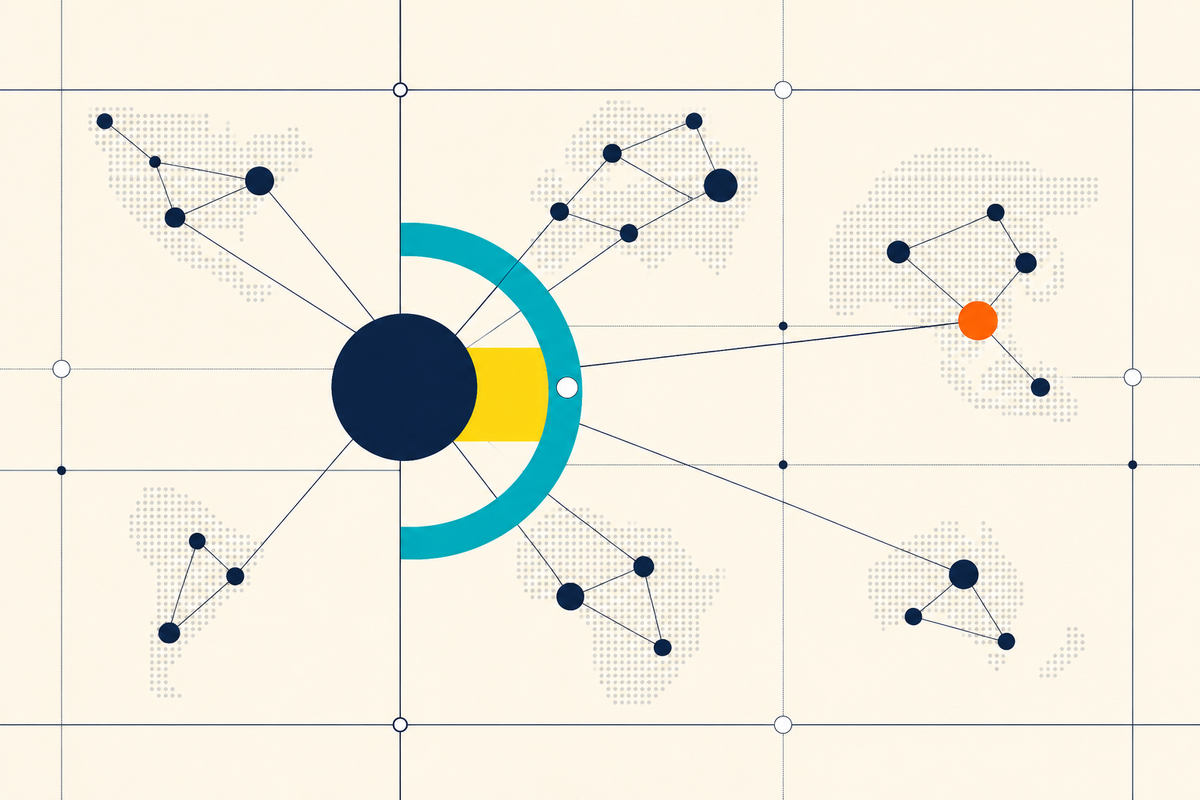
The core product is recurring access to a relevant peer set. Communities are organized around leadership level, function and problem domain: board directors with board directors, chief financial officers with financial officers, marketing leaders with marketing leaders. That density changes the conversation. A CFO considering a major systems migration does not need generic encouragement; she needs someone who remembers the budget overrun, the adoption fight and the question the audit committee asked six months later.
Comparable seniority and responsibility make each introduction more likely to matter.
Private exchange gives unresolved questions somewhere to exist before a decision.
Recurring membership lets relationships compound beyond a single conference encounter.
Research, polls, gatherings and facilitation turn anecdotes into usable perspective.
Around that center sits a broader product stack. Members attend private gatherings and roundtables, ask the network questions, poll peers, direct-message one another and read membership insights. Leadership accelerators serve executives and future leaders. Life 50 addresses the next act for former C-suite leaders building portfolios of board work, advising, investing and entrepreneurship. The Moment podcast and a long-running book club package executive experience for a wider audience.
World 50 Accelerator takes the model in another direction. Its roots lie in the Employer Health Innovation Roundtable, acquired in 2021, which matched large employers and health organizations with emerging solutions. Recast under the World 50 name, the accelerator approach has expanded into functions including marketing, legal, procurement and supply chain. Here, the company is not merely connecting peers; it is helping enterprises inspect innovation without wandering an entire vendor bazaar.
A place to rehearse the consequential decision
The service is most legible when a decision is important, ambiguous and too sensitive for a broad survey. Consider a new chief human resources officer inheriting a reorganization, a director preparing for a first activist campaign or a chief information officer weighing an AI vendor whose case studies all seem suspiciously perfect. Each can buy analysis. What is harder to buy is an unvarnished account from someone who made the comparable choice, including the political resistance and second-order effects that never reach the conference stage.
A peer community is not supposed to make the decision. Its practical job is to widen the decision-maker's field of view. Members can use it to test assumptions, locate an operator with relevant experience, compare how other enterprises define a metric or discover that a supposedly urgent trend has not survived contact with an actual budget. The counsel is valuable precisely because it remains counsel. Authority stays with the member, and the peer has no implementation contract to win.
The customer is often the enterprise as much as the individual. A company paying for several leaders to participate gets an external learning layer across functions: its finance leader can compare capital allocation, its people leader can examine succession and its marketing leader can investigate changing consumer behavior. World 50's current public description puts the community at more than 4,800 leaders. Earlier materials said their companies averaged more than $30 billion in revenue, which explains why a seemingly small improvement in judgment can justify a premium membership.
There is also a human benefit that resists a neat return-on-investment cell. Senior jobs compress identity around competence. The leader is expected to know, decide and project calm. A durable group of equals permits a different posture: curious, provisional and occasionally wrong. World 50 describes its own associates as mission-driven and curious, but its harder cultural assignment is to make those traits safe for members. Generosity must beat status competition; confidentiality must beat the temptation to repeat a good story.
A membership business with an acquisition engine
The economics are familiar to anyone who has built a strong professional community. Revenue recurs because the need recurs. A leadership problem is rarely “solved” forever, and a relationship becomes more useful as context accumulates. Invitation-only admission supports scarcity. Employer-paid participation makes the customer less price-sensitive than a broad consumer network. Events, research, development programs and innovation services add reasons to renew.
Reported community scale · leaders
Acquisitions have supplied the second engine. Procurement Leaders joined in 2019, adding research, benchmarking, professional development and a global community for purchasing executives. World 50 combined with G100 in 2020, expanding CEO, board and leadership programs. EHIR followed in 2021. Each transaction added a new executive doorway while preserving the same underlying machinery: select a high-value cohort, organize trusted exchange and give companies a continuing reason to participate.
- World 50 launchesA role-based executive community begins in Atlanta.
- Procurement Leaders joinsFunctional intelligence and benchmarking enter the portfolio.
- G100 combines with World 50CEO, board and senior-leadership programs broaden the platform.
- EHIR is acquiredThe network adds an enterprise innovation marketplace.
- A new investment vehicleMSCP continues its backing alongside a group of institutional investors.
Morgan Stanley Capital Partners invested in 2020, when World 50 described a network of more than 1,700 senior executives. In 2024, MSCP moved the company into a single-asset continuation vehicle backed by Pantheon and other institutional investors. Deal values were not disclosed. The structure signaled a longer runway for the same playbook: organic member growth, technology, geographic reach and adjacent acquisitions.
Where it sits - and where it can slip
World 50 occupies the narrow, expensive end of a broad executive-support market. YPO, Vistage, Chief, C200 and The Conference Board all offer versions of peer community. Gartner and other advisory firms combine research with councils. Coaches offer individual reflection. Boards, bankers and consultants supply specialized judgment. Informal networks remain the free alternative.
Its distinction is the combination of large-enterprise focus, role-specific matching, invitation-only admission and a cross-functional platform. World 50 can serve a board member, a CEO and multiple officers without asking them to join one giant undifferentiated feed. The company also has unusual reach: it says its members work across 40 countries on six continents and lead organizations representing more than $34 trillion in market capitalization and 37 million employees.
Those numbers explain both the appeal and the risk. A network becomes more valuable as it adds the right nodes, yet intimacy can weaken as the map fills in. More products can create more useful entry points, or turn a clear promise into a catalogue. Technology can surface relevant knowledge, or make private exchange feel recorded and searchable. For World 50, growth is not simply a sales problem. It is a trust-preservation problem.
The moat is not the event calendar. It is the belief that the person across the table understands the stakes and will not exploit the admission.
That is why the business remains more interesting than another collection of executive retreats. World 50 has productized a social condition of leadership. It gives private uncertainty a schedule, a facilitator, a login and a renewal date. The member does not leave with a thick binder. Ideally, the return is a better question, asked earlier, of someone who has already paid for the lesson.