The troublesome thing about a workforce is that it can disappear without anybody leaving. In one Workforce Logiq case study, a cable and telecommunications company had already put its contingent staffing under better control. Yet professional services bought through statements of work remained difficult to see. People were doing the work. The spending was happening. Management lacked a useful picture of the whole.
- Workforce Logiq joined workforce software with people who ran the program.
- Its vendor-neutral model coordinated competing staffing suppliers.
- Predictive recruiting expanded the proposition beyond administration.
- The business became part of PRO Unlimited in 2021, then Magnit.
The company responded with discovery workshops, provider vetting, and a customized managed-service and vendor-management system. It reported visibility into $80 million in annual services procurement and $350,000 in annual savings from reclassifying engagements. Those were customer-case results, rather than a promise for the next buyer. The interesting discovery was how much work sat outside the familiar staffing categories.
Annual services spending brought into view
A referee with no team to sell
Workforce Logiq occupied an awkward seam between human resources and purchasing. HR understood hiring. Procurement understood suppliers. Outside workers crossed both territories, arriving as agency contractors, independent professionals, or members of a consulting project. A company could have excellent payroll records and still struggle to answer a basic question: who, exactly, is doing our work?
The business, founded as ZeroChaos in 1999, developed a vendor-neutral position. In its 2017 investment announcement, Carlyle emphasized that ZeroChaos was unaffiliated with any single staffing firm. That mattered. A buyer could ask it to compare suppliers without automatically steering the assignment toward an affiliated agency. Neutrality was a commercial argument about incentives.
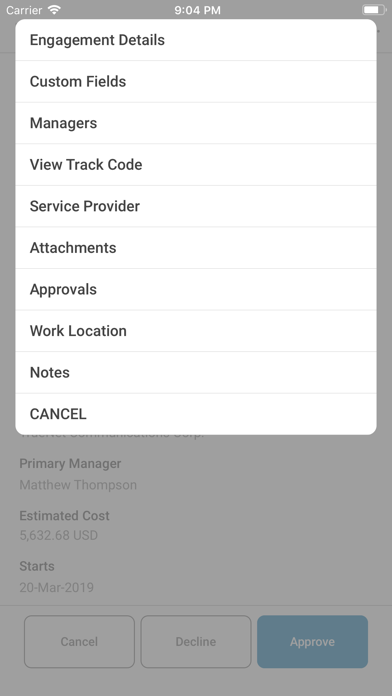
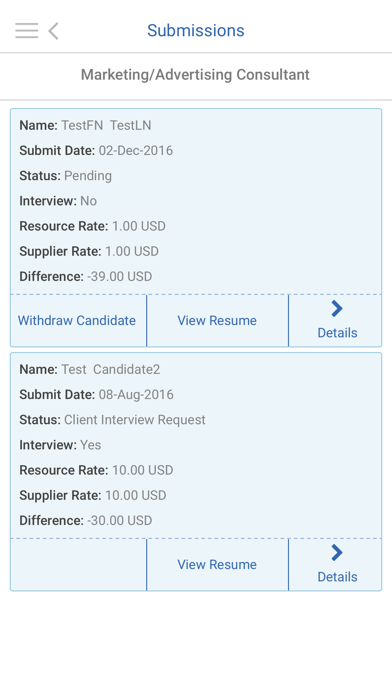
Two abbreviations describe the machinery. The MSP, or managed service provider, supplies the operating team and program management. The VMS, or vendor management system, supplies the shared software. Together they connect requests, candidates, suppliers, approvals, time records, and invoices.
- 01RequestDefine the work
- 02SourceCompare suppliers
- 03EngageApprove and onboard
- 04TrackTime, cost, invoices
That blend helps explain the company’s market position. It sold to organizations with enough outside labor to need an operating discipline around it. In 2020, Workforce Logiq placed first overall in HRO Today’s MSP customer satisfaction rankings. The assessment covered service breadth, deal size, and quality, giving buyers evidence about the service relationship as well as the technology.
The other side of the hiring desk
Consider Svenska kraftnät, Sweden’s electricity transmission authority. Its agreement with Workforce Logiq covered part of its consultant procurement across IT, professional services, and engineering. The arrangement paired a VMS with a customer team supporting the purchasing process. The authority wanted structure, competition, transparency, and control.

The broader service menu included recruitment process outsourcing for permanent hiring, employer-of-record and payroll services, independent contractor management, and employment screening. Expertise meant understanding how a worker entered the organization, which supplier supplied them, and which process governed the relationship. The software gave those questions somewhere consistent to live.
From recording a hire to anticipating one
In January 2019, ZeroChaos became Workforce Logiq. That October it bought ENGAGE Talent, adding predictive recruiting and retention intelligence. The acquisition moved the offer earlier in the decision. Before a requisition produced candidates and invoices, an employer could examine talent availability, employment volatility, and the likelihood that someone would welcome a recruiter’s approach.
“Problem solving with data science is in our DNA.”
Joseph Hanna / ENGAGE Talent founder / 2019
ENGAGE’s Talent Retention Risk benchmark addressed employment volatility. Its attraction profiles aimed to help recruiters tailor messages to the workplace characteristics candidates might value. The proposition was narrower, and more useful, than a machine choosing everybody’s career: improve the odds of a productive conversation. A prediction still requires a hiring team to interpret and test it.
Other additions widened the available choices. A September 2019 partnership put Upwork’s freelance network into Workforce Logiq’s MSP supplier workflows, with reporting, billing, and compliance options. In 2020, the pandemic prompted IQ Location Optimizer, designed to compare recruiting locations and assess whether a role suited on-site, nearby remote, or fully remote work.
By 2021, a LinkUp partnership sought to combine job-posting demand data with Workforce Logiq’s talent-supply intelligence. Location, rates, and supplier selection became decisions the platform could inform. The distinction from a basic workflow system was the combination: operate the process, record what happened, and bring market evidence to the next choice.
What the buyer actually buys
This was an enterprise purchasing decision involving software, services, and a configured operating model. Its public materials invited a business assessment. The free mobile download was access to an existing program; it did not establish the price of that program. Buyers needed to examine implementation, ongoing service fees, internal work, and measurable savings together.
The alternatives also depended on the problem. A team choosing a VMS might consider Beeline or SAP Fieldglass. An organization outsourcing its workforce program would compare managed-service providers. Workforce Logiq’s appeal lay in combining those layers with intelligence. The tradeoff was implementation: shared categories and agreed workflows require cooperation across departments.
The human side deserves the same scrutiny. Workforce Logiq employed workforce advisors and data specialists, and sponsored the National Association of African Americans in Human Resources conference in 2021. Those choices describe its public priorities. For a customer, the practical question remained whether the people running the program could turn information into decisions managers would follow.
The name changed. The question survived.
PRO Unlimited announced its acquisition agreement in August 2021. The combined business’s next public identity arrived in September 2022, when PRO Unlimited became Magnit. Workforce Logiq’s technology and services belonged to that larger operation. Reading its history as the story of a still-independent startup would miss the consolidation that shaped the business.
The lesson travels well beyond large corporations. Start by counting the labor bought outside payroll. Agree on categories and give someone responsibility for the complete picture. If managers bypass the process or suppliers provide incomplete records, additional analytics will inherit the confusion. Workforce Logiq’s most practical idea was to make that hidden work visible enough to manage.
Keep following the work
The business continues at Magnit. Explore the current company, the historical profiles, and the product.