The first version of Harvey faced a small jury: three landlord-tenant lawyers and 100 questions collected from Reddit. Winston Weinberg and his roommate, AI researcher Gabe Pereyra, gave the lawyers answers generated with GPT-3 without telling them where the answers came from. Weinberg later recalled that, for 86 of the questions, at least two of the three lawyers said they would send the response without edits. The number did not turn a machine into an attorney. It did give two people in a Los Angeles apartment a reason to take an unfamiliar technology seriously.
Weinberg was a first-year associate at O’Melveny & Myers, working in securities and antitrust litigation. Pereyra had worked in AI research, including at Meta. Weinberg had first played with GPT-3 as a way to run a Dungeons & Dragons game with friends. A landlord-tenant assignment at work gave the experiment a different shape. He needed to learn a new area of law quickly; Pereyra knew how to press the model for better answers. Together they built a long prompt around California landlord-tenant statutes and put it to the test.
The next step was audacious and plain: an email to Sam Altman and OpenAI general counsel Jason Kwon. Weinberg says the founders chose to include a lawyer because a lawyer could judge whether the output was any good. On the morning of July 4, 2022, they pitched OpenAI over a call. Its Startup Fund became Harvey's first institutional investor. For Weinberg, who has said he knew little about venture capital and had no network in tech, the route into Silicon Valley began with legal questions rather than introductions.
The blind testFor 86 of 100 sample answers, Weinberg says at least two of three attorney reviewers would have sent the response without changes.
A first-year lawyer with a sales problem
The legal profession is built to examine claims closely. That made it a difficult place to sell a tool capable of confident mistakes. Weinberg could describe the model's promise, but the people he needed to persuade were trained to ask what it had missed. Early Harvey sales meetings therefore became demonstrations of the customer's own work. Weinberg says his team would find a litigator's publicly filed brief and let Harvey argue against it. A partner who might ignore a generic software pitch would recognize their own reasoning on the screen.
The tactic had an obvious hazard. When the model invented something, the meeting could end there. When it identified a real weakness, the customer had a reason to keep watching. Weinberg has been candid about both possibilities. That candor helps explain his selling style: his most persuasive evidence was specific to the person in front of him. He was learning sales while learning the limits of the product, one legal matter at a time.
He has also said his best product decisions come when he is selling the most. Time away from customers once led him to make roadmap calls he later judged wrong. His description of the correction is refreshingly direct for a chief executive: go back to the people using the software. For a company built around legal work, that means listening for the moments where a polished answer still fails a lawyer's real task.
“The times that I’m best at product is when I’m selling the most.”Winston Weinberg
Some of the first people to take the idea seriously were change-minded leaders inside legal organizations: David Wakeling at A&O Shearman, Claudia Junker at Deutsche Telekom, and Bivek Sharma at PwC. Weinberg remembers many refusals as well. Those early conversations pushed Harvey toward security and governance. Legal buyers had to trust where their documents went, who could see them, and what the software did with them. A clever demonstration could earn a meeting. Those less theatrical questions could earn a contract.
Why the software has a first name
Even the name came out of watching lawyers work. Weinberg noticed that users spoke normally to him and Pereyra, then became stiff and formal when typing into a product. Instructions they would give a junior colleague in ordinary language arrived as awkward prompts. The founders tried a human name to change that behavior. Harvey also nods to Harvey Specter, the fictional lawyer in Suits, and, Weinberg has joked, has a sound that evokes Harvard. It was a brand choice, but it began as a usability experiment.
There is an amusing symmetry in what followed. In 2026, Harvey partnered with Gabriel Macht, the actor who played Specter, for a brand campaign. The joke finally met its source material. Yet the more enduring point is practical: the way a person addresses a system can affect the usefulness of the answer. Weinberg's early observation was less about giving AI a personality than about making its interface fit a lawyer's habits.
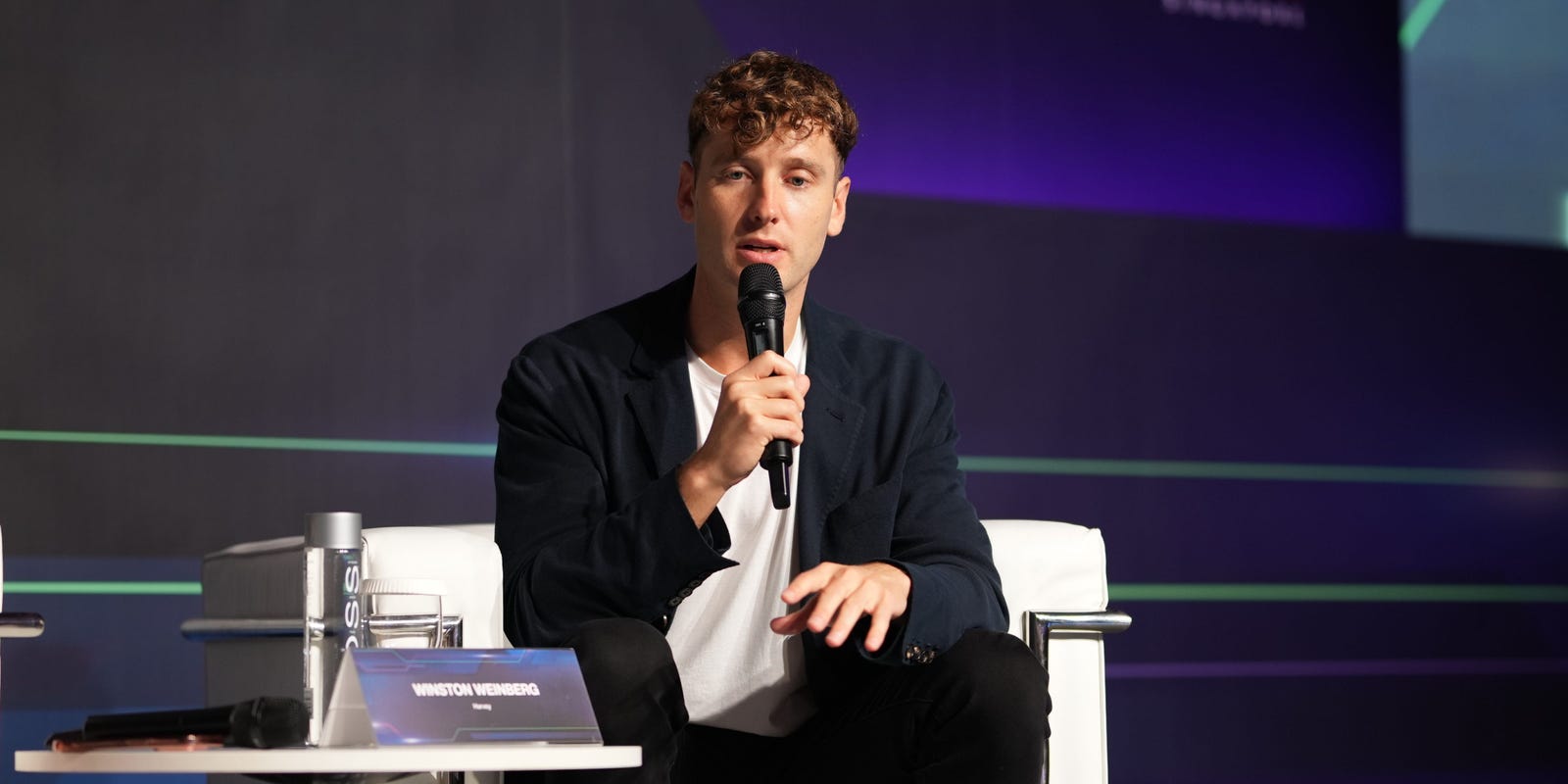
The company grew faster than the job description
Weinberg and Pereyra founded Harvey in 2022. Their backgrounds were complementary: one understood the daily texture of legal work; the other had worked on AI systems. By August 2025, their company reported more than 500 customers in 54 countries, more than $100 million in annual recurring revenue, and 350 employees. The figure that said most about adoption was perhaps less glamorous: active files stored in Harvey had grown from 268,000 to 9.75 million in a year. Lawyers were putting their working material in the system.
The pace continued. A March 2026 raise valued Harvey at $11 billion. In September, a $550 million round put the valuation at $15.5 billion, followed by a $50 million extension from Ontario Teachers' Pension Plan. Weinberg reported more than 3,000 customers and over $400 million in annual recurring revenue; Harvey said 80% of the Am Law 100 firms used the platform. These are company-reported figures, and valuations describe investor expectations rather than cash in anyone's pocket. They do, however, show how quickly a once speculative tool entered major legal institutions.
Company growth has asked Weinberg to learn a new profession: management. In a long 2026 conversation about leadership, he said every four months or so he reaches a point when too many problems require his attention. The answer may be a new leader, a new structure, or a decision to stop doing something. He described himself as a very fast decision maker who has had to learn where that speed creates confusion. If nobody knows who owns a decision, everybody can wait for somebody else.
He has said he would rather see a person make a call, discover it was wrong, and adjust a week later than spend months deciding. His shorthand for what he wants in a hire is “bias for action.” He has also acknowledged how hard it can be to hand work to a new leader. The portrait is more interesting than the usual founder myth: a former associate learning, in public, when to move quickly and when to get out of somebody else's way.
The hard work beyond the answer box
Harvey's next challenge is harder to show in a single demo. General AI models improve quickly, and their makers are moving into professional work themselves. Weinberg has said the large model companies are partners and likely long-term competitors. His answer is to build around the parts of legal practice a general chat window handles poorly: permissions, secure documents, precedent, memory, and collaboration among people at different organizations.
He points to a bank working with multiple outside law firms as an example. Each participant may need different access, while the documents and reasoning must remain connected. Harvey's Shared Spaces product tries to make that kind of work possible. Weinberg says he cares more about how many legal teams collaborate in Harvey on a given day than about the ratio of law-firm to corporate customers. It is a less flashy metric than valuation, and a more revealing one. It measures whether the software becomes part of a relationship between people.
The company has also moved toward specialized models. In August 2026 it introduced Tenet, a post-trained open-weight model for legal work. The September financing announcement linked further investment to helping customers build and own more of their intelligence. For Harvey, the central test remains whether those systems can manage the complexity of real matters while lawyers retain judgment over the work.
Weinberg's view of junior lawyers follows from that test. He argues that AI can take repetitive redline and research tasks while creating more room for mentorship and strategic work. He also says firms must keep investing in people entering the profession. Harvey has announced law-school partnerships and early-career programs. The question is consequential because the routine work AI can speed up is also work through which young lawyers often learn. Weinberg's preferred future will require firms to teach deliberately, not simply remove tasks from the bottom of the ladder.
The 100-question experiment still offers a useful way to understand him. It combined curiosity with a lawyer's demand for outside judgment. The founders did not only ask whether a model could produce answers; they asked working attorneys what they would do with them. Four years and several thousand customers later, the questions have grown more complicated. Who can trust the answer? Who owns the decision? How do people work together around it? Weinberg's career since that first test has been an attempt to keep those human questions close to the machine.