William Short gave his holding company the name of a business that did not survive its founder. A.E. Perkins was his great-grandfather’s company before it was his. The original enterprise succeeded during its founder’s lifetime, then failed after his death. The name carries affection, certainly. It also carries an awkward question for anybody who enjoys being the person with all the answers: what happens when you are gone?
That question gives Short’s career a shape more interesting than a list of executive titles. He is the founder and CEO of today’s A.E. Perkins, with a working history that includes UMB Bank, Ameriflex, and Workforce Go. He has written books and supported civic research in North Texas. Across those different activities, there is a recurring interest in the machinery beneath an outcome: how an idea becomes a process, how a process becomes an organization, and how that organization carries on.
A family name can invite nostalgia. Here, it supplies a test. The old business depended too much on one person. The new one has to answer for what happens beyond its founder’s working life. That is a large ambition to place on a company sign, and a useful one to bring into a meeting about ordinary decisions.
The basement comes before the bank
Short’s own beginning contained a more familiar entrepreneurial inconvenience. After college, he spent time in his parents’ basement trying to develop a business idea. His parents eventually lost patience with the arrangement. He went to work at UMB Bank. An unfinished idea had acquired a practical deadline: leave the basement.
The detail is funny because it punctures the polished version of a founder’s life. A business degree does not make the next step obvious. Short graduated from Washington University in St. Louis with a BSBA in 2002. The credential and the uncertainty belonged to the same young person. The bank supplied a setting in which he could put his interest in business to work.
His early years were in Kansas City. At UMB, he developed a white paper that helped leadership recognize an opportunity in an underused financial program. Writing mattered: an observation became something other people could examine and act on. The episode suggests a practical route for curiosity inside an established institution. Find something overlooked, explain it clearly, and make the case for doing something with it.
There is a pleasingly unromantic object at the center of this early story. A white paper does not have much cinematic presence. It does, however, force an idea to endure a few pages of scrutiny. Someone else must be able to follow the argument. For a future executive concerned with organizations that can work beyond one personality, that is a fitting place to begin.
An operating job with an ownership horizon
In 2008, Short became CEO of Ameriflex, with an understanding that he would eventually acquire the company. That arrangement joined immediate responsibility to a longer view. He would be running the business while looking toward ownership. The work in front of him included the decisions that determine whether an existing company can grow into its next stage.
He later described accomplishment as his motivation: “with the money coming second.” It is a small phrase with a substantial implication. The reward he points to is solving the problem. Money remains in the sentence, appropriately enough for somebody running a business; it simply arrives after the satisfaction of making something work.
That emphasis makes the operating part of his career worth keeping in view. An investor can choose a business. An executive inherits the daily consequences of its choices. The customer still needs an answer. The team still needs direction. An unfinished process still has to be completed. Those demands give long-term thinking a weekly calendar.
By 2020, Short had been named to Fort Worth Business Press’s 40 Under 40 list. Recognition provides a date in the public record. The more revealing part of his story remains the work around it: a banking opportunity, a company leadership role, and the gradual development of a group of businesses. His career is easier to understand through decisions than through trophies.
“We don’t buy companies to flip them.”
William C. Short
A company with a longer clock
A.E. Perkins describes itself as a holding company and long-term investor working with founder-led businesses. Its structure allows ownership to continue without a fund’s preset exit timetable. The distinction has practical consequences: preserving what works in an acquired company becomes part of the task, alongside improving what needs attention.
Short’s group includes Ameriflex and Workforce Go, and maintains interests in real estate, consumer products, and emerging payments. The breadth places a premium on management. A collection of investments needs people who understand the work inside each business. Owning several companies also multiplies the places where the founder cannot personally settle every question.
Patience sounds agreeable until it becomes a decision about time or money. Keeping a business for years means living with the results of maintenance, hiring, product development, and customer service. A longer ownership horizon gives those choices room to accumulate. It also leaves the owner around to find out whether they were sensible.
The great-grandfather’s story sharpens that idea. Building around a gifted individual may produce success while that individual is present. Continuity asks more of the organization. The relevant achievement becomes the ability of other people to understand the work, take responsibility, and keep making decisions when the founder is elsewhere.
From the history of the original A.E. Perkins to the purpose of the present holding company.
Putting other people in charge
In April 2026, that concern with organizational structure became visible in a set of appointments. Chris Goheen moved from leading Workforce Go into the chief innovation officer role at A.E. Perkins. Rashmi Daryman became president of the parent company, with responsibility for Workforce Go and Ameriflex. John Goheen continued as executive vice president of operations.
The changes gave different people defined responsibilities across the group. Chris Goheen’s new position covered innovation at the parent level. Daryman’s remit brought two operating businesses together. These are concrete arrangements through which a company can distribute the work that might otherwise collect around its founder.
Workforce Go described its next stage in terms of execution and a dependable experience for payroll, time, and HR customers. The promise has the texture of an ordinary working day. Payroll arrives on a schedule. Questions need responses. Customers notice reliability in the moments when they have other things to do.
Innovation and dependability both require attention. A new idea can be compelling; an existing obligation still has to be met. The appointments offer a useful glimpse of how Short’s group is assigning those responsibilities. They also give the family lesson a present-tense setting. An organization intended to endure needs identifiable people doing the work today.
The executive who keeps writing
Short also puts ideas into books. His titles include 127 Grains and Think Boldly: Accept Nothing and Challenge Everything, the latter published in December 2025. The distance between an operating company and a paperback is smaller than it first appears. Both require a person to give an idea enough structure that somebody else can engage with it.
127 Grains ranges across questions about money, fairness, regulation, and incentives. Its description even brings the Ant and the Grasshopper into the discussion. A familiar fable becomes material for another look at how the world works. That is an appealing change of scenery from an executive title: the same curiosity can follow a banking product into an argument about a story told to children.
The subtitle of Think Boldly makes its invitation explicit. Accept nothing; challenge everything. A title is easier to print than to practice. Still, it supplies a companion to the family history behind his company: inherited assumptions deserve examination, including the comfortable assumption that a successful founder has already secured a successful future.
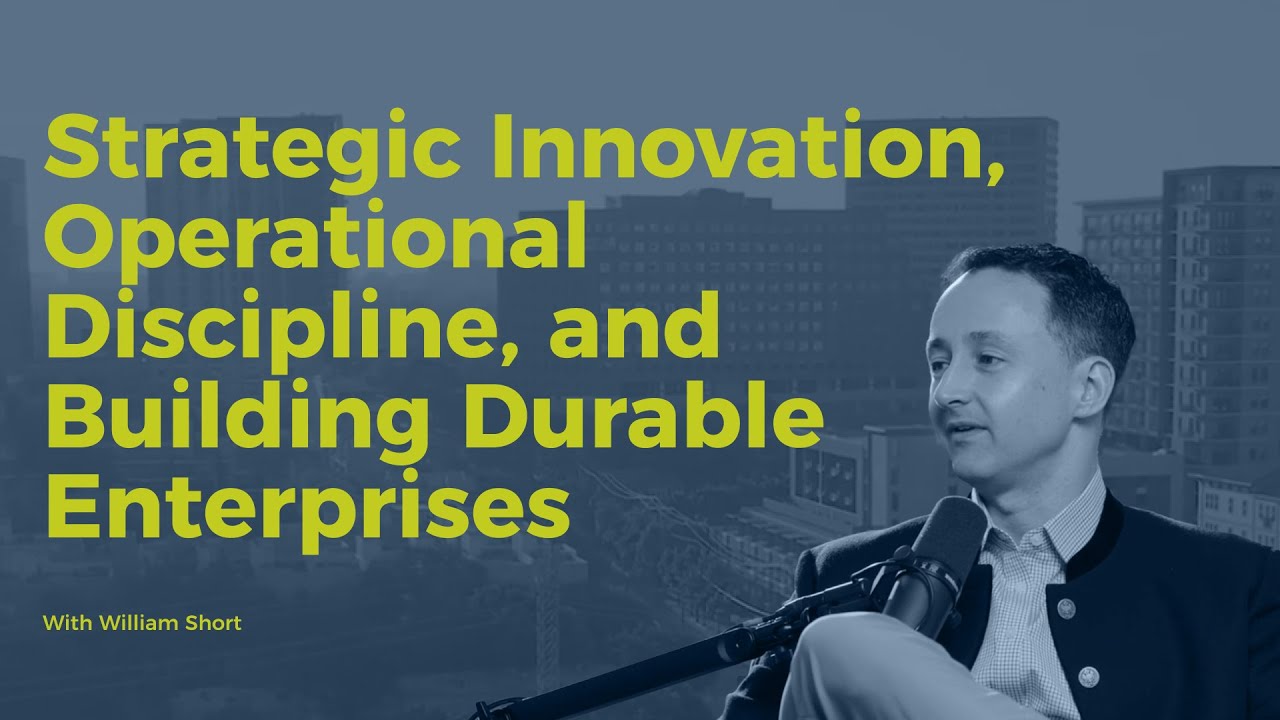
In April 2026, Short discussed his career with Scott Wood on Decision Points. The conversation covered his move to Texas, the development of multiple ventures, and writing. The different parts of his life meet there without requiring an invented hobby or a picturesque private routine. Banking, operations, and books already offer enough evidence of somebody interested in how ideas travel.
A survey with his name on it
Another name-bearing project takes the story outside the company. Short contributed $250,000 to help launch a civic survey program at UT Dallas in the summer of 2020. The university matched the gift, producing an initial $500,000 in support. The North Texas Quality of Life Initiative includes the William Short Annual Quality of Life Survey, also called the “Short” Survey.
Two equal contributions provided $500,000 to help get the program underway.
The project gathers information about residents’ experiences and public services. Its design includes an annual survey, reports, and dashboards intended to make results accessible. Short’s contribution helped establish a way to keep asking questions about a region that changes. The gift has an institutional afterlife in the research it supports.
His connection with the university also appears in leadership course schedules, which listed him for sessions in 2022 and 2023. A company, a book, a classroom, and a public dataset give ideas different audiences. Each asks for a version that other people can use. The useful work begins after the person who supplied the idea has finished speaking.
That brings the story back to A.E. Perkins. Short chose a name with a failure attached to it, then made continuity an ambition for the new business. The name cannot do the work. People, authority, and ordinary decisions have to carry it forward. For a founder, there is a certain generosity in that task: building a place where the next person can get on with things.