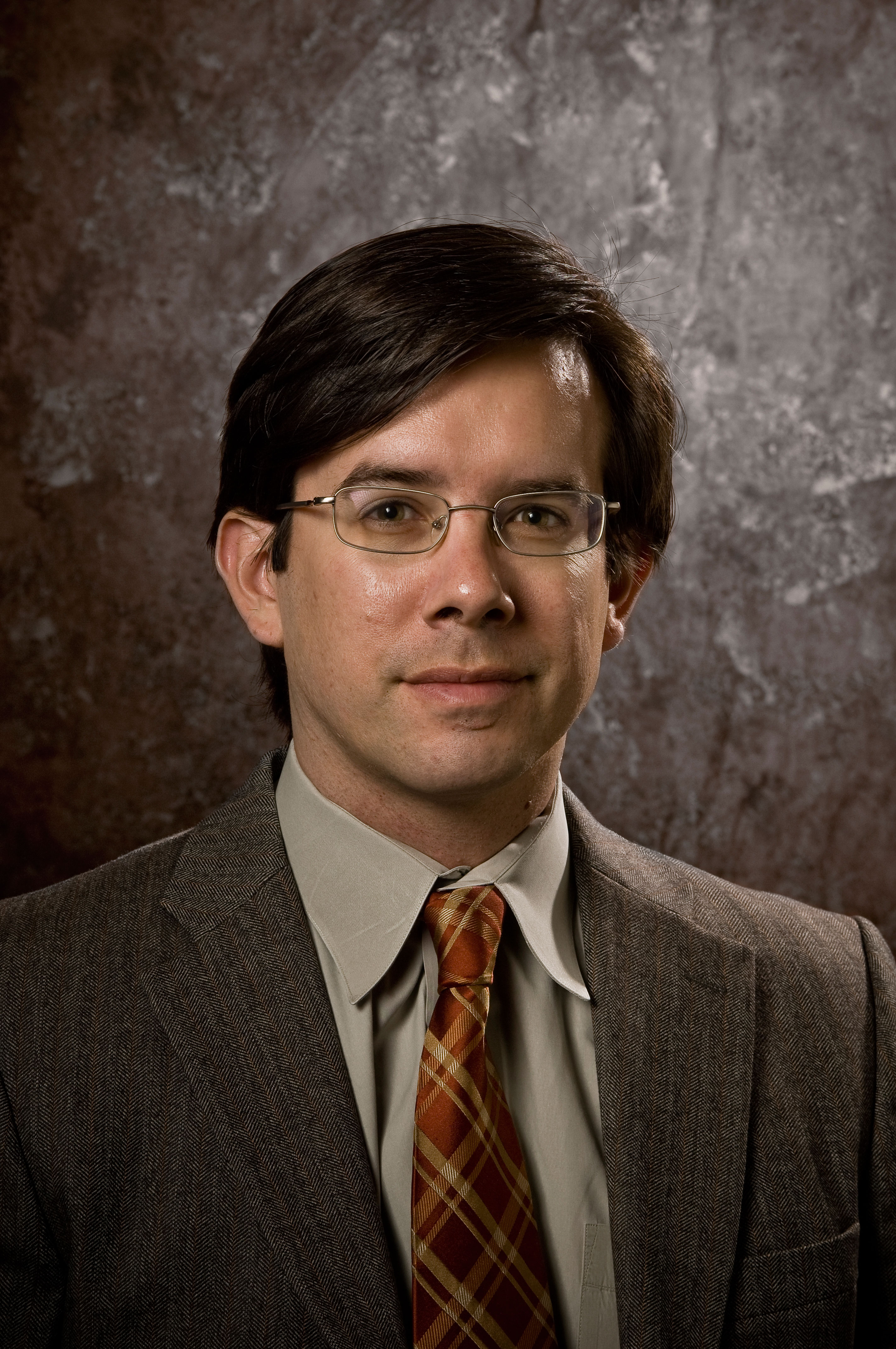
Profile
Catching Up Mid-Stride
Right now, Will Wilkinson is figuring out how to make digital identity work for everyone - government, citizens, and the companies caught in between. His title is Director of Government Affairs at Persona, a San Francisco-based identity verification company. The job requires him to speak fluently in the language of regulators, technologists, and privacy advocates simultaneously. It's a good fit for someone who spent two decades doing exactly that with political philosophy.
The Marshalltown, Iowa upbringing is not incidental. The same town that gave him a front-row seat to American rustbelt anxiety also gave him a natural skepticism of airy ideological systems that explain the world but fail the people in it. He left for the University of Northern Iowa, then Northern Illinois for a master's in philosophy, then the University of Maryland for a doctoral program he never finished - technically ABD, All But Dissertation. What he got from that incomplete credential turned out to be more useful than the degree: the ability to read a primary source, follow an argument to its conclusion, and notice when the conclusion was wrong.
He arrived at the Cato Institute in the early 2000s as a research fellow and managing editor of Cato Unbound, the think tank's online journal. This was deep libertarian territory, and Wilkinson was a native speaker. His signature work from this period, "In Pursuit of Happiness Research: Is It Reliable? What Does It Imply for Policy?", challenged the emerging progressive argument that income inequality necessarily reduced subjective well-being. It was careful, empirically engaged work - exactly the kind of thing that makes you valuable at a think tank and occasionally unpopular at dinner parties.
"There is no end to the process of negotiation and amendment and updating and fighting and contestation. And this is what pluralism means."
Will Wilkinson
He departed Cato in August 2010. The parting wasn't explosive - he simply outgrew a framework he'd once found useful. The years that followed traced the outline of his evolving political philosophy: academic coordinator at the Mercatus Center, program director at the Institute for Humane Studies, then in 2015 a pivot that announced something genuinely new. He joined the Niskanen Center as Vice President for Policy, becoming one of the most prominent voices at a think tank explicitly challenging the old libertarian-conservative coalition.
The Niskanen Center was building something genuinely strange in the Washington policy landscape: a place that took market mechanisms seriously and also accepted that climate change was real, that the safety net was worth defending, and that pluralism was preferable to ideological purity. Wilkinson thrived there. His writing from this period - published across The Atlantic, Vox, Bloomberg View, The Washington Post, and eventually The New York Times as a contributing opinion writer - was sharpening toward something. He was less interested in scoring points for a team than in understanding why American politics kept producing outcomes that almost nobody wanted.
In 2020, he added another byline: U.S. Politics Correspondent at The Economist. Covering American democracy for a British audience requires a particular discipline - you can't rely on shared assumptions, you have to explain everything from first principles. It's an excellent assignment for someone whose entire intellectual project had become explaining American political dysfunction to readers who found it baffling, which at that point included most Americans.
Intellectual arc
From Pure Libertarian to Pluralist Democrat
⛪
Pure
Libertarian
2000-2010
⚅
Liberaltar-
ian Synthesis
2010-2015
◐
Center-Left
Pluralism
2015-2021
●
Democracy
Realist
2021-Now
The concept that got him labeled "Rawlsekian" - mixing John Rawls's egalitarian principles with Friedrich von Hayek's epistemic humility - was coined by The American Conservative, which meant it as a mild provocation. Wilkinson wore it as something more like a shrug. He'd coined his own term years earlier: "liberaltarianism," an attempt to find the overlap between social liberals and libertarians. He later abandoned the label but not the underlying impulse: that ideological tribes tend to protect the tribe rather than find the truth.
By 2022, he'd moved from think tank work entirely, joining TBD, a subsidiary of Block Inc. - Jack Dorsey's company - as Head of Policy. The focus shifted to cryptocurrency regulation and the policy landscape around decentralized finance. For a philosopher-turned-political-analyst, it was an unusual landing spot, but the logic held: emerging technology and democratic governance were increasingly the same problem, just described in different vocabularies.
His Substack newsletter, "Model Citizen," has been running alongside all of this - the constant thread. The newsletter describes itself as offering "artisanal takes for the discerning take-consumer," which undersells the ambition. It's a place where Wilkinson works through ideas in public: the relationship between political philosophy and democratic practice, why Americans keep talking past each other, what pluralism actually demands of citizens rather than just theorists. The newsletter is, in his own framing, "a voyeur's view inside an overactive mind obsessively groping to make sense of this damnably confusing world." The phrasing is deliberately unglamorous. That's the point.
✎ FACT: Wilkinson holds dual American-Canadian citizenship and grew up in Marshalltown, Iowa - one of the most ethnically diverse small cities in the Midwest, with a significant immigrant meatpacking worker population. The experience of watching a small city negotiate radical demographic change likely shaped his longstanding interest in pluralism more than any seminar he attended.
The move to Persona in early 2025 brings the arc back to democratic infrastructure - specifically, the plumbing of identity verification that underlies everything from voting systems to financial access. Digital identity is not a glamorous policy beat, but it's one of the most consequential: decisions made now about how governments verify who people are will shape civil liberties, access to services, and the architecture of trust for decades. Wilkinson is working at the intersection of those decisions and the companies building the systems, in a role that requires him to translate between technical, legal, and political vocabularies simultaneously.
What makes him unusual in the Washington-to-tech-policy pipeline isn't the credential set - plenty of think tank veterans end up in government affairs roles. It's the willingness to do the public intellectual work alongside the policy work. Most people in policy choose a lane: either you're writing essays or you're in meetings. Wilkinson has never accepted that the two are incompatible. The "Model Citizen" newsletter keeps publishing. The Twitter/X feed keeps churning. The ideas keep getting tested against public reaction, refined, published again.
There's a quality in his public writing that's genuinely rare: the record is there. Two decades of positions, arguments, reversals, and reconsiderations, all timestamped and archived. The libertarian who argued against progressive redistribution. The liberaltarian who tried to build bridges that didn't hold. The democracy defender who now argues that getting the process right matters more than winning any particular argument. The record doesn't embarrass him because he's never pretended his earlier positions were wrong for tactical reasons. He explains, in detail, why he changed his mind. In a media environment that rewards consistency-as-brand, that's a genuinely strange thing to do.
"I've shifted my focus from optimal political philosophy to the workaday challenges of pluralism and democracy."
Will Wilkinson
The philosophical foundation - the ABD at Maryland, the Rawls and Hayek, the subjective well-being research - isn't decorative. It shows up in how he constructs an argument, in the precision with which he distinguishes between empirical claims and normative ones, in his impatience with arguments that skip steps. When he writes about polarization, he's not just pointing at a problem; he's working through the mechanisms. When he writes about pluralism, he's not just endorsing tolerance; he's describing what the procedural demands of genuine pluralism actually require from citizens and institutions.
The American Conservative called his synthesis "Rawlsekian." The label didn't stick, but the underlying observation was right: Wilkinson takes the epistemic arguments for humility seriously (we don't know enough to plan society from the top down) and also takes the egalitarian arguments seriously (that freedom without material security is mostly theoretical). Most people treat those as contradictory. He's spent two decades arguing they're not - and that the tension between them is precisely where democratic politics has to operate.
He's fifty-two, dual citizen, living somewhere between the wonk world and the ideas world, with a Substack that reaches readers who want both. The newsletter is the most accurate picture of what he's actually thinking: raw-enough to show the working, polished-enough to be worth reading. He's not building a brand. He's just figuring things out in public, and has been doing it long enough that the accumulated record is itself a kind of argument - that intellectual honesty, pursued consistently over time, produces something worth reading.
Published In
Major Outlets & Platforms
The New York Times
The Economist
The Atlantic
Washington Post
Bloomberg View
Vox
Forbes
Politico
Boston Review
Slate
Reason
The Week
Philadelphia Inquirer
Prospect
Cato Unbound
Substack