Profile / The Forecaster
Henry Olsen
In January 2023, with the field still wide open, he told his listeners how 2024 would end. He was right. Again.
Senior Fellow, EPPC
Washington Post columnist
Reagan scholar
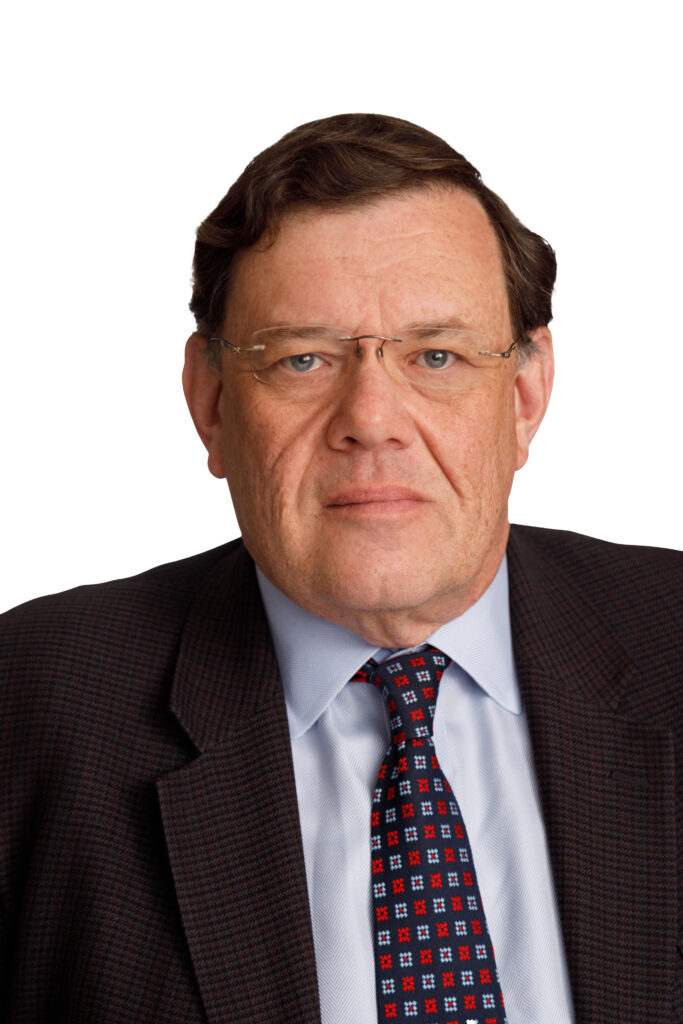
In January 2023, with the field still wide open, he told his listeners how 2024 would end. He was right. Again.
Who He Is Now
Most analysts spent the autumn of 2024 hedging. Henry Olsen spent it explaining a result he had already settled on. From January 2023 onward, on his podcast and in print, he sketched a Donald Trump victory - and added the detail that made colleagues wince: Trump might win the popular vote. When the returns came in, the hedgers scrambled to revise. Olsen mostly nodded. The one thing that genuinely surprised him was Michigan.
That is the texture of how he works. Olsen is a senior fellow at the Ethics and Public Policy Center in Washington and an opinion columnist for The Washington Post, where he writes about elections, populism, foreign affairs, and the long argument inside American conservatism. The title that fits him best, though, is one nobody prints on a business card: forecaster. He has spent two decades calling U.S. presidential and congressional races with a level of accuracy that most pundits would trade a book deal to claim.
The method is not mysticism and it is not a model with a clever name. It is attention. Olsen reads the voters that national polling tends to round off - the blue-collar, non-college, often church-going Americans whose preferences refuse to sit neatly inside the categories pollsters build. He treats them as a feature of the electorate, not a footnote to it. When you spend that much time on the parts of the map other people skim, you tend to see the storm before it lands.
His current beat is the realignment itself. Not who won the last race, but why the coalitions are buckling and reforming, and what that means for a Republican Party that no longer looks like the one it was twenty years ago. He hosts "Beyond the Polls" every week and "Conservative Crossroads" every other week, the second devoted to the arguments conservatives have with one another rather than the ones they have with the left.
He writes for outlets that rarely share a room. National Review and the Guardian. The Wall Street Journal and POLITICO. The Telegraph, the New York Times, Brussels Signal. It is an unusual range for a man with firm convictions, and it tells you something: Olsen is more interested in being understood by people who disagree than in being applauded by people who already do.
He also teaches. Since 2020 he has run a graduate course on elections at Hillsdale College's Washington campus, turning his forecasting instincts into something he can hand to a room of students. The lawyer who once clerked on a federal appeals court now grades essays on turnout.
"The working-class voter was never a footnote. He was the story. The rest of us just kept turning the page too fast."— The Olsen thesis, in spirit
By The Numbers
Two decades of presidential and congressional forecasts, built on reading the electorate rather than the chatter about it.
"The Working Class Republican" solo, and "The Four Faces of the Republican Party" with Dante J. Scala.
"Beyond the Polls" weekly and "Conservative Crossroads" biweekly - one for the electorate, one for the family fight.
Commonwealth Foundation, Manhattan Institute, and the American Enterprise Institute before EPPC.
The year he settled into the perch he still holds, and where the column habit took hold.
He called the race. Michigan still caught him off guard. He says so out loud, which is half the credibility.
The 2024 Call
A rough illustration of conviction over time. While mainstream forecasts hovered near a coin flip deep into 2024, Olsen had been pricing in a Trump win - popular vote included - since early 2023.
Illustrative of public statements and timing, not a polling average.
The Long Game
Political consultant at the California firm Hoffenblum-Mollrich, learning campaigns from the inside.
Worked for the California Assembly Republican Caucus, then went back to school to become a lawyer.
J.D. from the University of Chicago, then a clerkship for Judge Danny J. Boggs on the U.S. Sixth Circuit Court of Appeals.
Associate at Dechert, Price & Rhoads in Philadelphia - the last stop before he traded billable hours for ideas.
President of the Commonwealth Foundation, Vice President at the Manhattan Institute.
Vice President and Director of the National Research Initiative at the American Enterprise Institute.
Joined the Ethics and Public Policy Center as senior fellow - his home base ever since.
Published "The Working Class Republican," recasting Reagan as a pragmatist with New Deal instincts.
Began teaching a graduate elections course at Hillsdale College in Washington, D.C.
Called the presidential race for Trump, popular vote included, ahead of nearly everyone.
Margins & Marginalia
His big argument: Ronald Reagan was less the small-government purist of legend and more a New Deal pragmatist who kept the working class close. It rankles purists. He makes the case anyway.
He clerked on a federal appeals court before he ever filed a political column. The discipline of reading a case shows up in the way he reads an electorate.
"Beyond the Polls" is for the country. "Conservative Crossroads" is for the household argument - where conservatives disagree with each other in public.
Bylines in National Review and the Guardian, the Wall Street Journal and POLITICO. A man who would rather be read by his opponents than cheered by his choir.
He had Trump winning in early 2023 - before Biden's debate stumble reshuffled the whole race. Then he waited for the rest of the world to catch up.
He nailed 2024 and still volunteers that Michigan surprised him. The willingness to say so is part of why people trust the rest.
Listen / Watch
Olsen's election analysis and interviews, collected in one playlist.
The weekly podcast where the calls get made before the results come in.
The Record
Pass It On