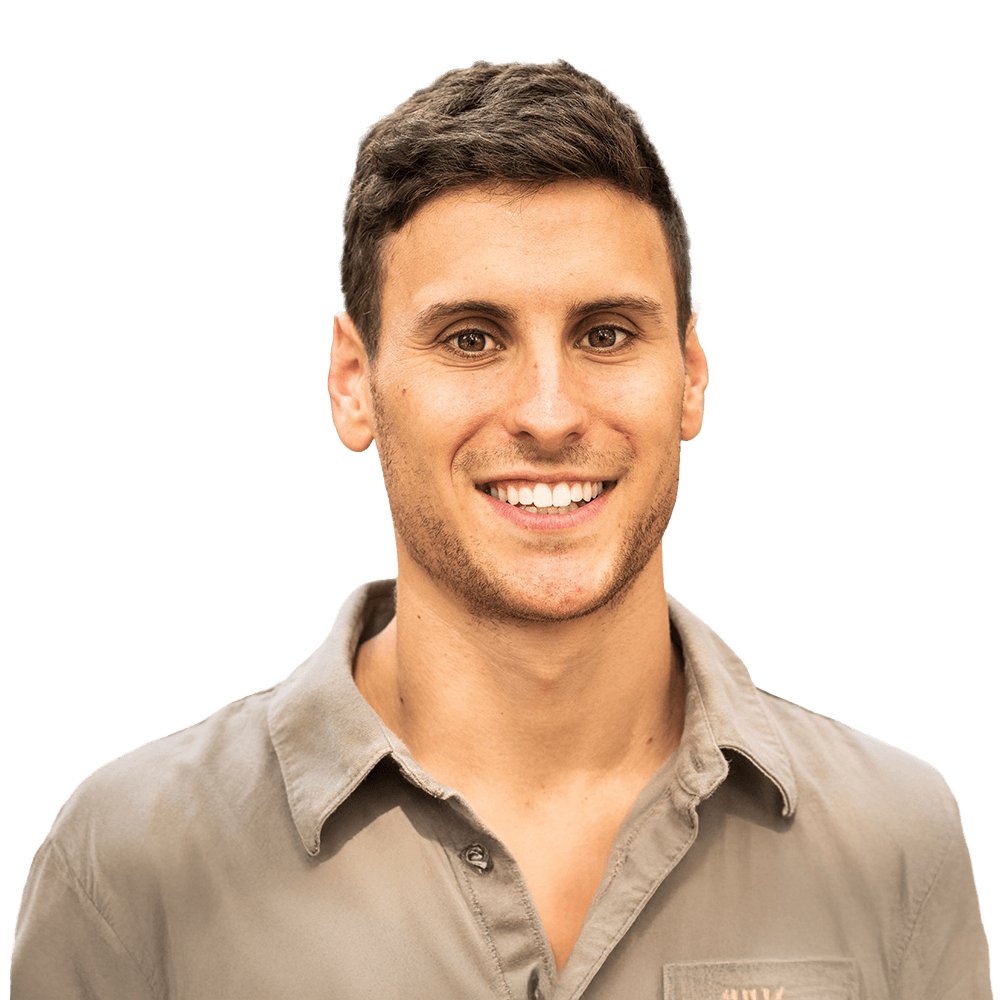
The Investor Who Thinks the Factory Floor is the New Frontier
Most venture investors pitch themselves as sector-agnostic generalists who "follow great founders." Will Bitsky has a different answer: he thinks aerospace, defense, energy, and manufacturing are where the next fortunes get made - and that the investor who understands data moats in physical systems will beat everyone chasing GPU compute.
That thesis took him from FirstMark Capital in New York - one of the more distinguished mid-market growth funds on the East Coast - to Andreessen Horowitz's American Dynamism team in 2025. The move wasn't a lateral trade. It was a deliberate bet that the most consequential technology investments of the next decade will happen at the intersection of software and the physical world.
Before venture capital, Bitsky ran TMT investment banking deals at Goldman Sachs, the kind of work that trains you to read balance sheets at speed and understand why companies live or die by their capital structure. He took that analytical rigor to FirstMark, where he backed enterprise software, fintech, and consumer internet companies at seed and Series A. He wrote the investment memo on Vendelux - an operating system for corporate event intelligence - and co-led FirstMark's participation in Zilla Security's $13.5M Series A round in identity access governance.
Data, not compute, determines who wins in physical AI.
- Will Bitsky, a16z Big Ideas 2026That quote isn't idle provocation. It's Bitsky's investment framework compressed to a sentence. While the rest of the technology world debated who would win the GPU race - Nvidia, AMD, custom silicon - Bitsky focused on a different question: who owns the proprietary training data that makes physical AI systems defensible? A warehouse robot trained on millions of hours of your specific facility's movement patterns isn't replaceable with the next chip generation. The data is the moat.
At a16z, that thesis plays out across a defined set of sectors: aerospace, defense, energy, public safety, education, housing, supply chain, and manufacturing. The American Dynamism team - led by Katherine Boyle and David Ulevitch - built their franchise around the idea that America's greatest technological challenges are also its greatest investment opportunities. Bitsky joined that practice in 2025, working alongside Boyle, Ulevitch, and Erin Price-Wright to source and lead deals in what the team calls "national interest" technology.
The Investment Thesis
Defensible data beats raw compute.
The industrial stack is where America wins.
The intellectual framework matters because the American Dynamism practice is still a relatively young bet, even within a16z. Katherine Boyle launched it in 2022 with the conviction that Silicon Valley had spent too long ignoring the companies that keep America literally running - the defense contractors, the aerospace manufacturers, the energy infrastructure operators. Bitsky coming aboard represents expansion: more deal capacity, more sectoral depth, and a second generation of partners who believe the thesis.
His entry into a16z also came with a public announcement that had the specific texture of genuine enthusiasm rather than corporate PR. When he posted about joining on X in May 2025, he tagged his future colleagues by handle and named the specific sectors he'd be working in. It read like someone who'd thought for a long time about exactly where they wanted to be - and had finally gotten there.
FirstMark welcomed Bitsky as one of their first new investors in 2021. By 2025, he'd made the jump to one of the world's most famous venture funds. That's four years from new hire to a16z partner.
The trajectory from Goldman Sachs to FirstMark to a16z is cleaner than most VC origin stories. Investment banking taught him how capital works. FirstMark taught him how early-stage companies are built. a16z gives him the platform - and the fund size - to back the companies operating at national scale. The same analytical clarity he brought to Goldman deal rooms now goes into evaluating whether a defense-tech startup's proprietary sensor data is genuinely defensible or just impressive-sounding.
What makes Bitsky's positioning at a16z interesting is timing. Physical AI - the deployment of AI systems into real-world environments, from autonomous manufacturing to drone logistics to industrial inspection - is moving from research curiosity to commercial reality faster than almost anyone predicted. His role on the American Dynamism team puts him at the precise intersection of national security urgency and technology maturity. The deals that get done in the next three years in this space will define the next fifteen.