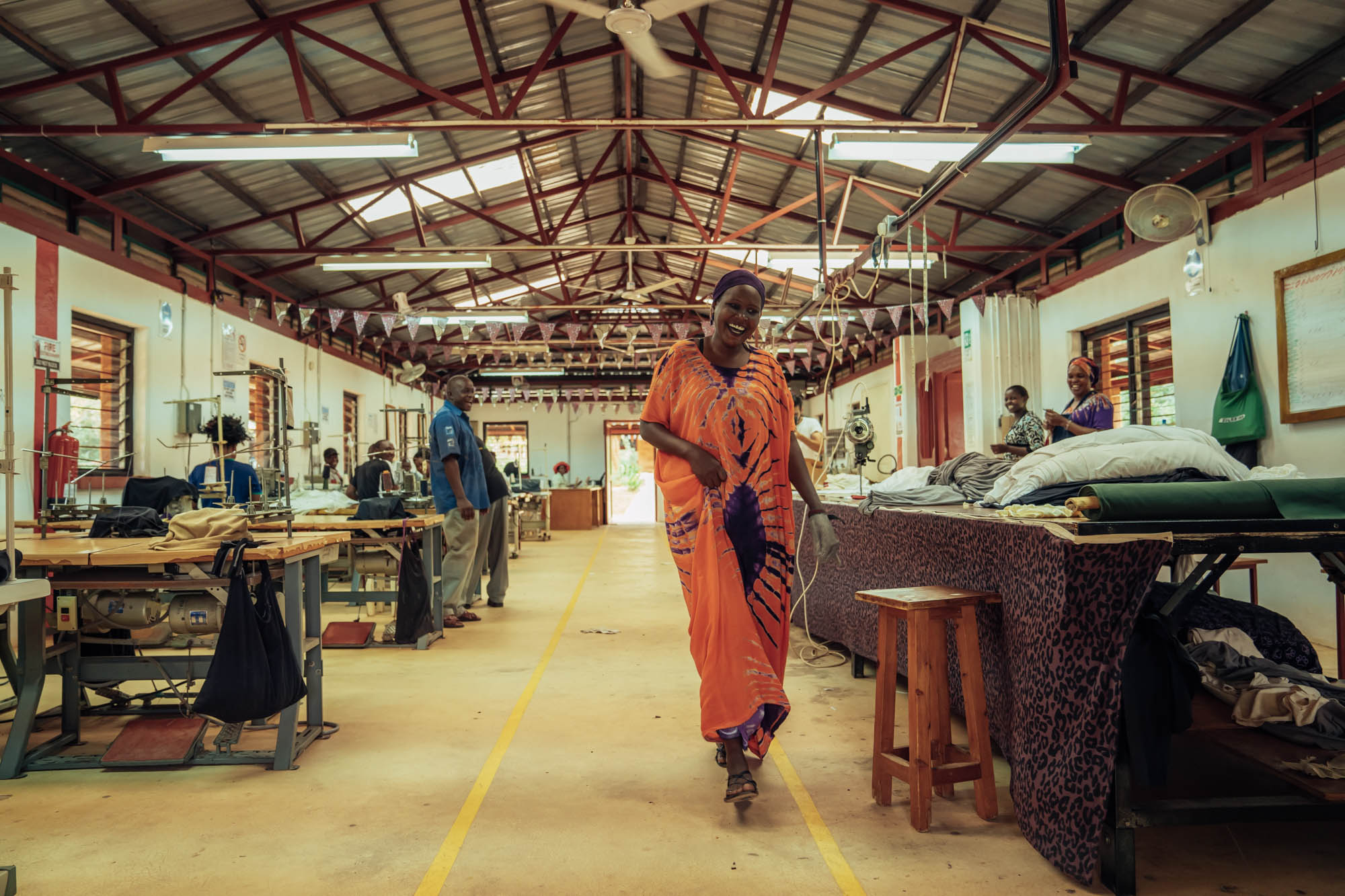
Consider the sewing machine. It is an unusual piece of conservation equipment: no satellite, no tranquilizer dart, no binoculars. Yet at Rukinga, in southeastern Kenya, making clothes was central to Mike Korchinsky’s experiment. Wildlife needed room. People needed work. A factory might help make those two needs compatible.
- The original product was clothing; carbon credits became the larger conservation-finance engine.
- Kasigau issued the first VCS REDD credits in 2011. Retail credits currently list at $20.
- The record includes conservation investment, volatile demand and serious safeguarding failures.
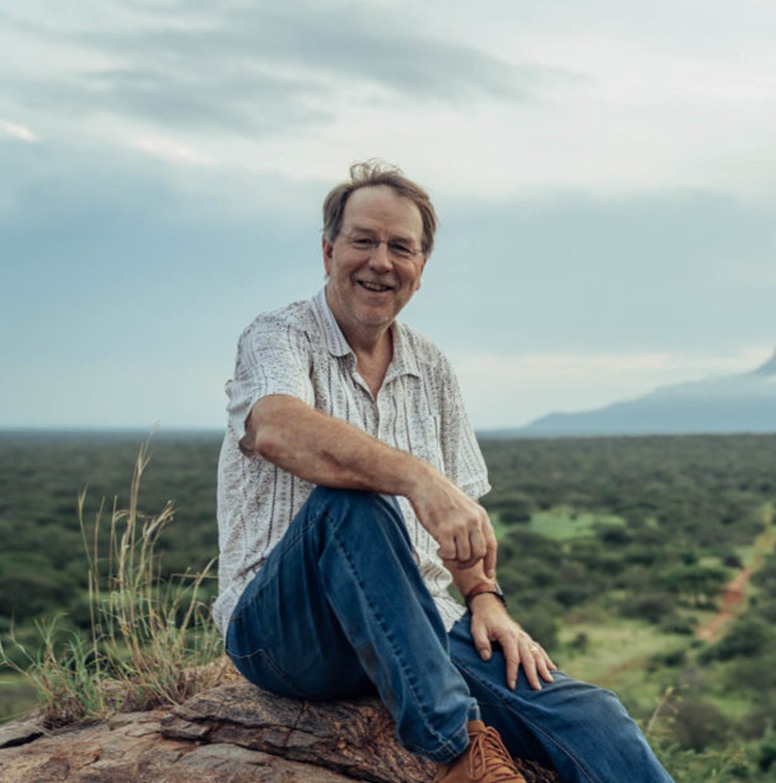
Korchinsky founded Wildlife Works in 1997 after a trip to Kenya the previous year exposed him to conflict between rural communities and wildlife. He had built and sold a management consultancy. His next business would address a different management problem: how to make keeping animals and trees economically useful to their neighbors.
Rukinga sits in the corridor between Tsavo East and Tsavo West national parks. Wildlife Works built an eco-factory there and hired unarmed rangers. Its factory history records the first organic-cotton collection in 2001. The company’s premise was practical: offer alternatives to activities that damage habitat, including poaching and forest clearance.
The distinction from a donation was deliberate. A customer would buy something useful, and the transaction would help sustain local employment. That premise survives in the carbon business, although the product is harder to inspect than a shirt. Buyers must rely on measurements, project documents and institutions that can challenge the seller.
There was a catch. Keeping the early businesses afloat was difficult. A clothing workshop and tourist lodge could create jobs without generating enough money to finance conservation at the desired scale. The incentive made sense; the revenue engine needed work.
The customer became a carbon buyer
By 2009, Korchinsky was exploring REDD+, short for reducing emissions from deforestation and forest degradation. Instead of asking someone to buy a T-shirt, Wildlife Works could ask a company to pay for forest protection measured in avoided emissions. But Kasigau’s dryland forest needed an accounting method. The company helped develop one.
In February 2011, Kasigau became the first project to issue REDD credits under the Verified Carbon Standard. That qualification matters: this was a milestone within a particular certification system. It made a local conservation operation legible to buyers who needed a standardized unit.
Today Wildlife Works develops and manages forest-carbon projects, measures forest change, arranges independent verification and sells the resulting credits. It also advises governments and other project developers. Corporate buyers purchase at volume; individuals and smaller businesses can buy online. Its storefront lists Kasigau and Mai Ndombe credits at $20 each.
A credit represents one metric tonne of carbon-dioxide equivalent. In avoided-deforestation projects, the calculation depends on a comparison: what happened in the protected forest versus what credibly would have happened without the project. That hypothetical future is the commercial product’s most consequential assumption. A surviving tree alone cannot settle it.
- 01 Buyer funding
- 02 Local work + forest protection
- 03 Monitoring + verification
- 04 Credit issuance
A forest has operating expenses
Wildlife Works is a project operator with a long local presence, rather than simply a shop window for credits. Its expertise combines carbon accounting, field monitoring, community engagement and the daily administration of conservation. Alternatives include developers such as Permian Global and Terra Global Capital; buyers can also choose other project types or carbon removals.
The early economics were substantial. A 2016 account republished by Wildlife Works put the REDD+ rollout at about $4 million and an audit at approximately $70,000. Those are historical figures, not current quotations. In 2010, BNP Paribas announced financing of up to $50 million for an African project portfolio, with options to purchase credits. A financing ceiling is not cash received.
The money has several destinations: landowners, conservation operations, community-selected development and the business itself. Arrangements differ by project. At Kasigau, elected Locational Carbon Committees allocate community funds. In the Democratic Republic of the Congo, the company reports that Mai Ndombe protects roughly 300,000 hectares and supports investments in schools, water and healthcare.
The bondholders chose cash
An experiment in 2016 exposed a useful distinction between financing forests and wanting to own carbon credits. IFC issued a $152 million Forests Bond with an unusual choice: investors could receive their coupon in cash or credits linked to Kasigau. BHP provided price support by agreeing to buy credits when investors wanted cash.
Every investor chose cash, every year, according to IFC’s retrospective. The forest-finance mechanism worked with the backstop; the hoped-for investor appetite for credits did not materialize. Conservation could attract capital through a familiar financial instrument. That did not mean institutional investors wanted to become carbon-market participants.
Demand also moves on a timetable that forests cannot follow. The company’s historical account says credit sales fell by roughly half in 2015 as buyers awaited the Paris climate talks. Salaries, patrols and community expectations do not conveniently halve with them. Reliable purchasing commitments matter because conservation has recurring bills.
What the certificate missed
The hardest challenge to the model came from inside the workplace. In November 2023, SOMO and the Kenya Human Rights Commission published allegations of sexual abuse and harassment at Kasigau, based on employee and community testimony. The allegations directly challenged a business built around community benefit.
Wildlife Works said its commissioned investigation did not substantiate many allegations, but it dismissed its head of security for gross misconduct, including violating its sexual-harassment policy. It also dismissed the HR manager, saying he had created fear and intimidation that prevented reporting. The company apologized and described counseling, revised policies and safeguarding measures.
In February 2024, Verra completed its review, finding that Wildlife Works was taking required corrective action; the projects were active in its programs. SOMO and KHRC challenged the review’s adequacy. Their criticism remains material: certification and remedial action do not, by themselves, establish that everyone affected has obtained protection or remedy.
A surviving tree alone cannot settle the carbon calculation.THE BASELINE PROBLEM
The meeting needs childcare
A quieter detail appears in Wildlife Works’ June 2026 newsletter about Gerbang Barito, Indonesia. Women said childcare made attending community workshops difficult. The response was a childcare space. This is the unglamorous machinery of participation: a meeting can be formally open and still be practically inaccessible.
For a buyer, the useful questions reach beyond price: how credible is the baseline, who controls community revenue, and can workers report harm safely? For another conservation business, the transferable idea is to fund livelihoods and local decision-making as operating necessities. Credits cannot replace cutting a buyer’s own emissions. And this model depends on defensible accounting, community consent, safe employment and buyers who keep paying. The sewing machine still has something to teach the spreadsheet.
Follow the work
Wildlife Works · Explore credits · Field notes & news · 2025 impact report