A carbon credit looks tidy from a distance: one tonne of carbon dioxide avoided or removed, represented by one certificate. Up close, it acquires a biography. There is a project, a method, a location, a vintage, a registry, a seller, a date of delivery and, finally, a retirement record. A buyer can click once. The atmosphere has no such shortcut. Patch built a company around the gap between those two clocks.
- Patch began in 2020 with a carbon credit marketplace and API that put purchases inside other companies' products.
- It now combines market data, climate specialists and software for sourcing, checking, buying and managing credits.
- Patch says more than 500 companies use it; its 2025 database covered over 25,000 carbon projects.
- The useful lesson: treat a credit as a long procurement process, not a souvenir from checkout.
The button was a good beginning
Brennan Spellacy and Aaron Grunfeld founded Patch in San Francisco in 2020, after working at the rental company Sonder. Their early idea was wonderfully legible to a software person: give a business an API and it can offer carbon offsets as naturally as it offers shipping insurance. An e-commerce checkout, a travel booking or an internal expense workflow could calculate an estimate and attach a credit purchase. Patch supplied the marketplace and the plumbing.
The pitch had an obvious audience. Companies wanted a way to act on emissions they could not yet eliminate, while project developers needed buyers. Patch connected the two. Andreessen Horowitz led a $4.5 million seed round announced in February 2021; a $20.75 million Series A followed that September, then a $55 million Series B in 2022. Those three disclosed rounds total $80.25 million. It was serious money for a market still prone to spreadsheets and opaque quotes.

No public account says the API failed. The first thing that proved insufficient was the idea that access alone solved the buyer's problem. Even if a business could purchase a credit instantly, someone still had to decide which project to trust, whether the price made sense, how a future credit would be delivered, and what evidence an auditor would need years later. A Buy button can start that story. It cannot finish it.
“Where Patch started isn’t where we are today.”Brennan Spellacy, announcing the new platform in 2025
A market with too many columns
Patch's own research found that only 15 of the largest 100 carbon credit buyers had teams dedicated to carbon. That finding explains the company's turn. A thinly staffed sustainability office is expected to compare forest restoration with engineered removal, parse different registry records, ask several suppliers for bids and keep watch after a deal closes. Each project type has its own risks. A forest has permanence questions; an engineered removal project may carry delivery risk. These are procurement questions as much as climate questions.
In April 2025, Patch publicly launched an end-to-end buyer platform. Its sequence now runs from strategy and sourcing through diligence, purchase and management. By September, it said its centralized database contained more than 25,000 projects, including all projects in ICROA-endorsed registries. The point of the count is not that a customer should read 25,000 project files. Patch says it standardizes details such as methodologies, locations, vintages, issuance history and permanence so its team can make a shortlist that can be compared on consistent terms.
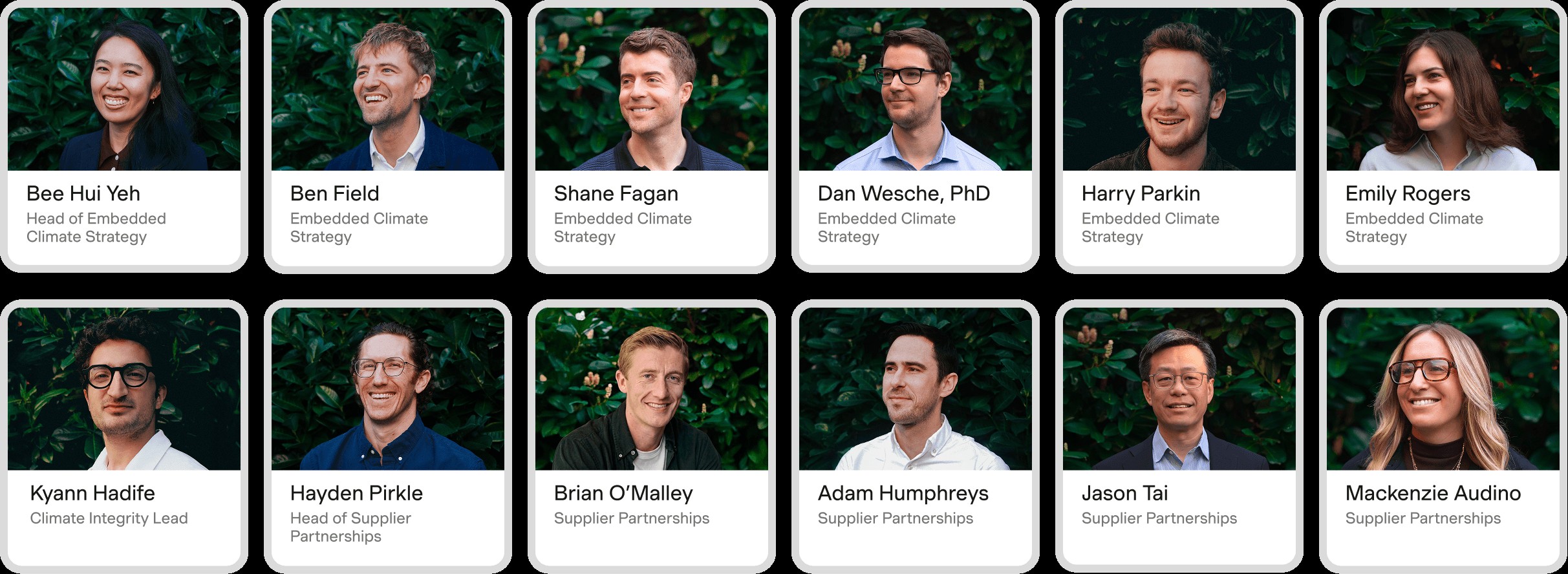
There is a revealing difference between this and a simple marketplace. Patch says it does not own or invest in the projects it recommends. It pairs that claim of neutrality with market data, software and embedded climate strategists who work with customer teams. Its business model combines B2B procurement and advisory work with marketplace transaction fees. Patch's public request-for-proposal page mentions standard marketplace fees; it does not publish a complete enterprise price list. The cost of an actual program therefore depends on the credits, contract and service, rather than one universal per-tonne figure.
One contract, several futures
The clearest example is IFS, the enterprise software company. It wanted a supply of externally verified credits over five years to address residual emissions from operations and business travel. Patch helped structure a multi-project offtake spanning nature-based removal, engineered removal and avoidance. The agreement gave IFS a way to plan supply and price across several years; it gave project developers a committed buyer. Future delivery also raises the stakes of diligence, so Patch tracks status and says it will replace credits from a project that fails to deliver a future vintage at no additional fee.
Another side of the company serves sellers. CarbonOS, introduced in 2023, lets project developers manage estimates, verified inventory, sales, reserves and delivery. Patch said at launch that suppliers used its software to manage or ultimately deliver more than 130 million tonnes of credits. Radius, by contrast, lets a consulting firm, investor or corporation offer a branded selection of credits to its own network. Change Climate uses it for participating brands. The original API remains useful wherever a company needs to embed a purchase in another product.
Patch's customers include Workday, Autodesk, Bain & Company, Deutsche Telekom, IFS and Starling Bank. They do not all buy for the same reason. Some are constructing long-term portfolios. Others need an auditable record for a small purchase. For a buyer, the practical use is to write the criteria first: emissions goal, preferred project types, delivery year, acceptable risk, budget and evidence required. Only then compare projects. That order is easy to copy even without Patch.
The instrument matters
Patch has also widened the conversation beyond carbon. Its 2026 writing groups credits with renewable energy certificates and sustainable aviation fuel certificates. These instruments answer different questions: a carbon credit concerns a tonne of emissions avoided or removed; an REC documents renewable electricity generation; a SAF certificate concerns a share of lower-carbon aviation fuel. Buying the wrong instrument for the wrong emissions problem can produce an impressive portfolio and an unimpressive explanation.
The same distinction sets a limit on the Patch model. A brokered or software-managed credit cannot replace a company's own emissions reductions. A database cannot turn weak project evidence into strong evidence, and a forward contract still depends on a project delivering. Patch can make records comparable, surface risk and organize the transaction; the environmental result is decided out in forests, factories, fields and registries. Its useful promise is more modest, and therefore more interesting: make the work visible enough that a company can tell what it bought, why it bought it, and what happened next.