A binder is an unusually persuasive technology. It needs no battery, survives neglect, and can be understood by anyone who has mastered turning a page. It also has a talent for concealing what happens after the page is turned. Was the instruction followed? Was it the latest version? Did somebody notice a problem and tell the next shift? The binder, impeccably polite, declines to answer.
That silence became the business opportunity for WI, the San Francisco company originally called Wearable Intelligence. Its founders began with wearable computing. By 2016, the business had become Parsable, selling a way to digitize industrial work. The interesting part of the story is how a company named for something futuristic came to concern itself with something so stubbornly ordinary.
- The turn: Google Glass applications gave way to a broader industrial workflow business.
- The product: mobile instructions, collaboration and data about how work gets done.
- The buyers: manufacturers and energy businesses with frontline teams.
- The next chapter: CAI Software acquired Parsable in September 2024.
A future interrupted by a binder
Wearable Intelligence was founded in 2013 by Yan-David Erlich, Ryan Junee and Chase Feiger. The original idea involved applications that let industrial workers consult procedures through Google Glass. But visiting customers exposed a more basic problem: much of the work still depended on paper.
“They were using binders full of pieces of paper”Chase Feiger, co-founder, speaking in 2016
The observation redirected the business toward sharing instructions, tracking progress and helping employees collaborate. By June 2016, Erlich was CEO, Junee president and Feiger vice president of business development. Parsable had replaced the wearable-specific name.
The narrow hardware premise was the first thing the company outgrew. This history does not require a grand verdict on smart glasses. A customer can need better information without needing a particular apparatus for displaying it. The useful move was to keep following the operational problem after it wandered away from the original device.
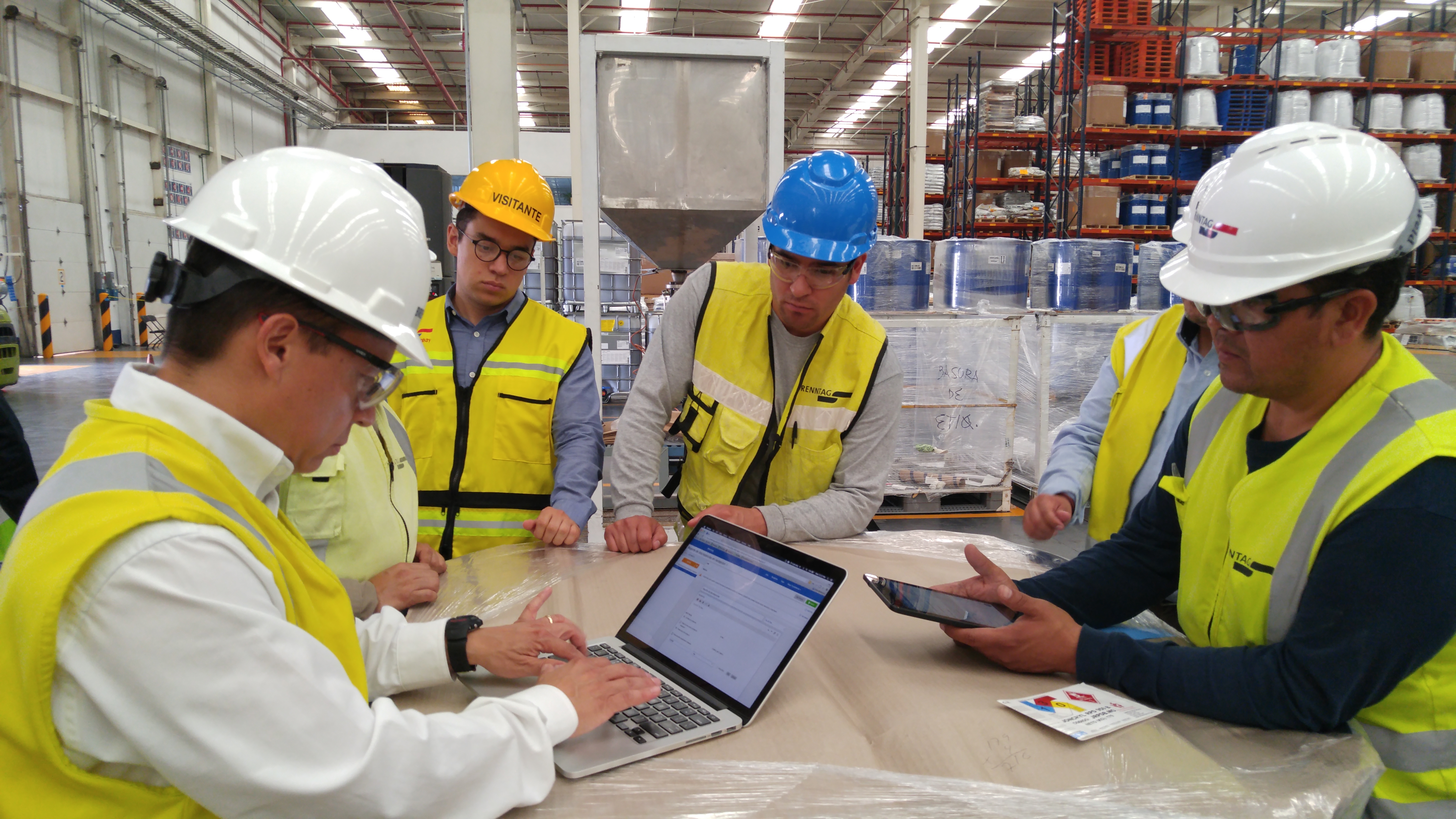
The instruction becomes a conversation
Parsable’s Connected Worker product divides the job into three parts. A mobile app puts procedures and training material in workers’ hands, supports collaboration with experts and collects operational information during tasks. An administration portal lets managers build digital forms, checklists and standard operating procedures without writing code. Analytics turns the resulting activity into patterns teams can examine.
The portal can connect with ERP, manufacturing execution and maintenance-management systems. That matters because a factory already has software keeping track of its business. Parsable’s pitch concerns the work performed by people beside the equipment, including the information those people generate while doing it.
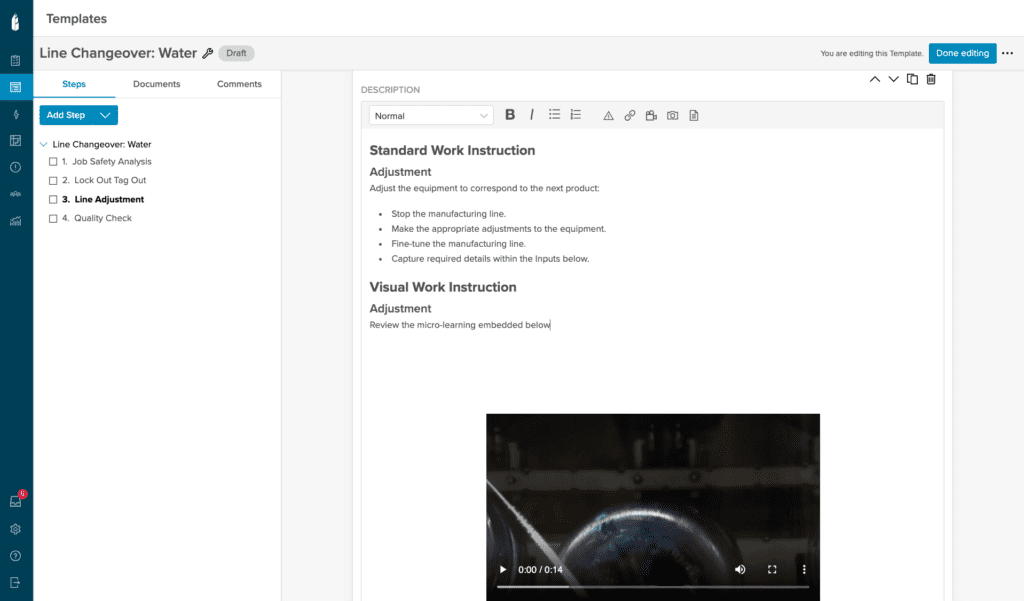
Consider the difference between publishing an instruction and recording its execution. A document can tell a worker what should happen. An interactive workflow can also ask for the information that shows what did happen. The second version gives the next person something more useful than an assurance that a file exists.
Procedure → mobile work → recorded responses → revised procedure
The company now advertises AI-powered analytics with natural-language questions, customizable dashboards and anomaly detection. These are advertised product capabilities, rather than a promise that every plant will achieve the same result. Their usefulness still begins with a decidedly unglamorous activity: getting relevant data into the system.
Twenty plants, eight weeks
One concrete example comes from Bimbo QSR’s safety program. Parsable’s published case study describes standardizing safety procedures at 20 plants across 10 countries in eight weeks. It also describes workshops delivered in eight languages and digital capture of safety information that leaders could review at facility, regional and enterprise levels.
Reported rollout scope in Parsable’s Bimbo QSR safety case study. These figures describe deployment, not an independently measured reduction in incidents.
That distinction is useful. The case study’s strongest specific evidence concerns how widely and quickly procedures were distributed. Its broader account connects digital information with corrective action and better oversight. It is a story about a safety program using a tool, with training and operational decisions accompanying the software.
A procedure shared across countries has to travel farther than a file. People have to understand it, use it and know what to do when the actual situation differs. The eight-language detail is therefore more revealing than another adjective about transformation. It points to the work required to make a common standard usable.
Who pays for the missing handoff?
The customers are industrial organizations. Parsable has publicly named Grupo Bimbo, Georgia-Pacific, Henkel, Shell, Suntory and Yara. The 2024 acquisition announcement adds Reyes Coca-Cola Bottling and Holcim to the picture. These businesses have production, maintenance, quality and safety work to coordinate across frontline teams.
The business model is enterprise software delivered through the cloud, with a sales process that begins with a custom demo. Professional services include template authoring, training, implementation consulting, project management, integrations and business intelligence work. The buyer is acquiring a system and arranging how that system will enter daily operations.
For a prospective customer, the sensible budget question includes the software agreement, devices, implementation and staff time. That is an evaluation framework, rather than a quoted Parsable price. The company’s financing figures answer a different question: how much capital investors supplied to develop and expand the business.
Selected rounds, not annual revenue or customer pricing.
A roughly $7.9 million financing in 2014 preceded the $20 million Series B in 2016. Saudi Aramco Energy Ventures led that later round, with Airbus and Schlumberger participating. A $40 million Series C followed in 2018. In August 2020, Parsable announced a $60 million Series D co-led by Activate Capital and Glade Brook Capital Partners, reporting cumulative funding above $133 million.
Copy the observation before the software
The practical lesson is to examine one job closely. Where does the instruction live? Who changes it? What happens when a worker sees something unexpected? Where does that observation go? WI’s history suggests a useful order of operations: understand those handoffs before deciding which device will carry them.
The alternatives depend on the missing piece. A knowledge base can hold instructions; a remote-expert tool can connect a worker with help. In its own discussion of frontline technologies, Parsable points out that a recorded expert conversation can be difficult to associate with the specific task where it occurred. Live remote assistance also needs connectivity, even when other work can proceed offline.
Parsable describes offline access with later cloud synchronization for its connected-worker platform. For a buyer, that invites a concrete trial: test the actual workflows in the actual working environment, including connectivity gaps. A capable app cannot make a live video conversation happen without a connection.
The same discipline applies to adoption. If a procedure is wrong, making it digital simply distributes the error more efficiently. If responses disappear into a dashboard nobody uses, the feedback loop ends there. These are operational conditions to examine during a pilot. The useful result is a better decision or handoff, rather than a more handsome checklist.
The company after the name change
In March 2020, Parsable announced a non-exclusive partnership with Boston Consulting Group, pairing its software with transformation consulting. The arrangement reflected a practical fact about industrial change: installing a tool and changing an organization’s habits are related jobs, and neither completes the other automatically.
Its published values emphasize customers, teamwork, accountability and continuous improvement. Read those as the company’s stated commitments. They fit a product whose promise depends on listening to frontline information and acting on it.
On September 25, 2024, CAI Software announced the acquisition of Parsable. CAI already supplied manufacturing, enterprise planning and supply-chain software. The announcement said Matt Belkin would continue as Parsable CEO, reporting to CAI CEO Brian Rigney. The combination put digital work instructions alongside a broader set of industrial systems.
WI survives online as an older identity pointing toward Parsable. The business has traveled a considerable distance from its wearable-computing premise. Yet the customer question remains pleasingly small enough to ask on a factory visit: when somebody turns the page, does the organization learn anything?