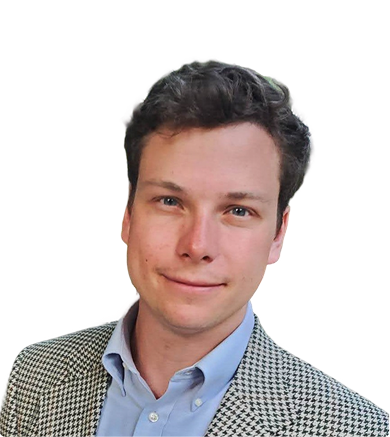
Ridge Bio's pitch is deceptively simple and quietly radical. Most drug discovery hunts for molecules that already exist somewhere in biology. Ridge wants to design them. The company pairs machine learning with what it calls "massive cell-free datasets" - biology run in a test tube instead of inside a living cell - to engineer precision enzymes and the delivery systems that aim them at the right tissue. The stated mission is to catalyze "the next generation of precision medicines."
That phrasing is not marketing filler for Kightlinger. Catalysis - the chemistry of making reactions happen - is the literal substance of his scientific life. His research career was built on cell-free protein synthesis and protein glycosylation, two of the more stubborn problems in modern biomanufacturing. Glycosylation, the sugar-coating that decorates most therapeutic proteins, is the thing that quietly breaks a great many biologics. He spent years learning to control it. Ridge Bio is the commercial version of that obsession.
The structure of the company tells you how he thinks. Rather than chase a single drug, Ridge launched with three platforms at once: NativeLink, ProTrigger, and Catalytic Medicines. It is a toolmaker's instinct - build the press before you print the newspaper.
NativeLink
Site-specific protein and peptide modification for building antibody-drug conjugates without re-engineering cell lines or protein sequences.
ProTrigger
Conditional linkers designed to switch a drug payload on only inside the target tissue, and stay quiet everywhere else.
Catalytic Medicines
Engineered enzyme-based therapeutics aimed at the targets the rest of the field calls undruggable.
The Making
Goldwater, then the bench, then the boardroom
Before the Slack channels and the seed round, there were pipettes. Kightlinger trained at Northwestern University from 2014 to 2019, where his work centered on cell-free systems and the chemistry of glycoproteins. The credentials he collected along the way are the kind that follow a person around: a Barry M. Goldwater Scholarship as an undergraduate, a National Science Foundation Graduate Research Fellowship, and a Distinguished Graduate Researcher Award that put him at the top of his 2019 class.
He published, and not quietly. His name sits on more than ten peer-reviewed papers, including work in Nature Communications and ACS Synthetic Biology - a body of research spanning glycoprotein biomanufacturing, antimicrobial proteins, and the cell-free machinery that makes them possible. This matters because it explains the order of operations. Kightlinger did the science first and built the company second. Ridge Bio is not a thesis in search of a lab. It is a lab that grew a thesis.
After Northwestern, he moved into the San Francisco Bay Area biotech ecosystem - the South San Francisco and Palo Alto corridor where cell-free synthetic biology has been quietly maturing from academic curiosity into industrial method. By the time Ridge emerged, the field had caught up to the bet he had been making for a decade.
Goldwater Scholar
NSF Graduate Fellow
Top of 2019 Class
Nature Communications
ACS Synthetic Biology
The Company He Keeps
A seed-stage startup with a Nobel laureate on the masthead
Here is the detail that makes people look twice. Ridge Bio is twelve people. Its scientific advisory board includes Carolyn Bertozzi, who won the 2022 Nobel Prize in Chemistry for bioconjugation - the exact discipline NativeLink is built on. Sitting alongside her: MIT's Sangeeta Bhatia, cell-free pioneer Michael Jewett as academic co-founder, protease and linker specialist Gabe Kwong, and others spanning industrial enzymes and the extracellular matrix.
You do not assemble that bench by accident, and you do not keep it with a weak idea. The advisory roster is, in a sense, Kightlinger's first product - proof that the people who understand this chemistry best were willing to put their names next to his.
Carolyn Bertozzi, PhD
Nobel Laureate / bioconjugation
Michael Jewett, PhD
Academic co-founder / cell-free systems
Sangeeta Bhatia, MD, PhD
Precision oncology
Gabe Kwong, PhD
Proteases & linkers
Hans Wandall, PhD
Extracellular matrix
Vesna Mitchell, PhD
Industrial enzymes