A broken car radio was an excellent inconvenience for Marvin Rush. Taking it to a repair shop introduced him to another line of merchandise: used television sets. Families were trading up. Their old sets still had buyers. Rush began buying, refurbishing, and reselling them, even arranging payment terms. Before the truck dealerships and the stock-market listing, he was already interested in both halves of a transaction: finding something worth selling and helping somebody afford it.
There is a pleasing lack of glamour to this beginning. A radio fails. A teenager visits a shop. A business opportunity arrives without bothering to dress for the occasion. Much later, when Rush had a company measured in billions, the underlying question would remain recognizably similar: what else does the customer need to make the purchase work?
The bus station came before the boardroom
Born in Houston on October 10, 1938, W. Marvin Rush grew up close to the transportation business. His father owned a bus company. After school and during summers, the younger Rush learned how it operated. His business education had schedules, vehicles, and customers attached to it.
He eventually spent four years as vice president and general manager of Pioneer Bus Company. In 1961, he joined Hausman Bus Sales as vice president of sales. Selling buses took him through Central and South America. These were substantial responsibilities before the business bearing his name existed, and they complicate the tidy image of a founder appearing fully formed beside his first dealership.
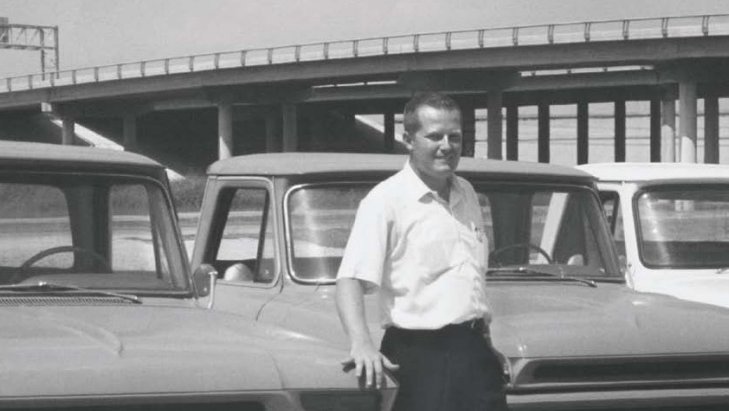
He had been learning transportation from several angles: running an operation, selling its equipment, and dealing with buyers across borders. In 1965, after obtaining a GMC franchise, he left Hausman and founded Rush Enterprises in Houston with two partners. He was 26. The business began with one dealership, while his ambition already extended beyond its lot.
A truck was only the start of the sale
The commercial truck market was fragmented, with small dealers scattered across the country. Rush wanted connected locations across the southern United States. In 1967, the company acquired its first Peterbilt franchise. Leasing, financing, and insurance broadened what a customer could arrange through the business.
The appeal becomes easier to understand when the truck is considered somebody's working equipment. Buying it is one decision. Paying for it, maintaining it, and finding support away from home create others. Rush's dealership network gathered those needs into a continuing business relationship. The sale could begin an association that lasted through years of work.
Expansion brought an early warning, too. Rush's move into Hawaiian tire stores in the late 1970s ran into a recession. Frost National Bank helped him stay afloat while he sought a buyer. Back on the mainland in 1982, he spent years paying down debt and rebuilding. The eventual public company had a founder who had already discovered how little a large ambition can impress a creditor.
A relationship built around the vehicle's working life.
A billion dollars, with a deadline attached
By 1992, Marvin and his leadership team, including sons Rusty and Robin, had set their sights on a billion-dollar company by 2000. The target was ambitious enough that Rusty would later remember the absence of a clear route to it. A deadline can be an excellent conversationalist; it keeps asking what happens next.
The next consequential answer was public ownership. Rush Enterprises listed on Nasdaq in June 1996, becoming the first commercial truck dealer to go public. It was an unusual step for a business rooted in dealership lots and service bays. Access to public capital gave the network another means of financing its expansion.
The billion-dollar mark arrived in 2004, four years after the original deadline. The company also completed a second public offering that year. The distinction between the goal and its timing matters. The family had named a destination, missed its calendar appointment, and kept building until it reached the place itself.
- 1965One GMC dealership in Houston
- 1967First Peterbilt franchise
- 1996Nasdaq listing
- 2004Annual revenue passes $1 billion
The chairman was called Marvin
By the time he was chairman of a multibillion-dollar business, employees still called him Marvin. Technicians, salespeople, and office staff did not need an elaborate verbal runway to approach the founder. That informality gives his management philosophy a useful human scale. A company can become enormous while its chairman remains available by his first name.
At the company's second annual technician skills rodeo, he recalled his father's advice: hire capable people, then make sure they share in the rewards. Sixty technicians were competing for nearly $100,000 in prizes. Here was an employee recognition program with enough money involved to suggest that recognition had survived a meeting with accounting.
“In my view, we in corporate serve them.”
Marvin Rush, speaking about employees, 2008
He put the corporate office in a supporting role. Its purpose was to help employees perform their work, which would help them serve customers. For a dealership dependent on technical competence, that order had practical consequences. The people fixing the equipment were central to what the company sold.
A pocket-sized set of instructions
Rush also gave the culture a physical object. In 1992, he introduced the Rush Enterprises coin, carrying the company motto and four core values: fairness, excellence, productivity, and positive attitude. Employees received something small enough to carry rather than another statement destined for a conference-room wall.
Fairness. Excellence.
Productivity. Positive attitude.
“The Customer is the Boss” is a particularly interesting inscription for a company founded by someone accustomed to making decisions. It places an external check on authority. Whatever the reporting chart says, the person who needs the truck has a vote. The company continued to emphasize the coin after Rush's death, treating it as a reminder of how he expected business to be conducted.
The object gives a sprawling organization an unusually portable piece of continuity. Acquisitions can add buildings and brands quickly. A shared habit takes longer. Rush had chosen a modest carrier for a demanding expectation: remember whom the whole arrangement exists to serve.
Giving other people the room to work
In June 2007, Rush received the Ernst & Young Entrepreneur Of The Year award for distribution and construction in the Houston and Gulf Coast area. His response returned to employees, the tools they needed, and the freedom to use their judgment.
“provide the proper tools and allow them the independence and freedom to act.”
Marvin Rush, accepting his regional entrepreneurship award, 2007
He credited the people who had spent decades turning his original idea into a network. The remark is revealing because independence can become harder to offer as a company grows. More locations bring more reasons for headquarters to intervene. Rush publicly associated achievement with giving capable employees enough room to do their jobs.
In April 2008, he received the Truck Dealer of the Year award, presented by Heavy Duty Trucking and the American Truck Dealers organization. He was selected from 12 nominees. The award considered business performance, industry involvement, and civic accomplishments. By then, his career had stretched across more than four decades of dealership work. The recognition gathered together activities that customers, employees, and neighbors would have encountered separately.
The next Rush had worked the floor
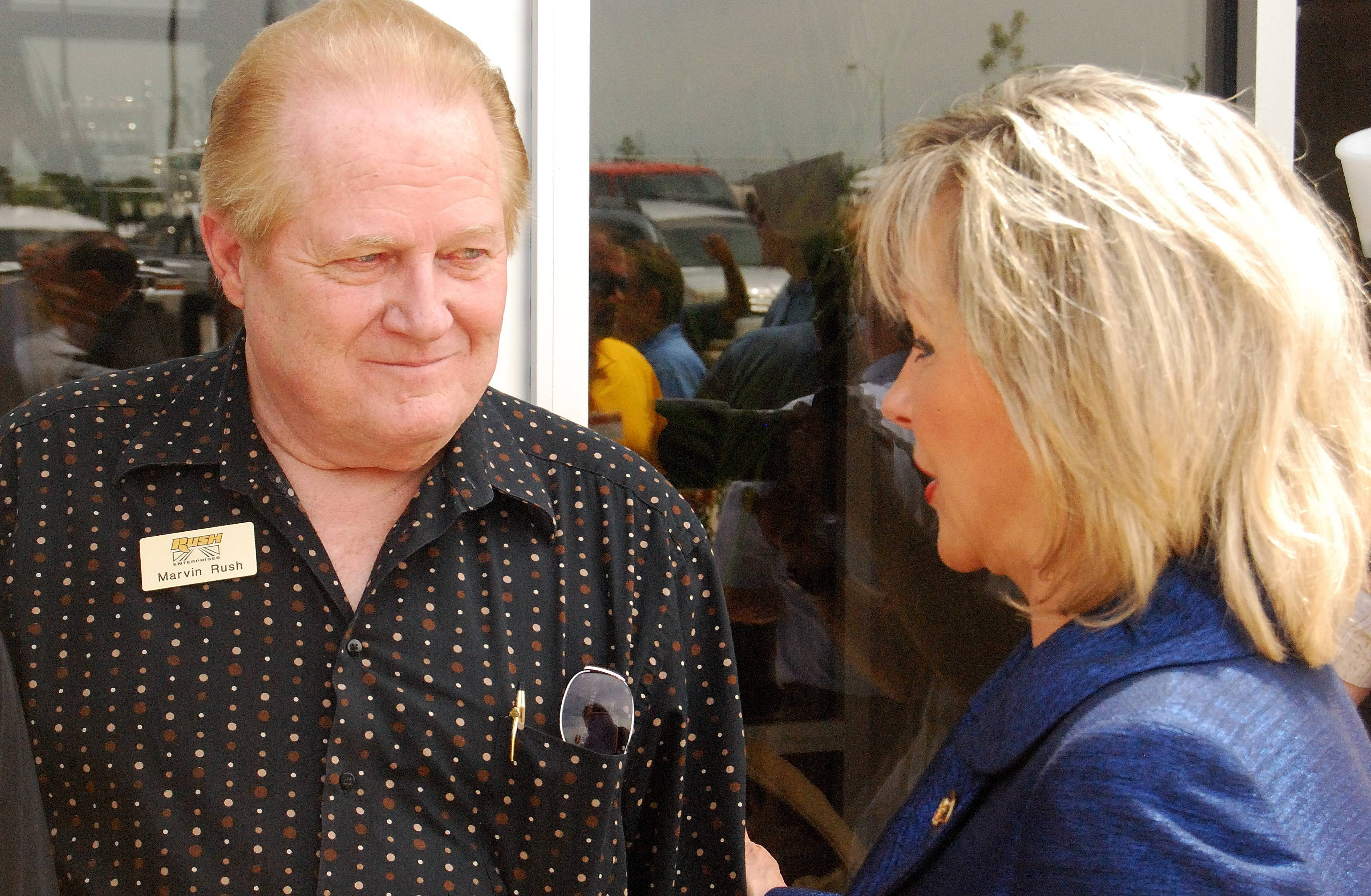
Rusty Rush became chief executive in 2006, following years in the business and responsibility for its daily operations. Marvin remained chairman until May 2013. On retiring from that position, he became chairman emeritus and stayed on the board. His board service ended in August 2016.
Those dates describe a succession spread across several stages. Operations, executive responsibility, the chairmanship, and board membership changed hands on different schedules. For a company carrying its founder's surname, that gradual transfer matters. The name above the dealership could remain familiar while the person making its daily decisions changed.
Marvin's interests also extended to TexStar National Bank, TrustStar Insurance Services, and Rush Chevrolet. His early ambitions had included owning a bank, becoming a General Motors dealer, taking a company public, and reaching a billion dollars in annual sales. Those goals were concrete enough to be checked off. They also reveal how broadly he thought about a business career.
An empty chair, and a continuing invitation
Rush died on May 17, 2018, aged 79. Seguin, Texas, had been his home. His support for young people in agriculture gave his public life another setting, at the San Antonio Stock Show & Rodeo, whose Hall of Fame inducted him in 2009.
At the 2019 livestock auction, an empty chair was reserved in his honor. Rusty bid $119,939 for the grand champion steer, continuing his father's support for the event's scholarship work. For a family whose history is so often expressed through vehicles and revenues, the unoccupied seat offers a more personal measure of absence.
Recognition continued. The American Trucking and Industry Leader Hall of Fame inducted Marvin on October 23, 2024, with Rusty, family, and colleagues accepting. On April 12, 2026, he became the Texas Automobile Dealers Association's 24th Hall of Legends inductee, honored posthumously at its San Antonio conference.
The medals and dinners have their place. So do the smaller details: a teenager arranging terms on a used television, a chairman answering to Marvin, a coin carried to work. They make his career understandable at a scale smaller than a billion dollars. Rush kept finding ways to bring another person into the transaction. The company grew around that habit.