Vincent Pluvinage spent a year deciding whether to buy a project. He talked to the scientist behind it. He read the patent applications. The subject was silicon nanowires, which is an unusually small thing to devote twelve months to, unless you suspect it might eventually belong inside a very large number of cars.
The scientist was Yimin Zhu, then at Nanosys in Silicon Valley. They met in 2012. Zhu and his colleagues had been working on silicon nanowires for lithium-ion batteries since 2007. Pluvinage had a background in physics, experience running companies and a professional interest in inventions that could be licensed. He wanted to understand the work before helping finance its future.
In 2013, a small investor group he assembled bought the project. The acquisition included the team, facilities, equipment and patents. OneD took shape around an existing body of research and the people who knew how to continue it. The cheque bought obligations along with possibilities. Those would occupy considerably more than a year.
“I am an inventor at heart.”
Vincent Pluvinage, 2023
An education in getting things out of the lab
Pluvinage’s route to that purchase crossed several borders and several businesses. He has described being born in Africa, growing up in Paris and Brussels, and retaining his Belgian nationality after becoming American. His education took him from applied physics engineering at the Université catholique de Louvain to a doctorate in bioengineering at the University of Michigan.
The combination matters to the career that followed. He could examine a technical proposition as an engineer, then approach the agreement around it as an operator or investor. Both jobs appear repeatedly in his record. A patent application asks whether an invention can be described and protected. A business asks who will use it, under what conditions, and for what price.
His first employer was AT&T Bell Laboratories, where he worked on the technical staff from 1985 to 1987. He participated in the transfer of technologies to ReSound and moved to Silicon Valley in 1987. Over the next decade, his responsibilities at ReSound extended across research, international operations, business development and strategic marketing. He was acquiring an education in everything that happens around an invention.
ReSound went public in 1993. In June 1997, he joined Preview Software; after its merger with Portland Software in 1998, he led Preview Systems. Its public offering followed in 1999. The two listings are milestones in his biography, but the work between them is more revealing: technical knowledge repeatedly accompanied by the practical work of running a company.
Before batteries, there were downloads
At Preview Systems, the questions included how digital content could reach customers while respecting its owners’ rights. In 2001, Preview and Convera announced an integration for secure distribution of music and other media. Pluvinage’s stated goal was to make the complications of compatibility and licensing disappear from the consumer’s experience.
There is a family resemblance between that task and his later battery work. An invention has to move through a system made by other people. A customer would quite reasonably prefer the machinery of that movement to stay out of the way. In software, the friction involved formats and rights. In batteries, it would involve materials, production equipment and qualification.
He subsequently co-founded IPValue Management, led strategic acquisitions and private equity work at Intellectual Ventures, and founded Invention Capital Partners. Intellectual property became a business subject in its own right. That history helps explain why, when Zhu’s nanowire work caught his attention, he spent so much time with its patent applications. The documents were part of what he was evaluating.
Technical staff
Public offering
Nanosys assets acquired
Research & investment
The customer already owns a factory
The attraction of silicon in batteries comes with an inconvenience. Silicon can hold more lithium than graphite, but it changes volume as a battery charges and discharges. A material’s promise on paper can become a mechanical problem in use. OneD’s approach uses silicon nanowires with graphite, seeking to capture the benefit while making the resulting material practical.
For Pluvinage, the existing industrial system belonged in the discussion from the beginning. OneD’s argument centred on working with commercial battery-grade graphite. Suppliers already produced it. Battery manufacturers already understood it. An improvement that could enter those relationships had a different commercial proposition from one requiring a customer to start again.
In his account of choosing the project, he credited Zhu with a manufacturing mindset as well as scientific understanding. Their roles were complementary: the scientist developing materials and processes, the investor and executive working on the company and partnerships around them. The acquisition preserved the technical team rather than treating the patents as a self-sufficient business.
OneD organised its model around joint development, pilot production and licensing. Its partners would participate in scaling the technology. For an executive with Pluvinage’s background, the attraction is understandable: research could reach several manufacturers through agreements and transferred know-how. The burden was to show that the process could behave reliably beyond the original laboratory.
The price of being useful
On September 29, 2022, General Motors announced a joint research development agreement with OneD. GM Ventures and Volta Energy Technologies also participated in a Series C round that had closed at $25 million. The round’s size matters here: that was the total financing announced, rather than a cheque of that size attributed solely to GM.
The research agreement concerned the potential use of OneD’s silicon technology in GM’s battery cells. Higher energy density and lower cost were the objectives. A research partnership creates a route to testing and development; it leaves the eventual manufacturing outcome to be earned. Pluvinage had brought the project into an automaker’s research programme, an important step with further steps attached.
OneD’s Series C round announced in 2022, with participation from GM Ventures and Volta Energy Technologies.
Affordability was a recurring concern in his public conversations. In a 2023 discussion with Chris Berry, the competition to make electric vehicles affordable was central to the subject. Range and charging speed might attract attention, but a buyer still has to meet the price. Pluvinage’s industrial argument therefore had an ordinary destination: a car that more people could afford.
That concern also shaped the way he discussed learning curves. In a 2022 podcast, he described improvements in design and production accumulating over years, with performance rising and cost falling through successive steps. It was a sober timescale for a field often described through the next breakthrough. The work after the announcement could be longer than the work before it.
The licensing structure also changes what a pilot line must demonstrate. OneD described its programme as a way for customers to obtain material for cell coating and battery qualification. A batch has to become evidence that another business can evaluate. That is a less glamorous objective than announcing a new material, but it is close to the everyday work of persuading an industrial customer to proceed.
The calendar loses to the factory
In August 2024, OneD announced the completion and commissioning of its pilot production line in Moses Lake, Washington. Construction had broken ground the previous October; equipment installation followed in April, with startup and commissioning in July. The company said initial production runs matched the performance of materials made at its Palo Alto research facility.
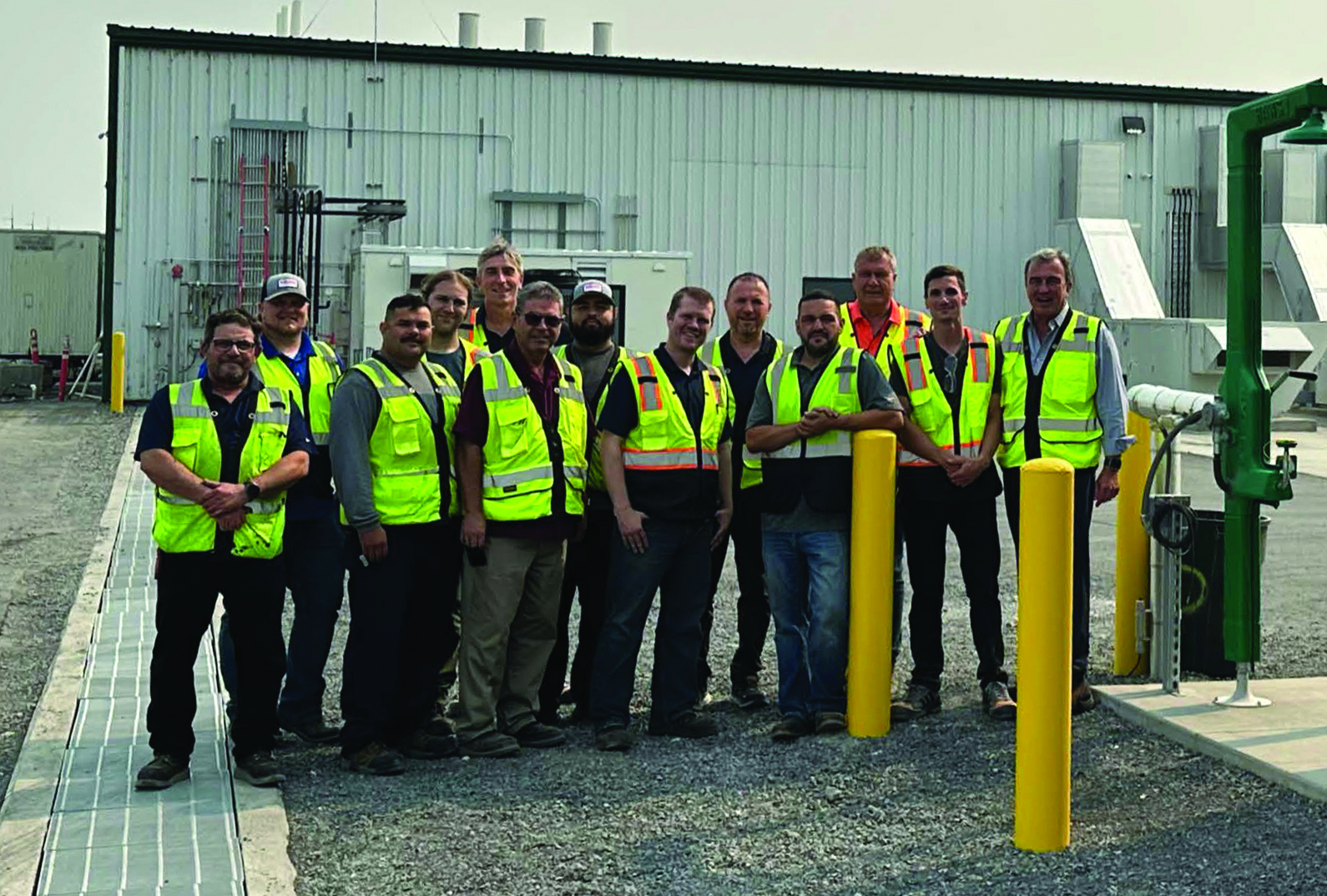
Pluvinage spoke then about customers wanting to verify the process’s costs in a manufacturing environment, using graphite from different suppliers. The sentence could almost serve as a description of his chosen terrain. An appealing material still faced questions about the equipment, the inputs, the cost and the quality of the next batch.
By May 2025, the story had taken a harder turn. The Moses Lake pilot facility’s closure was reported, along with layoffs in California. Pluvinage was identified as OneD’s former CEO. He attributed part of the difficulty to tariffs and their effect on electric vehicle demand. The reported closure followed the commissioning announcement by less than a year.
Both events belong in an account of his work. A process can reach a technical milestone while its business faces a deteriorating market. Investment in a pilot facility does not guarantee the demand needed to sustain it. His founding decision had always joined scientific and commercial questions; at Moses Lake, their different pressures became particularly visible.
The experiment after the experiment
His comments about verification offer another view of the person behind the agreements. In March 2025, he discussed submitting OneD’s manufacturing data for an outside life-cycle assessment by Minviro, followed by further scientific review. The assessment concerned the technology’s potential manufacturing carbon footprint. He stressed the value of having business claims examined by people outside the company.
In a separate public reflection on Zhu’s research team, Pluvinage praised concentrated experiments, controls and analysis of failures. His preference for the working day was unusually concise: “As few meetings as possible. Learning by doing.” It is a management recommendation likely to find supporters well beyond the battery industry, especially among people currently attending a meeting.
In December 2025, he described developing AI tools for work on patentable inventions. He connected that effort to his experience managing patent portfolios and negotiating transactions. It was a familiar subject approached with new instruments: how an invention is developed, protected and brought into a business relationship.
His public professional profile now points to Invention Capital Partners, while OneD lists Jeff Chamberlain as CEO. More recent posts range from AI tools for invention work to satellite communications. The interests extend beyond batteries, as they did before OneD. The thread through the career remains the practical journey of an idea: someone understands it, someone backs it, and eventually someone else has to use it.
Follow the conversations
- LinkedIn: Vincent Pluvinage
- OneD Battery Sciences
- Watch: Munro Live conversation
- Watch: SINANODE conversation with The Limiting Factor
- Listen: The Power Current with Chris Berry
- 2022 GM research announcement
- 2024 pilot commissioning announcement
- 2025 pilot closure reporting
- Read: his view of focused research
- AI and patentable inventions