Eighteen months passed between an introduction and a signature. The company waiting for the contract was Ikigai, co-founded by Vinayak Ramesh to help businesses make decisions with AI. Its software addressed work that computers could accelerate. Its prospective customer moved at the speed of an organization deciding whether to change. There, in miniature, was the founder’s problem: a useful calculation still needed somebody willing to act on it.
Investor Ashu Garg had made the introduction and remained involved until the deal was signed. He had first met Ramesh in 2018; Ramesh, in turn, introduced him to MIT professor Devavrat Shah. The three were connected before Ikigai’s 2019 launch. Years later, that long customer courtship would supply a more revealing detail than a funding announcement. An algorithm could have a runtime. Trust insisted on its own calendar.
Ramesh’s career has moved between those two kinds of work. He has been a student researcher, a technical co-founder, a chief executive and a chief customer officer. The titles trace a route from making something work to helping someone make use of it. At Ikigai, that route led through the records businesses keep in tables, and the decisions people must make before the next shipment, sales period or planning meeting.
The return to the lab
Before the enterprise meetings came science competitions. Ramesh participated in the Discovery Channel Young Scientist Challenge in 2004, was an Intel International Science and Engineering Fair finalist from 2006 through 2008, and became an Intel Science Talent Search semifinalist in 2008. These are the early entries in a career that would later involve a fairly different sort of judging panel: a customer with a budget.
The sequence gives his technical work a longer history than the startup biography usually allows. Entrepreneurship did not supply his first encounter with a problem that needed an explanation. Science competitions had already put him in the business of taking an idea seriously enough to submit it for examination. The later founder would have recognizable credentials, but those teenage entries came before the credentials could do any introductions for him.
He studied electrical engineering and computer science at MIT, earning an undergraduate degree and later a Master of Engineering. Between those stretches of study, he helped found Wellframe and served as its CTO. By 2016, he had returned to MIT because he wanted to work on technical problems again. The return is a useful detail. His route into Ikigai included a deliberate spell back on the research side of the desk.
Working with Shah connected him to research on graphical models and distributed computation. Ikigai’s technical white paper describes the computing architecture behind its large graphical models in terms of message passing: parts of a graph exchange the information needed to perform a computation. It links that architecture to Ramesh’s graduate thesis. The dry vocabulary conceals a practical question. How do you make the mathematics run efficiently enough for someone to use?
Ramesh and Shah are named as inventors on the MIT-assigned patent Method and apparatus for graph-based computing, granted in July 2021. It describes computing units associated with graph nodes and channels connecting them through a messaging platform. The method brings an abstract graph into the machinery of computation. For Ramesh, the connection between research and product was quite literal: his name appears on the patent as well as the company.
Returns to MIT for graduate research
Co-founds Ikigai with Devavrat Shah
Graph-computing patent granted
Celonis acquisition agreement announced
The numbers already in the room
Ikigai’s choice of material was consequential. Its models work with structured and time-series data: records organized into fields, often collected over time. A business has plenty of these. Inventory, transactions, demand and supply chain signals all leave numerical trails. A system that can work with those trails has a role in decisions whose consequences arrive as goods ordered, money committed and people scheduled.
In backing the company in 2023, Premji Invest described an ambition to combine an accessible interface with graphical-model predictions, reconciliation and optimization. That pairing mattered. The person who understands a business process may have little reason to want a second career configuring AI infrastructure. Ramesh and Shah were trying to put their technical work within reach of the people already responsible for the process.
The platform grouped its work into three named capabilities. aiMatch reconciled data, aiCast handled forecasting, and aiPlan supported scenario planning and optimization. Taken together, they addressed a sequence familiar to an operations team: establish what the records say, consider what may happen next, and examine possible choices. The names sound tidy. Anyone who has tried to reconcile two slightly different business records will appreciate the ambition contained in the first step.
- 01ReconcileaiMatchBring disparate records together
- 02ForecastaiCastModel what may happen over time
- 03ExploreaiPlanTest scenarios and possible actions
A place for the exception
When Ramesh hosted the inaugural Data, Operations, AI, and People podcast episode in January 2022, his guest was Garg. The conversation put a name to the people Ikigai wanted to serve: data operators. They knew how their businesses worked and were comfortable with data, even when they were not engineers. Ramesh’s argument was that these employees should receive tools that expanded what they could do.
That is a revealing starting point for an engineer. The user arrives with knowledge the system needs. Removing manual work can free that person to concentrate on judgment, but judgment still requires a place in the process. In the podcast, Ramesh kept returning to the benefit for existing employees. His ambition depended on a relationship between technical capability and the expertise already sitting inside the organization.
“With AI, exceptions are the norm, not the exception.”
Vinayak Ramesh
Consider the example he used of a retailer cancelling its usual Labor Day sale. Historical data can capture a repeated promotion; an analyst can know that the coming year will differ. Ikigai’s expert input lets that information enter the model. It is a modest example with considerable explanatory power. A cancelled sale does not become less cancelled because a beautifully calculated forecast expected it to happen.
His work on the customer side makes this detail particularly relevant to his story. By April 2024, Ramesh was being identified as Ikigai’s chief customer officer. Earlier, he had been described as CEO and co-CEO. The change placed a technically trained founder close to the people testing the product against operational demands. Their exceptions, corrections and requests were part of the work the product needed to accommodate.
Teaching the buyer to use the machine
The formal record captures the executive at work. On August 18, 2023, Ramesh signed an SEC filing as Ikigai’s chief executive officer. Six days later, the company announced a $25 million Series A led by Premji Invest, with Foundation Capital and e& capital participating. Research had become an enterprise with financing, directors and the ordinary obligations of building a company.
Alongside the funding came a less glamorous but telling number. Ikigai said its academy had trained more than 6,000 students from over 90 countries, covering topics including no-code AI and time-series forecasting. Education had a place beside the software. A prospective user needed enough understanding to recognize a useful application, ask sensible questions and know what the result could support.
Ikigai Academy’s reported reach at the August 2023 funding announcement.
For Ramesh, who had returned to formal study himself, the emphasis made his accessibility goal tangible. A familiar interface could lower one barrier. Teaching could lower another. Together they acknowledged that adoption includes a learning process. Even a friendly spreadsheet can become an intimidating place when the person using it must explain the decision to somebody else on Monday.
The business and the classroom also shared an audience: people whose jobs already involved consequential choices. The academy’s existence gave the company somewhere to begin before a buyer was ready to change a workflow. A course could introduce forecasting concepts; a product could then give those concepts an operational use. That progression fits Ramesh’s recurring interest in helping employees make better use of the information around them.
A forecast finds its context
On May 12, 2026, Celonis announced a definitive agreement to acquire Ikigai alongside the launch of its Context Model. The proposed combination joined Ikigai’s planning, simulation and forecasting capabilities with Celonis’s understanding of business processes. The next day, Foundation Capital described Ikigai as acquired; Premji Invest’s portfolio also lists that status. The transaction gave the startup’s research a home inside a broader enterprise platform.
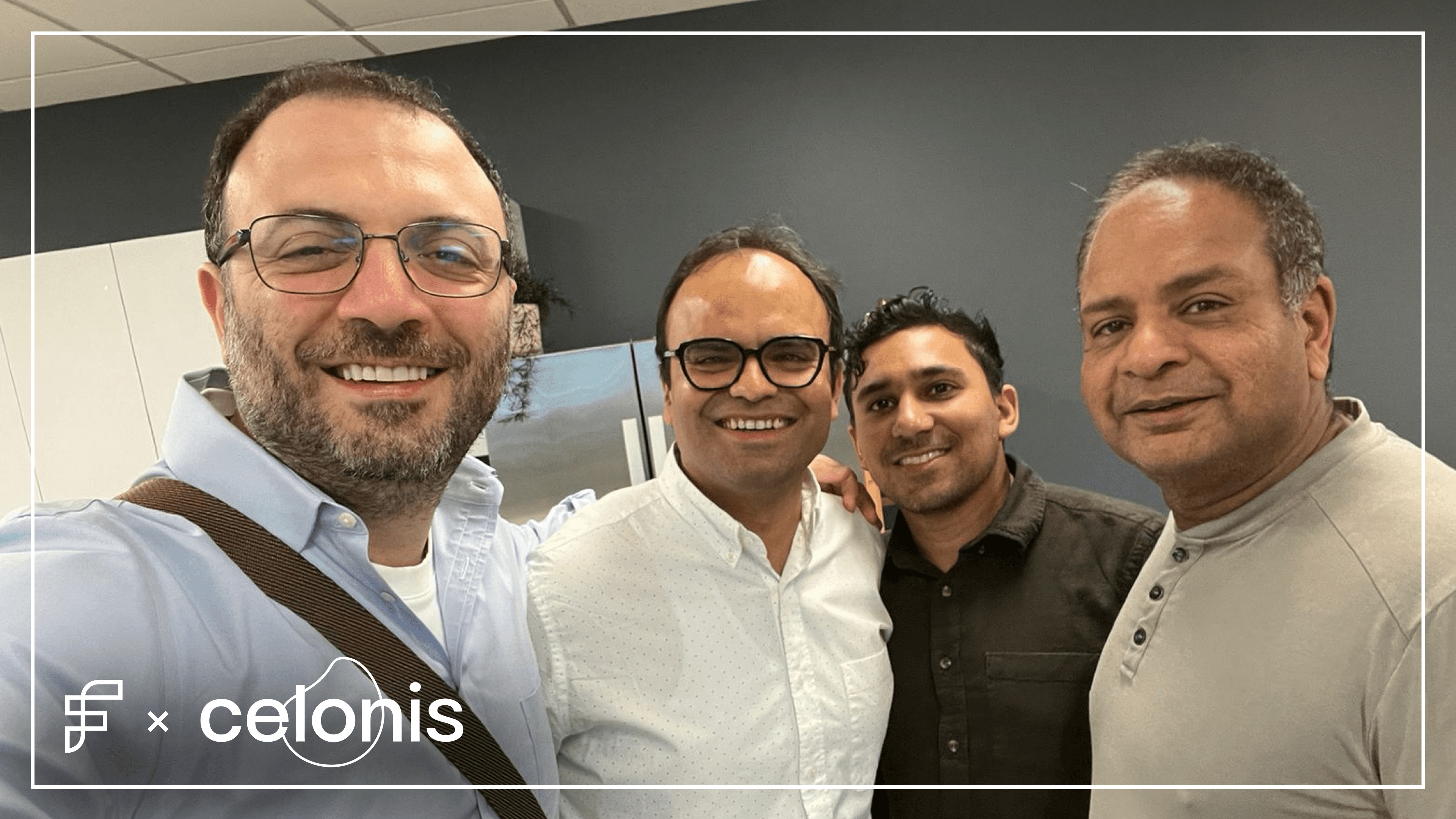
The co-founder announcement said Shah would join Celonis as Chief Scientist for Enterprise AI, with Ramesh joining as Field CTO. That announced role makes sense alongside the parts of Ramesh’s career already visible: the engineering education, the patent, the executive responsibilities and the customer work. It places his technical background close to the question that has followed Ikigai from its early days: how a business puts a model to work.
The deal also carried an institutional connection back to the university. Celonis said it would gain exclusive rights to MIT-owned patents licensed by Ikigai, and that MIT would become a Celonis shareholder. The research relationship had travelled a considerable distance from graduate study. Its eventual destination included ownership arrangements, enterprise integration and the prospect of forecasting becoming part of the machinery people already used.
Ramesh’s story is easiest to understand at that junction. He went back to MIT to work on technical problems. He then helped build a company whose usefulness depended on understanding people’s decisions. The eighteen-month contract belongs in the same biography as the graph-computing patent. One records a way to make computation work. The other records the time it can take to earn a place in someone’s working day.
Continue the conversation
- Ikigai website
- Vinayak Ramesh on LinkedIn
- The 2022 conversation with Ashu Garg
- Watch: Premji Invest’s Ikigai interview on Vimeo
- MIT: Large Graphical Model AI Gets Down to Business
- The graph-computing patent
- Society for Science: the 2017 honorees
- Ikigai’s Series A announcement
- Foundation Capital’s acquisition retrospective
- Celonis acquisition announcement
- The announced Celonis roles