01 A warehouse that finally agrees with its spreadsheet
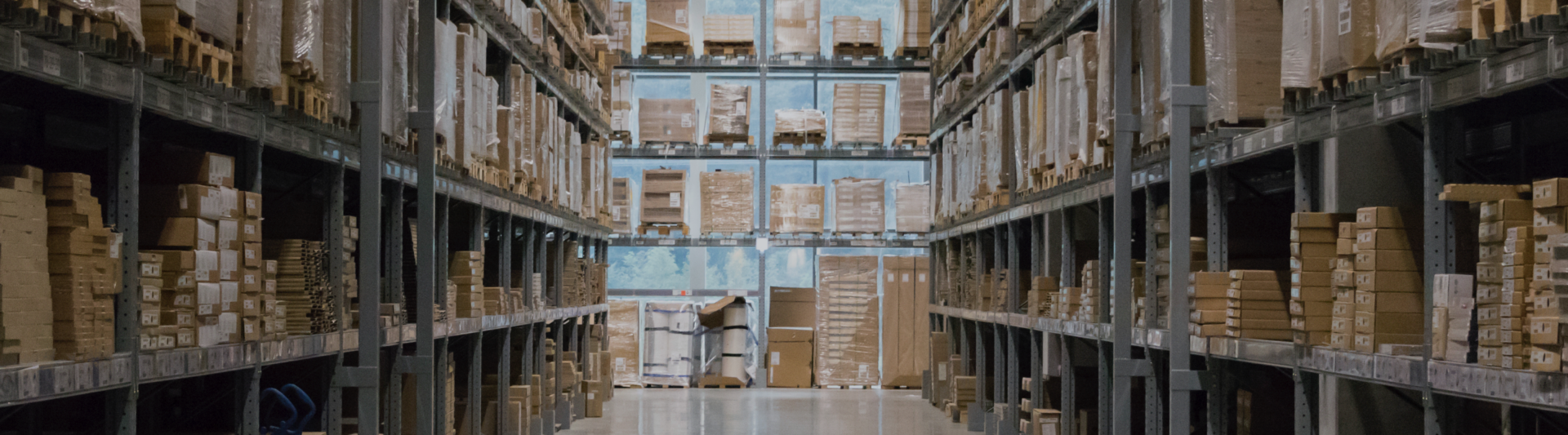
Walk a million-square-foot distribution center at 3 a.m. Forklifts hum in the cross-aisle. Somewhere on rack 47, a pallet is sitting in the wrong bay. The WMS has no idea. The night shift has no idea. The customer, who is expecting that pallet on a truck in six hours, will find out first. This is the moment Vimaan was built for - and the moment Vimaan is quietly erasing.
Vimaan, headquartered in San Jose with engineering depth in Bengaluru, sells one improbable thing: a warehouse that counts itself. Cameras live on forklifts, dock doors, and storage racks. Sensors look at every pallet that moves. Algorithms - trained on the small, gritty visual problems no one writes papers about - read barcodes, dimension cartons, flag damage, and reconcile the count in real time. The result, the company says, is up to 99.8% inventory accuracy, which is the kind of number warehouse operators have spent forty years trying to fake on a quarterly basis.
The truth about inventory accuracy is that almost no one has it. Vimaan's bet is that almost no one has to keep pretending.- YesPress Desk
02 The clipboard, the barcode gun, and the polite fiction
For three decades, warehouses fought the inventory problem with paperwork, then with scanners, then with RFID, then with WMS upgrades that promised to be the last upgrade. None of it worked the way the slides said it would. Cycle counts still happen on weekends. Audit variances still get smoothed into reconciliation entries. The retailer still ships the wrong SKU and blames the carrier. The polite fiction of "the warehouse knows what it has" remains, in most buildings, a fiction.
The deeper problem, Vimaan argues, is sensory. A modern warehouse is the closest thing in commerce to a city that nobody photographs. Stuff moves constantly; nobody sees it. WMS records intent ("this pallet should be in slot B-204"), not reality ("this pallet is, in fact, in B-203, on its side, with a torn label"). Closing that gap with humans is expensive. Closing it with RFID tags is expensive and incomplete. Closing it with cameras and AI - if the cameras and AI are actually good - changes the math.
Other companies tried to make inventory faster to count. Vimaan decided to make it impossible to lose.- The argument, in one sentence
03 What a sensor lifer noticed about pallets
SK "KG" Ganapathi co-founded Vimaan in 2017 with Marc Mignard. Ganapathi's resume reads less like a robotics founder and more like a sensor lifer - a Ph.D. in materials engineering, prior companies in MEMS and magnetic recording, the kind of background where you spend a decade staring at signal-to-noise problems and learning that almost every interesting business is a sensing problem in disguise.
The bet was simple, if also slightly impertinent. Warehouses had cameras already, mostly for security theater. They had forklifts that were essentially mobile platforms looking for a payload. They had aisles of barcoded inventory waiting to be read. What they did not have was anyone treating the building itself as a sensor. Vimaan would build the sensor.
Money agreed. In January 2022, Vimaan emerged from stealth with $25M from New Enterprise Associates, Wing VC, and Neotribe Ventures. Three months later, the Amazon Industrial Innovation Fund - a $1B fund that does not write speculative checks - added its name. Ryder Ventures and the USDA followed. The company has now raised roughly $53M, which is small for a sector that prints unicorns and entirely appropriate for a sector that has previously buried them.
Every interesting business, eventually, is a sensing problem in disguise.- A founder who has been right about this once before
Vimaan, in stops
- 2017Vimaan Robotics founded in Silicon Valley by KG Ganapathi and Marc Mignard. The clipboard is still the dominant warehouse interface.
- 2018-2021Quiet years. The company builds StorTRACK, DockTRACK, PickTRACK in stealth, runs pilots with anchor customers, and stays mostly off the press wire.
- January 2022Emerges from stealth. Announces $25M from NEA, Wing VC, Neotribe Ventures.
- April 2022Amazon Industrial Innovation Fund joins the cap table. The retail giant rarely picks favorites in warehouse tech; it picks Vimaan.
- 2023Expands product line - PalletSCAN, ParcelSCAN, PackVIEW, ViewDECK - covering receiving, pack, and parcel stages end to end.
- 2024Disclosed funding crosses $53M. Customers include GXO Logistics, Jaipur Living, and Meats by Linz.
- 2026Headcount near 120. Gartner recognition arrives. The polite fiction is in retreat.
A timeline edited for clarity, not drama. The drama is happening on rack 47.
04 Seven modules, one argument
Vimaan does not sell a robot, which is occasionally awkward at robotics conferences. It sells a sensing layer, glued to existing operations and existing forklifts, that talks to the WMS the customer already paid for. The pitch is unfashionably modest: don't replace your warehouse - let it see itself.
StorTRACK
Wall-to-wall, continuous counts of every storage location. The closest thing a warehouse has to a self-aware shelf.
DockTRACK
Verification at the dock door, in and out. The receiving error that becomes a six-month reconciliation problem is the one DockTRACK is most personally annoyed by.
PickTRACK
Cameras and sensors on the forklift itself, so the truck becomes an inspector. Inventory and order accuracy, measured in motion.
PalletSCAN
Drive-through pallet capture - dimensions, labels, damage - in the time it takes a forklift driver to nod.
ParcelSCAN
High-volume parcel reading for shipping accuracy. Dimensions, addresses, exceptions, all at line speed.
PackVIEW
Order validation at the pack station. The last chance to catch the wrong-SKU mistake before it becomes a customer email.
ViewDECK
The reporting layer that turns vision data into operational decisions. Where the numbers stop being images.
The whole stack ships as Data-as-a-Service - hardware, vision models, and software bundled into a subscription. No capex, no twelve-month integration, no procurement officer staring at a depreciation schedule. The shape of the offer is, of course, calibrated to a market that has been burned more than once by warehouse-tech vendors who confused a demo with a deployment.
Vimaan is a robotics company that does not sell robots. The warehouse is the robot. Vimaan is just teaching it.- An over-precise way of putting it, but accurate
05 Numbers, on the record
The proof you want from a warehouse-tech company is not the demo reel. It is the percentage of cartons that arrived as the system claimed, on the day it claimed, in the condition it claimed. Vimaan publishes accuracy numbers customers can hold it to.
Reported accuracy & operational lift
Source: Vimaan customer reports & public funding disclosures. Numbers approximate; warehouses, as always, vary.
The customer list reads as a sanity check. GXO Logistics, one of the largest contract logistics operators on earth, runs Vimaan. Jaipur Living, a high-SKU home-goods brand, runs Vimaan. Meats by Linz, a Chicago specialty distributor where a missed pallet is a missed dinner reservation, runs Vimaan. None of these companies are interested in computer vision as a concept. They are interested in not losing a pallet on a Thursday.
If your reference customer is a meat distributor, the technology is either working or it is fired.- A truth nobody admits in keynotes
06 A 100% accurate view, or nothing
Vimaan's stated mission is the kind of round, immodest claim that founders make and then quietly retreat from: a 100% accurate view of warehouse inventory. It is worth taking that claim seriously, partly because the company is on record with it, and partly because the alternative - 98% accurate, 95% accurate, "directionally accurate" - is what the industry has been quietly settling for since the introduction of the pallet jack.
The mission is also a recruiting tool. Vimaan hires across computer vision, full-stack, sales engineering, and field deployment - which is to say it hires people who can build the model and also people who can troubleshoot a camera on a forklift in a 40-degree freezer. The combination is the company. You cannot do warehouse vision without both halves of that org chart.
A perfect warehouse is not a metaphor. It is a measurable thing, and Vimaan would like to measure it.- A founding ambition, stated plainly
07 The building, fully observed
The next ten years of supply-chain software will be about closing the gap between digital intent and physical reality. Vimaan is one of the few companies in that race that did not start with the software. It started with the camera. That is the right end to start, because the camera is where the warehouse becomes legible. Without legibility, none of the downstream forecasting, routing, or autonomy promises survive contact with a forklift driver doing his actual job.
What Vimaan is building, in the end, is not a product line. It is a precondition. A 100% accurate inventory layer is the substrate on which everything else in the modern warehouse - automation, robotics, predictive replenishment, returns processing, even the contractual SLA between a 3PL and its client - depends. The fact that no one has had that substrate, and that warehouses have been functioning anyway, is one of the great quiet absurdities of global logistics.
Walk that same million-square-foot distribution center at 3 a.m. The forklifts still hum. The pallet on rack 47 - the one in the wrong bay, the one nobody had any way of finding - flashes on the operator's screen at 3:04. By 3:11, it is back where the system thought it was. The truck leaves at 9 with the right pallet on board. The customer never hears about any of this, which is the point. The warehouse, finally, has agreed with its spreadsheet. Vimaan was the one watching the whole time.
The warehouse, finally, has agreed with its spreadsheet.- The closing argument
08 Founders
SK "KG" Ganapathi
Co-founder & CEO. Ph.D. in materials engineering. Previously built MEMS and sensor companies (Fidelica Microsystems, Verreon). Believes most businesses are sensing problems in disguise.
Marc Mignard
Co-founder. Long career in display and imaging hardware. The reason Vimaan's cameras work in places cameras typically refuse to work.