For two years, Vijay Kedia wrote code at odd hours of the day and night. The system he wanted to build drew on a problem he had seen on Bear Stearns’ program trading desk: investment firms were spreading their trades across multiple platforms. Each platform could handle a piece of the work. The person directing the portfolio still had to make sense of the whole thing.
That is an unglamorous place to begin a company, which gives it a certain appeal. A trading strategy may be an elegant idea. Getting the orders into the market involves a less elegant collection of destinations, instructions and constraints. Somewhere between the idea and the completed trade, somebody has to organize the plumbing.
Kedia founded FlexTrade in 1996. As the early system developed, he invited his cousin Rajiv, then finishing a master’s degree in computer science, to join him. In 2026, the company reaches its thirtieth anniversary with Vijay still serving as founder, president and CEO. The original practical question has acquired more markets, more connections and more moving parts.
The trader keeps the steering wheel
Kedia graduated from BITS Pilani in 1983 with a degree in electrical and electronics engineering. There is something fitting about that starting point. His eventual business would involve understanding how separate components behave when they become part of a working system. On a trading desk, the components include people and institutions, each with priorities of their own.
FlexTrade’s central proposition was broker neutrality. An institution could use its execution technology across brokers while retaining control over its own workflow. The distinction sounds small until you consider the customer’s position. A portfolio belongs to the investment firm. Its trading decisions need to reflect that firm’s requirements, even when several outside organizations help carry them out.
Think of the difference between an individual order and a portfolio. One instruction can look sensible on its own while creating a problem alongside all the others. The value of a common working environment lies in helping the trader see those relationships. The platform sits close to the decisions, without requiring the customer to surrender the design of the strategy.
That gives Kedia’s career an interesting commercial tension. He sells technology that helps other firms preserve their distinctiveness. The product has to be adaptable enough for clients with different ideas about how to trade. A useful system needs room for its customer’s judgment, including the inconvenient judgment that a different broker or method would suit the task.
control · customization · coordination
One working view. Several execution relationships.
Every market brings its own grammar
FlexTrade began with equities and expanded into foreign exchange, futures and options. Moving between those markets required more than adding names to a menu. In describing the business in 2013, Kedia stressed the specialist knowledge behind the platform: “We have teams of experts with deep knowledge in each asset class.”
That is a revealing choice of emphasis. A platform can look unified from the outside while containing several different kinds of work. The people building it need to understand those differences. For the customer, a shared environment is useful only if the particular task remains intelligible. Nobody wants to learn that the feature they need has been simplified out of existence.
His expansion into derivatives followed customer demand. As institutions sought opportunities beyond equities, their tools had to accommodate instruments whose behavior brought different requirements. The growth of the business therefore involved an accumulation of expertise. A broader offering meant accepting responsibility for more of the details that a trader would reasonably expect the software to handle.
Acquisitions became one way to deepen that knowledge. The purchase of Derivix in 2012 brought portfolio risk management, scenario analysis and execution capabilities. Here the story becomes less about a solitary programmer and more about assembling people who understand different parts of the job. Building a platform also means deciding which knowledge belongs inside the business.
“Everything comes at a cost.”
Vijay Kedia, on latency and functionality, 2009
Kedia had already articulated a related trade-off in a 2009 discussion of latency. Every stage between learning about a market change and acting on it introduces delay. Richer functionality carries a processing cost. His compact observation leaves little room for magical thinking: engineering involves choices, and faster software still has to do something useful when it arrives.
It is an agreeable antidote to the idea that a product can have every desirable quality turned up to maximum. Speed, breadth and sophistication have to coexist within an actual system. The founder’s job includes deciding how to balance them. A trading platform is an especially unforgiving place to discover that your promises have become better acquainted than your components.
Teaching the wheel to choose
By 2017, FlexTrade was addressing a recurring decision inside the trading day: selecting a broker and an algorithm. FlexAlgoWheel allowed firms to configure a systematic decision process using order characteristics, market conditions and transaction cost analysis. Its purpose was to give repeated choices a consistent framework, with inputs that could change as the market changed.
This makes automation a question of design before it becomes a question of speed. Which factors should influence the choice? How should instructions from a portfolio manager enter the process? What happens when conditions move? Kedia’s description of the problem was grounded in the trader’s routine. Repetition creates an opportunity for software, provided someone has understood what is being repeated.
A year later, FlexTrade introduced a framework for testing strategies against historical trading data. It covered equities, foreign exchange and futures, with the ability to replay orders alongside market information. Kedia’s reasoning was straightforward: a strategy’s previous success does not guarantee that it will behave the same way under present conditions.
Testing gives an idea somewhere to encounter awkward evidence before it is deployed. There is a pleasing modesty in that sequence. Build something, expose it to data, adjust it. The process gives the engineer and the trader a common language. Both have reasons to be suspicious of an attractive result that nobody has tried very hard to challenge.
The useful art of joining things up
Kedia’s work received personal recognition in 2018, when he appeared in Institutional Investor’s Trading Tech 40. At the time, FlexTrade had 450 employees and served more than 200 clients in 45 countries. Those are historical figures, but they mark the distance between the early coding effort and the organization required to support institutions across markets.
His explanation of the company’s engineering geography was practical, too. Employing developers close to customers and capital markets mattered enough to justify higher costs. That choice suggests a view of software development in which understanding the user remains part of the technical work. Proximity can mean hearing the problem before it has been reduced to a list of features.
In 2021, FlexTrade and BlackRock announced a strategic partnership to deepen the connection between FlexTrade’s execution technology and Aladdin. The relationship focused on making their capabilities work together for shared clients. Kedia described the companies as having a curious engineering culture and linked the partnership to his commitment to an open, vendor-neutral approach.
That is another version of the problem at the heart of his business. A customer’s working day rarely respects the boundary of one software product. Information and decisions have to travel between applications. Integration is the work of making those handoffs less troublesome. It asks a company to consider the customer’s whole arrangement, including the parts another company supplies.
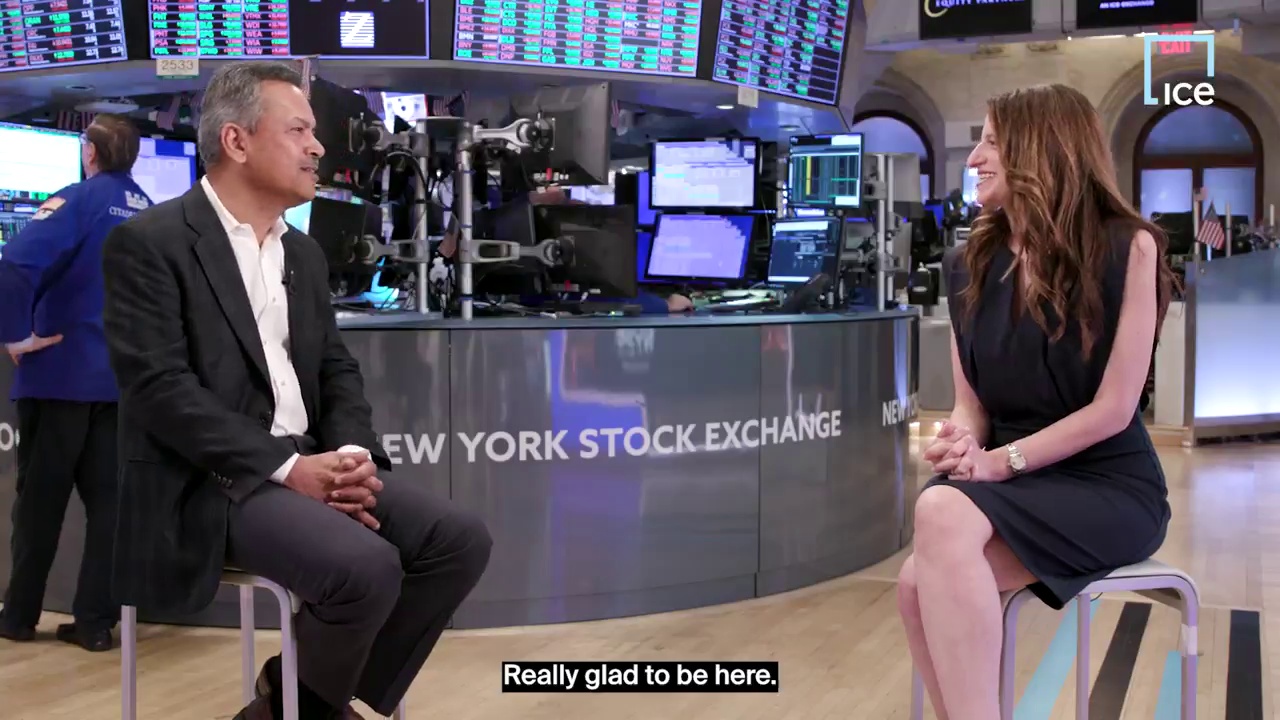
In a 2023 conversation with ICE’s Michele Nicoletta on the New York Stock Exchange floor, Kedia returned to execution management in fixed income. The setting offered a neat visual: screens everywhere, the discussion still about connecting a fragmented market. The scenery had changed considerably since 1996. The need to give the trader a workable view remained familiar.
Thirty years, and still more work
In 2025, BITS Pilani recognized Kedia with its Distinguished Alumnus Award in Corporate Leadership. More than four decades separated his graduation from that recognition. It puts a university milestone beside a business built over a long stretch of changing market requirements. The career has enough duration for the early engineering education and the later company to illuminate each other.
His outlook for 2026 puts system robustness, resilience and evolving institutional workflows on the agenda. He also identifies obstacles to wider AI adoption, including trust and data quality. The focus is practical: an emerging capability has to earn a place in a working environment where people need dependable information and understandable behavior.
Orders processed across asset classes in 2025 versus 2022, as reported in the company’s 2026 outlook.
ACTIVITY MEASURE · NOT REVENUE OR INVESTMENT RETURNSIn July 2026, the business announced a Portx integration for FlexONE, bringing additional portfolio construction and risk analytics into the order and execution workflow. The aim was to put those insights closer to the point of decision. It is a current example of the company extending the working environment around the trader, rather than treating execution as an isolated act.
Thirty years is a long time to keep improving a tool for a job that keeps changing. Kedia’s story has the early hours at a keyboard, a cousin who joined the venture, and the gradual work of understanding more markets. Its continuing interest lies in the relationship between all that machinery and the person using it. The trader still needs to make a decision. Kedia is still building around that fact.