Victony learned one of pop's difficult lessons before he was old enough to rent a car in most countries: a voice arrives unfinished, then gets built. In Ojo, Lagos, Anthony Ebuka Victor first built his through rap. The teenage student listened to Drake and Kendrick Lamar, admired Nigerian stars including Wizkid, Davido, M.I and Falz, then tried the machinery himself. At sixteen, he entered a professional studio. Online, he uploaded freestyles and covers. His first durable title, The Outlaw King, sounded less like an introduction than a small coup.
The surprise is that the rapper did not vanish when Victony became a singer. Listen closely and he is still there, arranging syllables, bending pockets, making rhythm do the persuasive work.
That early education happened in public, where awkward drafts are searchable and reinvention has witnesses. Victony released The Outlaw King as a mixtape in 2017, followed by the Saturn EP in 2020. By then, melody had begun to claim more room. Rap's straight spine remained, but Afropop, R&B and trap gave it different clothes. He was studying petroleum engineering at the Federal University of Technology Owerri, a degree with pipes, pressure and reassuringly legible answers. Music offered the opposite: invisible pressure, no guaranteed outcome and a public scorecard.
He chose both for a while. That doubleness feels important. Victony's songs rarely behave as though one influence must evict another. A high, almost weightless vocal line can sit above muscular drums. A local phrase can travel inside a pop structure. A rapper's clipped cadence can survive inside a singer's tune. The fusion gives him freedom from choosing too early.
The feature that became a front door
In 2021, Mayorkun placed Victony on “Holy Father.” The song became a major Nigerian hit and gave a wider audience a clear first look. Features can reduce a new artist to a useful texture, but Victony's performance announced a character. His voice was bright, urgent and slightly strange in the useful sense: recognizable before the listener had found the credits.
Then came “Soweto,” tucked inside the seven-track Outlaw EP in May 2022. Producer Tempoe gave it a light, repeating frame. Victony supplied a melody that seemed to arrive already familiar, like gossip from a friend you had not yet met. The song spread on TikTok, charted beyond Nigeria and acquired remixes with Omah Lay, then Rema and Don Toliver. Each version widened its map without troubling its center.
“Soweto” gave Victony the sort of success that tends to make a committee appear. The committee, whether real or imagined, has one excellent idea: do that again. He did something more interesting. He treated the hit as a passport, not a permanent address.
Stubbornness, properly understood
The word “stubborn” is usually an accusation delivered by someone whose instructions you have declined. Victony made it a self-portrait. His 2024 debut album grew from the belief that endurance and authenticity were not themes to paste onto the campaign; they were the method that made a career possible. Veteran rapper Olamide helped him recognize that the material deserved an album rather than the EP Victony had planned. Sometimes ambition arrives as somebody else noticing the size of your own idea.
Stubborn opens the autobiography wider. Lagos appears not as a fashionable origin tag but as a place that trained hope against evidence. Love, betrayal, prayer and memory enter the frame. The guest list is deliberately mismatched in the best way: Asake, Shallipopi, Teezo Touchdown, SAINt JHN, Shorae Moore and KTIZO. Victony's rule for collaboration is revealing. He is drawn to artists with a voice and a position, people whose presence creates friction rather than polite agreement.
The sessions could be playful. For “Everything,” he asked producer BlaiseBeatz to chase the emotional color of Post Malone and Swae Lee's “Sunflower” as Afrobeats. Permission to use the sample later arrived, a gratifying nod from artists he had grown up hearing. For “Tiny Apartment,” SAINt JHN joined a romance imagined inside the cramped Nigerian housing arrangement known as face-me-I-face-you. “Pier 46” began with the odd and useful prompt of imagining Billie Eilish on an Afrobeats record. Curiosity functioned as a working tool, far removed from press-release decoration.
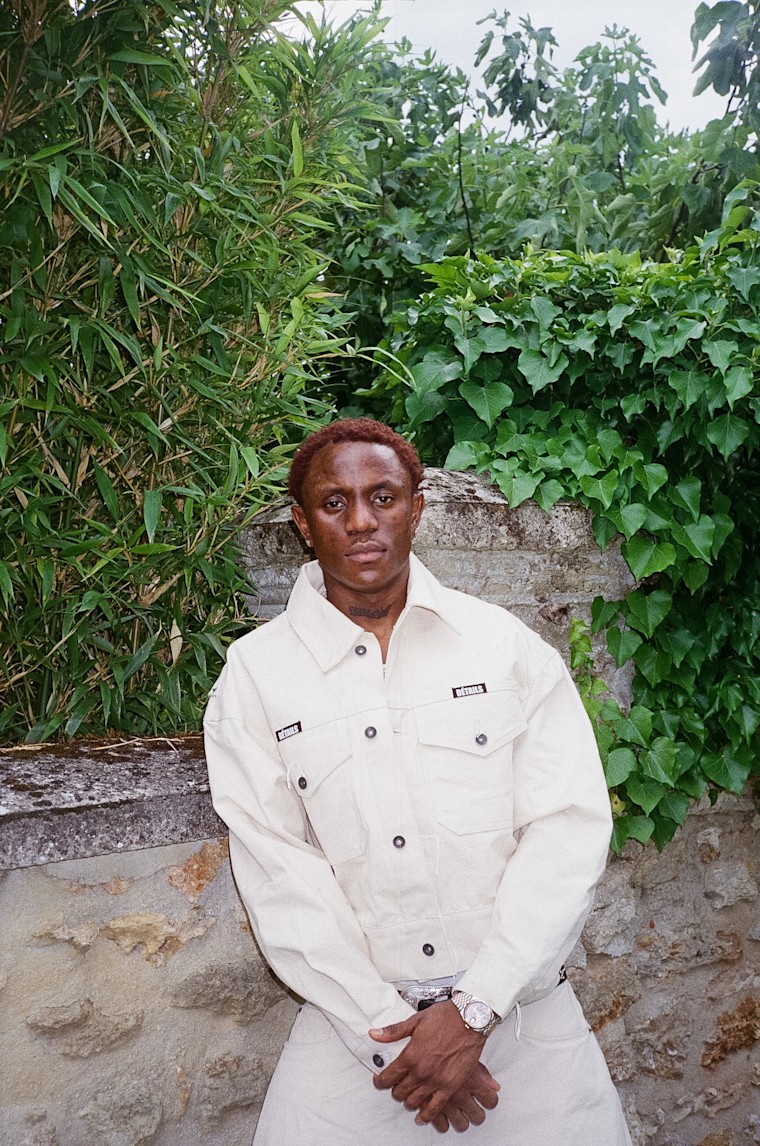
The visual world mattered just as much. Chainmail became the defining image of the Stubborn era: part armor, part veil, beautiful and slightly inconvenient. It gave a tactile form to the album's central tension. Protection can look glamorous from a distance. Up close, every link carries weight. Victony has said he wants audiences to enter the mood in which a record was made, and that he will use visuals as readily as songs to get them there. In his hands, art direction becomes another verse.
The expanding palette / a listening guide
When the plan got more fun
By late 2025, Victony had released Very Stubborn, a compact, inward-looking companion to the album. The next year was supposed to bring an EP, with another full-length record waiting until 2027. Studios are rude to calendars. Working closely with producer Ozedikus, Victony kept making songs connected by the same lighter charge. One track led naturally to another. The EP expanded until STARLIFE appeared in August 2026 as his second album.
The pivot is audible. “FRE$H” and “SLICK” arrive with cleaner flirtation and fewer storm clouds. The music does not deny the person who made Stubborn; it lets him clock out early. Victony described these sessions as the most fun he had experienced making music. That pleasure becomes structural. The grooves loosen. The lover-boy character is allowed to be unreliable, vain and amusing. Serious artists are often expected to drag their seriousness behind them like ceremonial luggage. Victony discovered that putting it down can also reveal character.
Ozedikus proved a useful partner for the escape. Both had roots in Lagos, and their sessions developed through rapid exchange, ideas volleyed back and forth until the distinction between experiment and song became irrelevant. The old rapper still peeks through. Victony acknowledges that even when he sings, cadence carries that history. On STARLIFE, the technique is less visible because the pleasure is more immediate. Good craft knows when to remove its name tag.
Professional studio beginnings, SoundCloud freestyles and The Outlaw King.
Saturn widens the sound; “Holy Father” opens a national door.
Outlaw, “Soweto” and remixes carry the voice across borders.
Stubborn becomes the long-form introduction, followed by Very Stubborn.
STARLIFE turns toward play, pop ease and the next version of Victony.
A fixed point inside a moving sound
There is a neat temptation when writing about a shape-shifting musician: call versatility the subject and go home. Victony's more interesting quality is selectivity. He does not seem to try everything. He tries the thing that creates a useful question. What happens if a Fuji inflection enters trap phrasing? What if a heartbreak song still moves like a beach afternoon? What if two collaborators who make no obvious sense share one record? His catalogue grows through those questions.
The fixed point is authorship. Outlaw, stubborn, star: each persona is a different light on the same insistence that he gets to decide the frame. That instinct reaches beyond sound. He has spoken about education as an area where he would like to create opportunity, a telling aspiration for somebody who once balanced engineering lectures with the uncertain curriculum of music. Success, in that formulation, is not only escape from the old choices. It is the chance to give somebody else more of them.
Victony is twenty-five. The career already contains enough pivots for a veteran and enough loose ends for a beginner. This is a fortunate combination. “Soweto” remains the great bright door through which much of the world entered, but he has refused to decorate every subsequent room the same way. The boy with the radio became the rapper with a SoundCloud page, then the singer inside a global hit, then the autobiographer in chainmail, then the star willing to grin at his own mythology.
Pop likes a clear identity because it makes shelving easier. Victony offers something better: a clear instinct. Follow the interesting sound. Keep the cadence. Change the costume. Let the plan grow when the songs demand it. He has made motion feel less like evasion and more like a signature. An outlaw, after all, is merely someone who has looked at the available rules and found they were insufficiently musical for the journey.