Somewhere in Miami Beach, a four-person company is trying to convince you that keeping your dog healthy should feel less like a dentist reminder and more like a game you are winning. Vetted Pet Health calls the currency Care Coins. You earn them for the ordinary work of pet ownership - a walk, a meal, a brushed coat, a set of clean teeth - and you cash them in for discounts at vets, groomers and retailers. It sounds gimmicky until you sit with the underlying claim: that the hard part of preventive health was never information. It was habit.
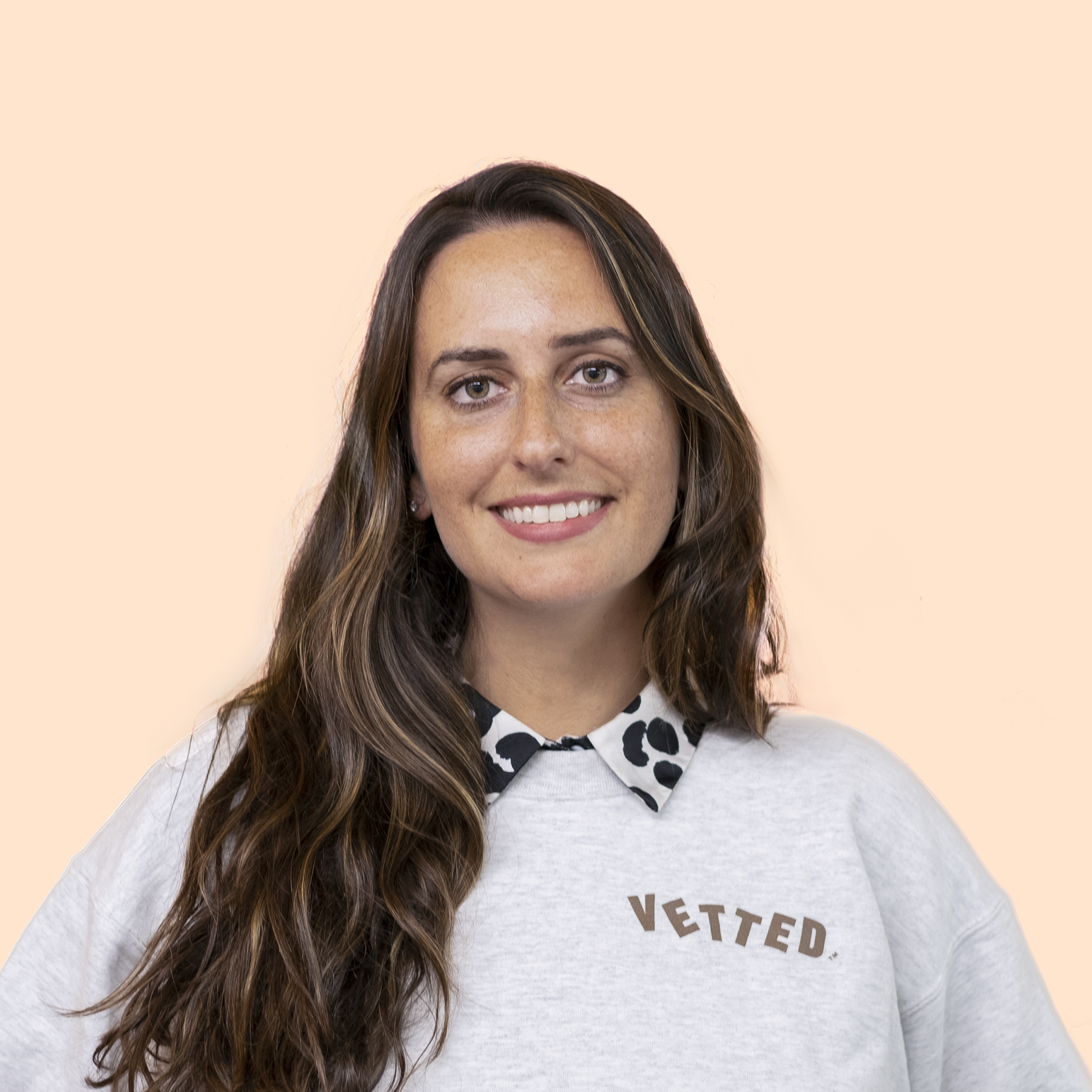
That claim is the reason Vetted exists, and it is also the reason the company looks almost nothing like it did when it started. The founders, Maya Shaposhnik Cadena and Ashley Brooks, met in the entrepreneurship program at the University of Chicago Booth School of Business and launched Vetted in 2021. The original product was a paid membership, roughly $24 a month, built around preventive care: mailed kits of vet-approved supplies, a 24/7 chat with veterinary professionals, a digital health log, and reminders for the routine care that owners tend to skip. It grew to thousands of subscribers, and the company even opened in-person wellness clinics in Chicago.
Then, in 2025, Vetted took the model apart.
From a three-hour vet visit to a company
The origin story is the kind of small, specific frustration that turns into a business. Cadena adopted a French bulldog named Shor, took him in for his first veterinary appointment, and found the whole thing slow and confusing. By her account it was a three-hour ordeal that left her unsure what she was supposed to do at home. Brooks had run into the same wall managing her cat Neko's health issues. The two bonded over a shared irritation: pets need steady, preventive attention, and the system is built around expensive, reactive visits.
Cadena's framing has stayed consistent since the early days. She has put it bluntly: pets need preventive care like humans do, arguably more, because their lives are shorter. One annual checkup for a dog, she likes to point out, is roughly the equivalent of a person visiting the doctor once a decade.
The pivot: killing the subscription
Most companies with thousands of paying members would defend that revenue. Vetted did the opposite. In March 2025 it walked away from clinics and subscriptions and rebuilt itself as a free, gamified mobile app. The logic is worth stealing for anyone in consumer health: a subscription asks people to pay for a chore. A game rewards them for doing it. Same mission, opposite incentive.
To make that switch credible, Vetted needed technology it did not have. So in July 2025 it acquired the AI assets of Dogiz, a Tel Aviv startup, and folded in the team as advisers. Cadena described the deal as the tech leap the company needed to deliver engaging care directly into pet parents' hands. Dogiz's co-founder and chief executive, Danny Djanogly, framed it from the other side: pet owners now expect wellness tools on par with human health, and the combination was meant to redefine care at home.
Duolingo and Strava had a baby in pet care, and it's Vetted.- Maya Shaposhnik Cadena, CEO
The joke does real work. Duolingo turned language learning into streaks and gentle guilt. Strava turned exercise into a social scoreboard. Both discovered that the product was not the content, it was the loop that got you to come back. Vetted is betting the same loop works for a species that cannot log its own walks.
How Care Coins actually work
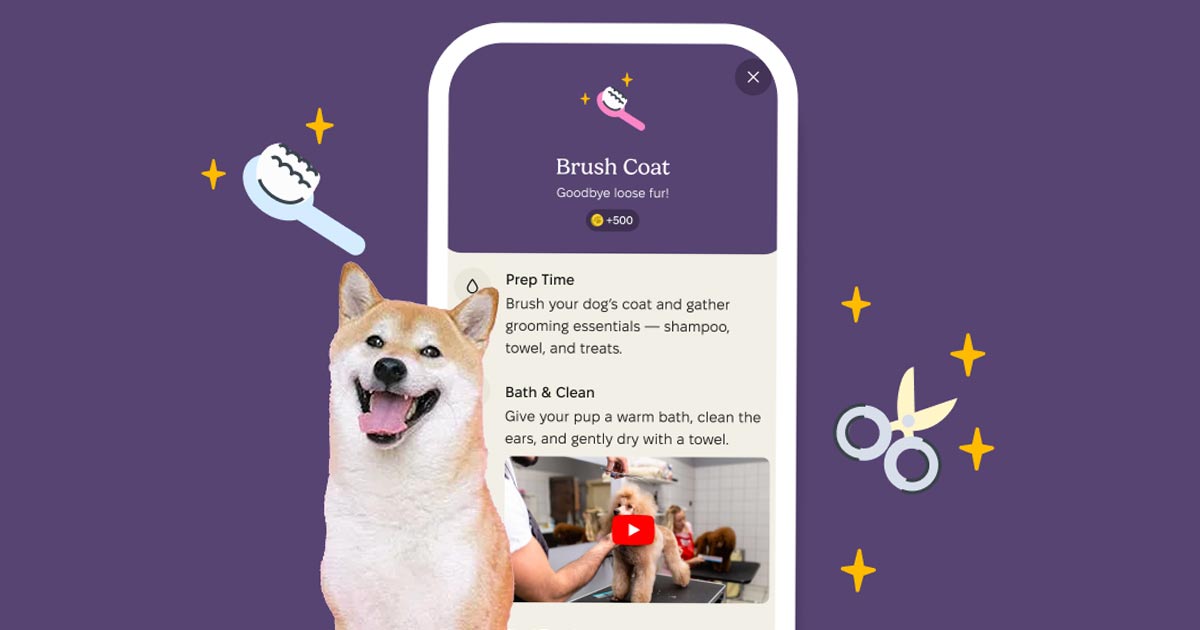
The mechanic is simple on purpose. You complete pet-care goals - walks, meals, dental care, grooming, small daily routines - and log them in the app. Each completed task pays out Care Coins. Stack enough of them and you climb a leaderboard, unlock Care Badges, and keep streaks alive. The coins are not just vanity points: roughly 4,000 of them convert to about $10 in discounts and gift cards with partner vets, groomers and retailers.
The Care Coin loop
The context Vetted keeps returning to explains why it thinks the numbers work. The global pet market is worth an estimated $260 billion. There are roughly 100 million dogs in the United States. And the average pet emergency-room visit runs north of $1,000 - much of it, the company argues, downstream of preventive basics that never happened. Move the behavior earlier and cheaper, and there is a business in the gap.
Dr. Poop and the rest of the AI stack
The Dogiz acquisition brought the part of the product that is easiest to laugh at and, arguably, most important. The flagship tool is named Dr. Poop. You photograph your dog's stool and the app returns digestive insights. It is a joke that writes itself, and it is also a clean demonstration of where consumer health AI is heading: photo-based, first-line triage that lowers the bar to checking on something before it becomes a $1,000 problem.
Dr. Poop has company. Vetted has described a lineup of similar tools - Dr. Teeth, Dr. Skin, Dr. Eye and Dr. Weight - meant to turn a phone camera and a few inputs into personalized guidance and habit tracking. The point is not diagnosis in the clinical sense. It is nudging owners toward the daily and weekly routines that keep a pet out of the emergency room.

How a free app plans to make money
Free is easy to download and hard to monetize, so it is fair to ask where the revenue comes from. Vetted has pointed to three streams. The first is advertising and sponsor content inside the app. The second is B2B partnerships with pet brands and service providers, the same partners who fund the discounts on the redemption side. The third is data - aggregated, behavioral signals about how pets are actually cared for at home. The rewards, in other words, are not charity; they are the top of a commerce funnel that pet brands are paying to sit inside.
Where it fits in the market
Ask Cadena about competitors and she reframes the question. "We're creating our own category right now in the United States," she has said. When pressed for a comparison, she points to Biscuit, a UK app that spun out of a pet-insurance company, as the closest thing to a direct rival, and to rewards apps like Fetch as a template for the coins mechanic. The broader field is crowded with adjacent players - pet telehealth services such as Pawp, Airvet and Dutch, activity trackers like Fi, and the whole edifice of pet insurance - but none of them are built around the specific combination Vetted is chasing: preventive care wrapped in a game with a redeemable currency.
Whether "our own category" is a real moat or a founder's optimism is the open question. The bet is that engagement, not information, is the defensible asset in consumer health, and that a habit loop is harder to copy than a feature. The long-term ambition is bigger still: Cadena has talked about Care Coins becoming a cross-border currency for pet care, a global rewards ecosystem that pays owners for keeping their animals well. That is a large vision for a team of four. It is also, notably, the kind of vision that only makes sense if the daily loop works first.
What you can actually do with it
Stripped of the strategy, the day-to-day is straightforward. Download the app, add your pet, and start logging the care you were probably already doing. Take the dog on a walk and record it. Brush the coat, note the meal, keep the teeth clean, run one of the AI checks when something looks off. Each action pays coins, builds a streak, and edges you up a leaderboard against friends. When the coins add up, you spend them on discounts with vets, groomers and retailers. Timed challenges, like the Walktober walking contest, give the whole thing a seasonal rhythm.
The honest read on Vetted is that it is early, small, and mid-transformation, having just torn up a working model to chase a harder one. What it has going for it is a clear thesis about behavior, a playful brand that does not take itself too seriously, and an AI stack it bought rather than waited to build. What it has to prove is that a rewards loop can hold attention long enough to change how people care for their pets - and that partners will keep paying for the privilege of being inside it. For pet owners, the offer is simple enough to try: do the care you meant to do anyway, and get something back for it.