Before an exchange-traded fund gets a ticker, it needs a series of decisions. Which companies belong? How much should each count? What happens when one merges, splits, or disappears? These choices look like plumbing. Together, they determine what an investor actually owns. VettaFi works in this machinery, designing and running the indices behind investment products. Then it does something that makes the business more interesting: it helps the people selling those products find an audience.
- Build: index design, testing, calculation, and licensing.
- Grow: investor publications, advisor intelligence, and events.
- Own: TMX completed its purchase in January 2024.
The combination deserves attention because an investment idea has two tests. Can it survive scrutiny? Can it attract capital? VettaFi sells services on both sides. Its paying customers include fund issuers and asset managers; its publications serve advisors and investors. That makes it an unusual neighbor in the indexing business: part engineering shop, part specialist publisher, with a sales intelligence operation connecting the two.
Four businesses, one bet
VettaFi arrived in May 2022 as the collective brand for ETF Trends, ETF Database, Alerian, and S-Network Global Indexes. The ingredients already had jobs. Alerian and S-Network supplied index expertise. ETF Trends and ETF Database brought investment research, tools, and readers. Putting them together meant an issuer could discuss the construction of a product and its eventual distribution with the same organization.
Leland Clemons, the launch CEO, called it a B-to-B business with B-to-C responsibilities
. That compact description still explains the central bargain. Asset managers pay for services, while the usefulness of the audience-facing business depends on people finding something worth reading. The educational ambition was there from the start. So was the commercial logic: help readers understand investment strategies, and help issuers reach readers interested in them.
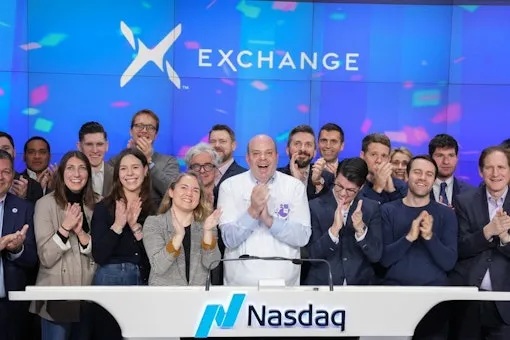
The factory has no conveyor belt
Its Index Factory is a cloud-based engine for turning a strategy into something repeatable. VettaFi describes a system that combines historical securities data with client or third-party datasets, tests alternative methodologies, and examines how changes affect returns, turnover, and tracking error. An issuer can explore a weighting rule before committing to it. A promising idea can be revised while revision is still relatively cheap.
The work continues after launch. Index calculation requires adjustments for corporate actions, rebalancing, and publication of levels and constituents. VettaFi offers different depths of involvement: calculate a basket while the client keeps the rules, implement a client’s methodology, or take on full administration. This matters because a firm with investment expertise may want operational help without handing over the intellectual property behind its strategy.
- 01DesignUniverse + rules
- 02TestHistory + trade-offs
- 03OperateCalculate + rebalance
- 04PublishLevels + constituents
Customization alone does not distinguish it. S&P Dow Jones Indices also provides custom calculation and benchmark administration. VettaFi’s more distinctive pitch combines that operational work with its own distribution and behavioral data. An issuer can buy particular pieces of the service rather than treat every fund launch as an entirely separate engineering and marketing project.
The reader is part of the product
On the distribution side, the company operates publications including ETFDb, Advisor Perspectives, and ETF Stream. Its current marketing page reports more than 1.9 million unique monthly visitors across VettaFi websites and over 90,000 financial advisors registering for virtual events annually. Those are company-reported audience measures. They describe access to attention, rather than evidence that every campaign produces investment.
Behavioral analytics makes the proposition more specific. VettaFi’s lead intelligence identifies advisors engaging with strategies, including research into an issuer’s tickers and competitors. Its advisor traffic tracker extends measurement to a client’s website. Profiles and reports can feed a customer relationship management system. For a sales team, the practical attraction is knowing where to begin a conversation.
Research interest is a useful opening. It is not a purchase order.
In July 2026, VettaFi announced a partnership with Defiance Analytics combining behavioral intelligence with an email campaign platform. The idea is straightforward: use signs of interest to make outreach more relevant. The limitation is equally straightforward. An advisor may research a fund to reject it, compare it, or answer a client’s question. The signal needs interpretation.
A billion-dollar vote for the plumbing
TMX began with a US$175 million investment for approximately 21% in January 2023. That December, it agreed to buy the remaining approximately 78% for US$848 million, bringing the stated full-ownership cost to about US$1.03 billion. Completion followed on January 2, 2024. These figures describe ownership transactions, rather than a billion-dollar venture funding round.
The buyer’s stated rationale was more recurring, international revenue and broader analytics and indexing capabilities. The subsequent record also shows uneven performance: TMX’s fourth-quarter 2024 results reported higher indexing and analytics revenue, partly offset by lower digital distribution revenue. The connected model did not make each activity rise together. Full-year VettaFi revenue was reported at C$136.7 million, a currency distinction that matters.
Buying a larger vocabulary
Acquisitions have broadened what the factory can build. Credit Suisse bond indices arrived from UBS in February 2025. ETF Stream followed in June, adding European publishing reach. RAFI Indices joined in August 2026, bringing fundamental indexing expertise. In October, VettaFi acquired the SPADE Defense Index, the benchmark behind Invesco’s PPA aerospace and defense ETF. The pattern connects established methodologies, operating infrastructure, and distribution.
The revenue model combines index licensing with calculation and administration services, analytics, advertising, content, and events. VettaFi supplies infrastructure behind funds; it is distinct from the issuer selling the ETF shares. For a prospective customer, the useful question is which burden to outsource: research and rules, daily operations, or finding interested advisors.
The transferable lesson is to place product development and customer understanding within speaking distance. Test the methodology, then test whether people understand its purpose. That approach depends on reliable data, credible research, and a product worth owning. Faster backtests cannot establish future returns. More precise outreach cannot repair an unsuitable fund. VettaFi’s business sits in the space between a workable investment idea and a conversation worth having.