Consider the humble refill. A veterinarian has made the diagnosis. A pet owner wants to follow the instructions. Yet between those two agreeable facts sits a collection of chores: request the medicine, get approval, find time to collect it, remember to order again. Vetsource has spent years assembling a business in that interval. The dog, admirably, has outsourced the entire problem to humans.
- Veterinary practices get online stores; Vetsource handles pharmacy fulfillment.
- Messaging and analytics help practices keep contact between visits.
- Amazon uses Vetsource too. The pharmacy reaches beyond the clinic’s storefront.
01 A store with the vet still in it
Vetsource dates its home-delivery business to 2008. Its original proposition was practical: let a veterinary practice offer online shopping without becoming a warehouse. Today, a clinic can have a branded store, choose its catalog and set prices. Vetsource supplies the dispensing and delivery machinery behind it. AutoShip handles recurring orders. The professional relationship stays visible even when the transaction happens on a sofa.
Its customers include independent practices, veterinary groups and retailers; pet owners use the resulting stores and services. Vetsource reported serving more than 10,000 practices in February 2023. That is a dated company figure, but it establishes the scale of the proposition. For a practice, the appeal is keeping pharmacy business while reducing inventory work. For an owner, it is one fewer errand.
02 The phone is part of the pharmacy
The company gradually bought the capabilities around that transaction. It acquired analytics business VetSuccess in 2018 and announced a majority investment in client-engagement platform Vet2Pet in May 2020. A 2022 rebrand brought the businesses into a unified portfolio. The sequence suggests a useful insight: shipping medicine leaves plenty of unfinished work if the client cannot easily ask a question or arrange the next visit.
In October 2024, Vetsource made Vet2Pet available at no extra charge with Prescription Management. The app offers appointment requests, reminders, messaging and medication requests. Its product page describes an advertised value of $499 a month. That figure prices the included app’s value, rather than the entire pharmacy arrangement. Practice economics still depend on product prices, service terms and actual use.
“It is very easy to use on both sides - client and staff.”
Nicole Clark / office manager, Riverside Cat Hospital

03 Then Amazon walked in
In May 2025, Amazon announced hundreds of prescription pet medications available through Vetsource. Customers use Amazon’s checkout and provide their veterinarian’s details. Vetsource manages dispensing and delivery after approval. Amazon described shipping times of two to six days at launch. The same pharmacy operator that helps clinics sell online also supplies a shopping destination those clinics must reckon with.
That makes Vetsource more interesting than a simple story about defending the local vet. It occupies the infrastructure between professional authorization and consumer convenience. A clinic-branded store competes for the purchase; the dispensing network can serve another channel too. An order placed through Amazon should not be assumed to have the same financial arrangement as an order through a practice’s store.
- 01AuthorizeVeterinarian
- 02OrderPet owner
- 03DispenseVetsource pharmacy
- 04DeliverShipping carrier
04 Software still has a ZIP code
The expansion required capital. Bain Capital Ventures led a $50 million investment in 2018. Mars Petcare became lead investor in 2021, with the announcement retaining management and cross-industry investors. Meanwhile, the physical operation kept growing. In May 2024, Vetsource said its Harrisburg pharmacy was nearing designed capacity a little over two years after opening. Northlake, Texas, became the third location.
This was a capacity constraint with a geographical wrinkle. Vetsource explained that shipping into Texas from outside the state could add a routing day for owners beyond the Dallas hub. Dispensing inside Texas helped avoid it. In September 2026, Atlanta became pharmacy number four, targeting the Southeast. Faster software cannot remove every mile. Sometimes the product improvement is a building closer to the customer.
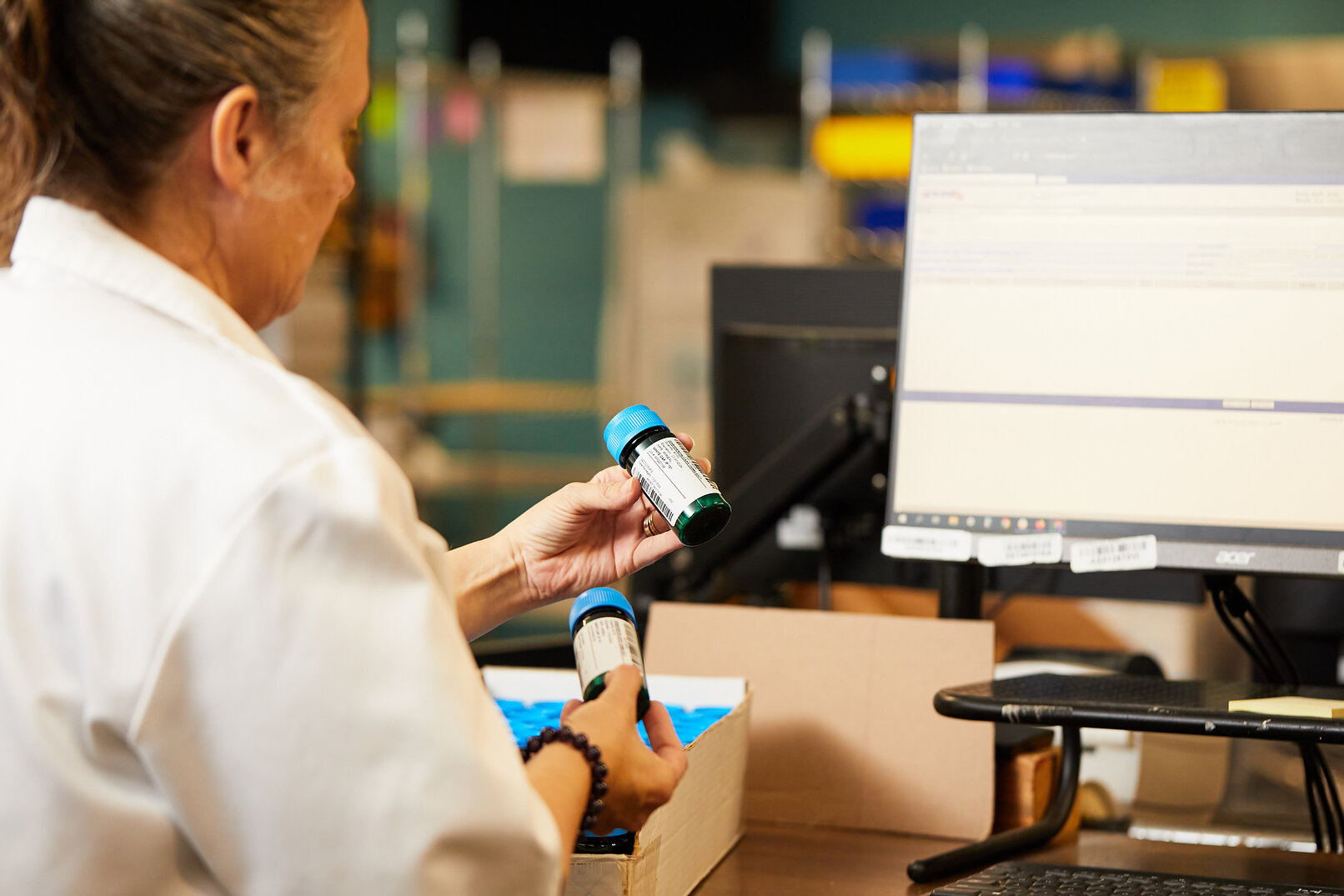
Vetsource’s pharmacy page reports more than 10.6 million items shipped in 2025. Pharmacists review prescriptions, while barcode checkpoints verify details through fulfillment. The company also describes its own veterinary pharmacy training and drug-interaction database. These are consequential capabilities in a business where a beautifully designed checkout is only the beginning of getting the order right.
05 The reminder that should never arrive
Some of the most revealing work happens in data. Veterinary groups have practices using different software and transaction codes. Vetsource standardizes those records so managers can compare activity across locations. Its SyncVet integration also offers a quieter example: when a pet is marked deceased in connected practice software, it can cancel future shipments and emails. A reminder system needs judgment about when to stop reminding.
The company’s January 2026 analysis found declining visits and longer gaps between appointments. It also reported higher patient bonding rates among practices combining its services than among those using home delivery alone. That comparison is observational: practices choosing more services may differ in other ways. Still, it explains why the company talks about relationships alongside prescriptions. Fewer visits give each useful contact more weight.
06 Make the next step easier
Vetsource spans several markets: clinic commerce alongside Covetrus and Vetcove, consumer pharmacy purchases alongside Chewy and PetMeds, and communication tools alongside PetDesk. Its particular combination joins licensed fulfillment with practice-facing software and analytics. Payment Services, introduced in 2023, extends that approach to terminals, payment links and reconciliation. The common task is reducing the administrative work surrounding care.
There is an unusually human detail in the data plumbing: the practice retains ownership of its data, and the company describes sharing with approved partners with permission. That matters when the connection reaches beyond a single shop. A practice weighing the service needs to understand what its existing software can share and what will come back into the patient record.
Current CEO Andrew Bane is identified by Vetsource as a member of its founding team, with experience in human pharmaceuticals as well as veterinary operations. The company’s stated principles include quality, responsibility and efficiency. Those words acquire a practical meaning here: a pharmacist reviewing the dose, a client avoiding a phone call, a package starting its journey one state closer.
The approach needs conditions to work. Prescription approval still takes time. Delivery cannot serve every urgent need. Integration capabilities vary, and some practice systems cannot accept data written back into medical records. The transferable lesson is to examine the handoffs customers must complete, then remove a chore they already dislike. A refill provides a wonderfully concrete test: did the medicine actually arrive?