Consider a used car that sells almost immediately. The customer is pleased. The salesman is pleased. The manager might reasonably wonder whether someone has been too generous. A quick sale can mean a good purchase, a popular model or a price that left money on the table. Vast’s automotive business, CarStory, built software around precisely this ambiguity: the same result can tell several stories, and a dealer needs to know which one applies.
- The work: turn vehicle listings and shopping behavior into appraisals, forecasts and market comparisons.
- The deal: Vroom acquired the CarStory business through Vast Holdings in January 2021 for about $120 million.
- The twist: CarStory continued after Vroom ended ecommerce car retailing in 2024.
01 The listings were only the beginning
Vast began in 2005. Its co-founders included Naval Ravikant, Kevin Laws and Boris Agapiev. In March 2006, Ravikant introduced a developer preview with a wonderfully practical ambition: extract classified advertisements from the web, organize their details and let other people build things with them. Cars, jobs and personal profiles were the initial categories. The raw material was already everywhere. The useful arrangement was missing.
The service normalized fields such as make, mileage, price and location. An open REST API made the results available to developers. Vast linked back to the originating listings, while filtering duplicates and spam. It was an early lesson in the difference between finding information and making information usable. A thousand incompatible advertisements are a chore; comparable records can become a product.
By 2016, Vast described itself as a data service for automotive and real estate purchases. Capital One Growth Ventures invested $14 million. The investment announcement reported more than 6,000 participating dealerships in CarStory’s network. These were the ingredients for a more specific question: what should someone actually do with all those records?
02 A forecast with somewhere to go
CarStory’s dealer products divide that question into moments. Appraise helps before a vehicle is acquired. Track watches it after it joins the inventory. Promote puts market information in front of the person considering buying it. Together, they follow the car from the dealer’s bid to the shopper’s browser.
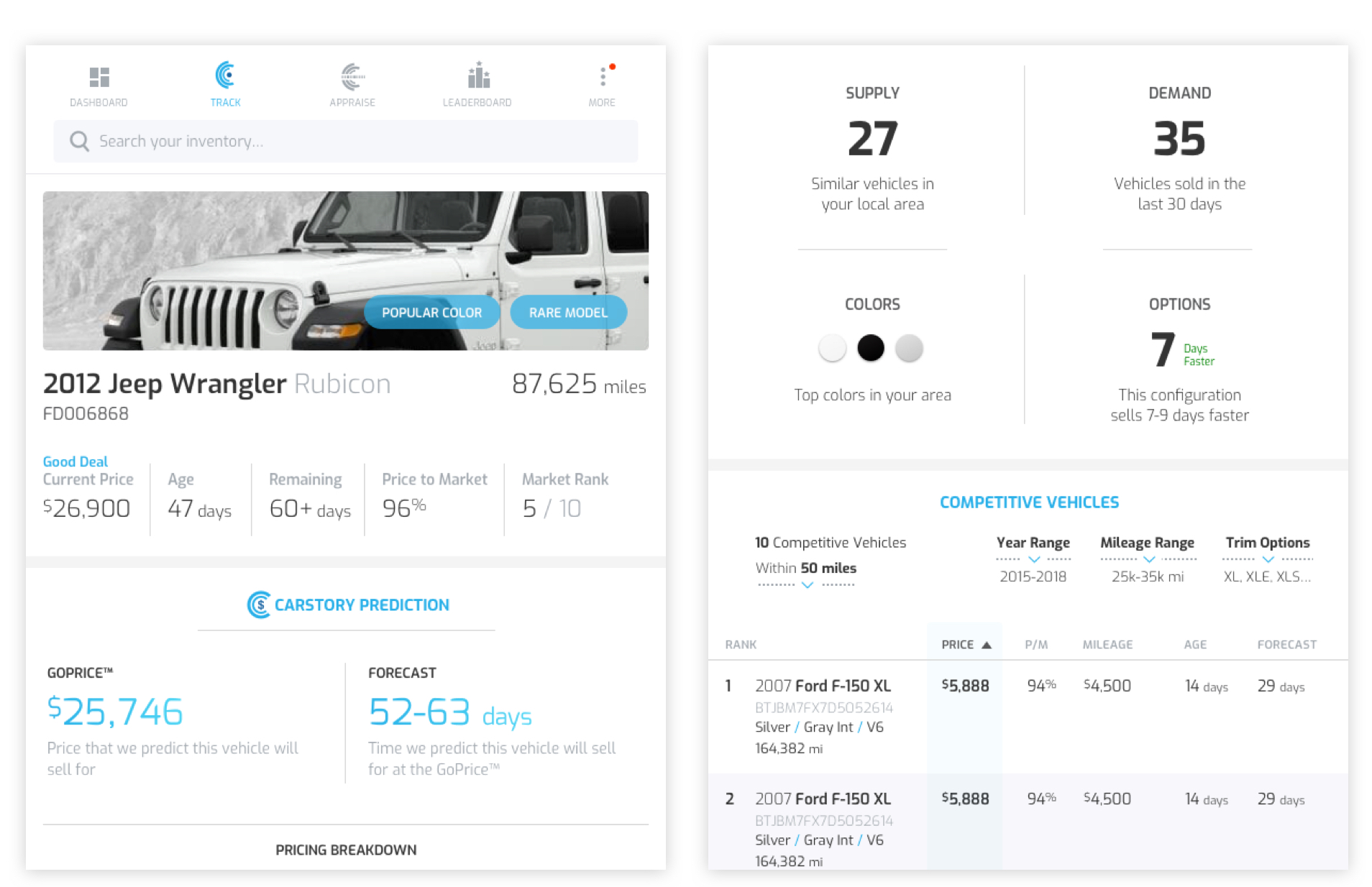
Appraise examines a vehicle against local supply, demand and competing inventory. Its GoPrice feature forecasts a selling price and timing. That matters because a bid commits money before the dealer knows what the eventual buyer will pay. A useful appraisal has to account for both the expected sale and the wait.
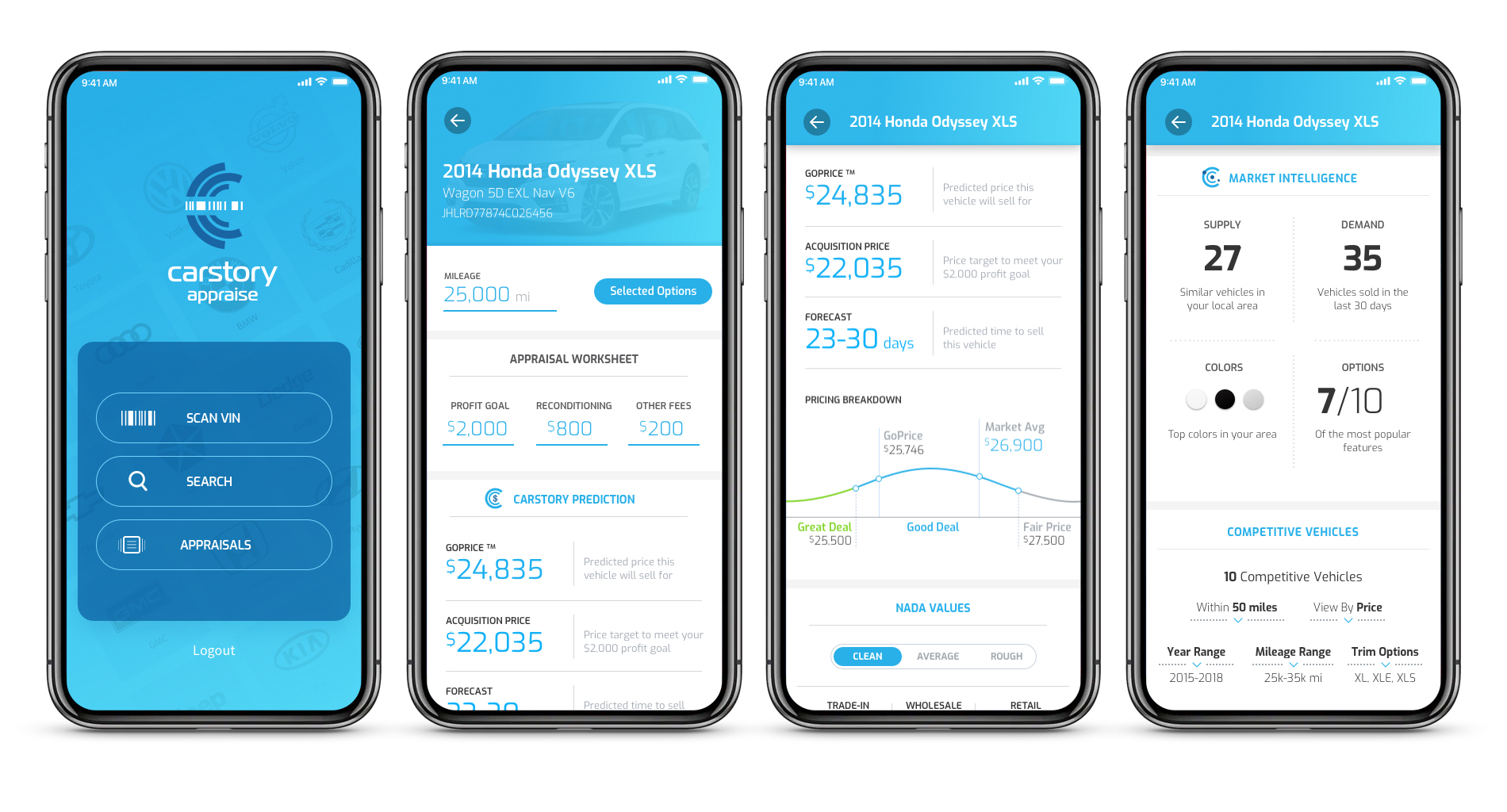
Track addresses the next problem: yesterday’s sensible price can become tomorrow’s expensive habit. Its alerts flag inventory that needs attention, and its forecasts incorporate dealer performance as well as vehicle characteristics. CarStory presents it as a companion to inventory management systems. The attraction is an intervention at the right moment, rather than another report demanding that a busy manager go hunting.
03 Free at the front door
Promote supplies embeddable market reports and syndicates listings to destinations including Car & Driver, Autoblog and CarStory.com. Its public page offers free enrollment. Website integrations include Dealer.com, CDK, Dealer Inspire and DealerOn. The consumer sees comparisons where a shopping decision is already happening. The dealer gets another way to explain a vehicle’s value.
Free distribution is one part of the business. Vroom’s filings describe CarStory revenue from advertisers, publishers and other service users, including dealers and automotive finance companies. A free website report should therefore be understood as a specific offer, rather than a price for the entire operation.
The distinction from a general marketplace is the depth of the decision. A marketplace can show what is for sale. CarStory also tries to estimate how a particular vehicle will perform in a particular dealer’s market. Alternatives include valuation providers and inventory tools such as vAuto. CarStory’s own documentation positions its monitoring alongside existing tools, making adoption less of an all-or-nothing undertaking.
04 The buyer changes course
Vroom had worked with CarStory for two years before announcing the purchase in December 2020. The announcement cited more than seven million listings a day and eighteen million consumer sessions a month. Those were historical activity measures, rather than counts of individual customers. They help explain why a retailer wanted the machinery behind the comparisons.
“Our mission has always been to provide data and services that enable our partners to grow”John Price / CarStory CEO / December 2020
The acquisition closed on January 7, 2021. Three years later, the buyer’s circumstances changed. Vroom announced that it could not raise the capital needed to continue its ecommerce operations. It stopped buying and selling vehicles through its retail platform, while retaining CarStory and its lending business, United Auto Credit Corporation. The retail operation ran out of financial room before the data service disappeared.
Continuing to operate did not guarantee growth. Vroom’s June 2025 filing attributed CarStory’s quarterly revenue decline primarily to losing a major customer. In the second quarter of 2026, CarStory revenue was $1.297 million, down 29.7% from a year earlier. Its database and pricing models also support UACC, with some technology staff helping modernize the lender’s systems.
−29.7% year over year. External revenue measures one part of the story; the technology also works inside Vroom’s lending business.
05 Copy the question, then test the answer
The transferable idea is to begin with a decision that someone repeatedly makes under uncertainty. Give that person a forecast where the decision happens. CarStory’s product designer, Neil Everette, describes prototypes and customer feedback during the move into direct applications. This suggests a sensible discipline: test whether a prediction changes someone’s work before decorating it with another dashboard.
The conditions matter. Forecasts depend on relevant inventory, recent market signals and outcomes against which to check them. A local shock can make yesterday’s comparisons less useful. A dealer who cannot act on an alert gets little benefit from receiving it. And CarStory’s disclosed customer loss supplies a commercial caution: a useful data product can still depend heavily on who keeps paying.
Vast’s story ends, for now, with that tension. Knowing what a car might fetch proved useful beyond one retailer’s storefront. Finding enough customers for that knowledge remains a separate job.
Take it for a spin
Explore CarStory’s marketplace, Appraise, Track and Promote. Visit Vast’s website or its LinkedIn, X and Facebook profiles. Read the acquisition news and browse the historical product designs and prototypes.