By the middle of 2022, Varun Mohan had a problem most founders would be pleased to have. The company he had started with Douglas Chen was bringing in a couple of million dollars, managing upward of 10,000 GPUs, and doing it with eight people. Its work was technical and useful: software that helped customers run complex machine learning workloads. Then the reason for building it began to look less certain. Generative models were getting good enough that customers might ask a general system to do jobs for which they had once built specialized models. The better those systems became, the less distinctive the surrounding infrastructure might be. Mohan had to decide whether to defend a working business or follow the implications of the new technology.
He chose the latter. The company eventually became Codeium, an AI coding assistant, and then Windsurf, an editor built for an agent that could do more than suggest the next line. A little over four months after Windsurf launched, Mohan said more than a million developers had tried it. By July 2025, the company was caught between an abandoned OpenAI acquisition, a Google deal that brought Mohan and other researchers to DeepMind, and a subsequent purchase of Windsurf by Cognition. It is a story with several endings if one insists on treating a company, a product, and a founder as the same thing.
An education in systems
Mohan grew up in Sunnyvale, California, in a family whose parents had emigrated from India. He studied at the Harker School in San Jose and later at MIT, where he earned undergraduate and graduate degrees in electrical engineering and computer science. His coursework ranged through operating systems, distributed systems, databases, security and performance engineering. Those subjects rarely make a glamorous opening chapter in a startup biography. They do, however, explain a great deal about the work he would choose: getting a system to function when its parts are numerous, its users impatient, and its scale real.
Before founding a company, he worked at Nuro on infrastructure for autonomous vehicles. Deep learning there was attached to a physical task. Models had to be trained and run efficiently; a clever demonstration was of limited use if the machinery behind it could not carry the load. Chen, whom Mohan has said he knew from middle school, had worked on augmented and virtual reality at Meta. Together they saw the same pattern from different directions: machine learning would spread into more industries, and the computers needed to run it would become an important business.
Their 2021 company, Exafunction, was built around that conviction. It virtualized GPUs and worked on compiler technology, handling some of the complexity of running demanding applications. The original thesis was hardly a wild guess. Customers paid. Revenue arrived. The team was small. That is what makes the next turn interesting. Founders often narrate a pivot as an escape from failure; Mohan’s first large change came while the business still had evidence in its favor.
- Exafunction builds GPU virtualization and compiler software.
- Codeium takes the team’s infrastructure into an AI coding assistant.
- Windsurf gives the agent its own editor and a fuller view of the workflow.
- Google DeepMind hires Mohan and colleagues; Cognition acquires Windsurf.
- Antigravity expands the agent into a desktop app, CLI and SDK.
The business he was willing to leave
The question in 2022 was almost embarrassingly simple. If broadly capable models could answer requests that once required custom machine learning systems, what would customers still need from Exafunction? Mohan reasoned that the next valuable products would be applications built on top of those models. He and Chen had already used GitHub Copilot, so software development offered a familiar place to test the idea. They brought their knowledge of inference infrastructure into a tool that lived inside the editors programmers already used.
Codeium was the first answer. It spread as an extension across popular development environments and found users inside large companies as well as among individual programmers. Enterprise demand shaped the product early. Mohan described working with customers such as Dell and JPMorgan Chase, where a codebase can be immense and permission, security and search are ordinary buying concerns. A coding assistant that produces an elegant snippet but cannot understand the existing repository is much like a colleague who writes fluent sentences and never reads the brief.
Windsurf was the next answer. The team wanted an agent that could search, plan, edit and act through more of a programmer’s workflow. A plugin constrained how much of that experience the company could shape, so it made its own editor. Its Cascade agent could use context from a project and work across files, moving the product farther from autocomplete. In May 2025 the company introduced SWE-1, its own family of models aimed at software engineering tasks beyond the act of writing code. Each step widened the scope of the original idea. The name on the door changed; the practical question underneath it did not.
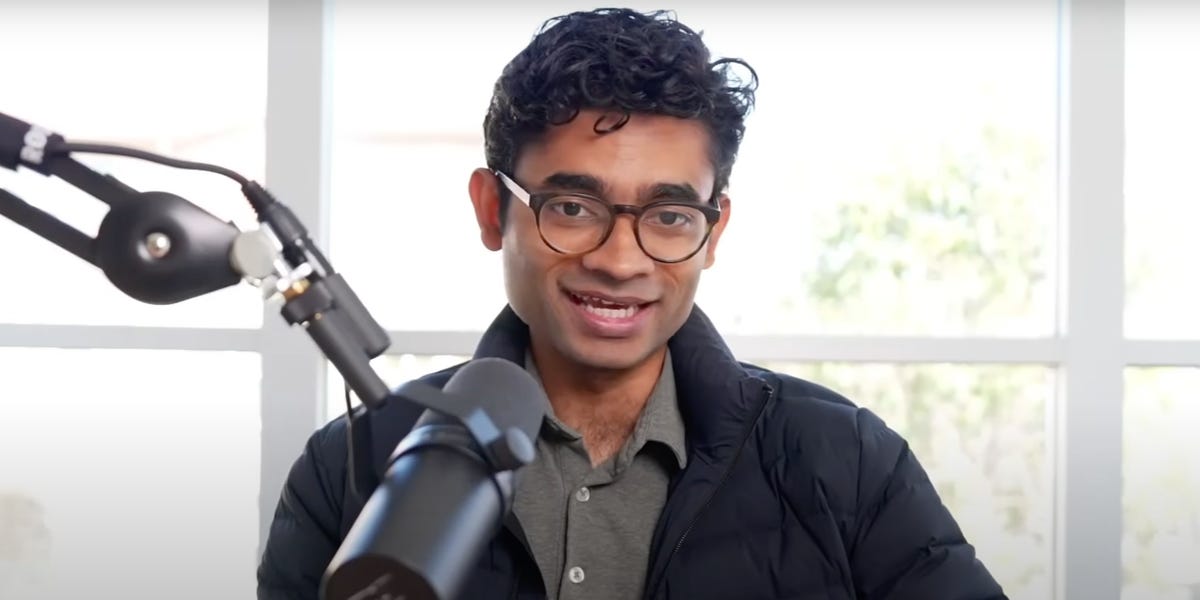
He had a striking way of putting the cadence: “We should be cannibalizing the existing state of our product every six to 12 months.” It sounds brisk in an interview. Inside a company, it asks people to make something good and then risk making it obsolete. Mohan also spoke about keeping hiring tied to a real shortage of capacity, reasoning that surplus people can invent work while a small team has to name its priorities. One can disagree with the management philosophy and still see the consistency. He wanted the organization to move quickly enough to revise its own assumptions.
“The only lasting advantage is a team that can adapt, evolve, and build what’s next.”Varun Mohan, on Windsurf’s advantage
What the million users measured
The number most often attached to Windsurf is a million. Mohan said more than a million developers had tried the editor in a little over four months. It was a measure of curiosity and adoption, not a count of people paying for it each day, but it showed that the product had entered a crowded conversation. Developers could compare it with GitHub Copilot and Cursor from their own desks. Enterprise buyers could ask whether it worked with their sprawling repositories and internal rules. The company had to serve both kinds of scrutiny at once.
Mohan’s argument about the future of programming was broader than a faster editor. Engineers spend time finding the right code, reading it, deciding what to change, testing, reviewing and explaining. A machine that merely types faster touches only one piece of that work. He also argued that easier software creation would let people outside engineering turn ideas into working tools. In an interview demonstration, he described product managers and other colleagues making more complete prototypes themselves. His preferred word for the useful human trait was “agency”: the willingness to take an idea far enough that somebody can test it.
That view does not erase the engineer. It changes where an engineer’s attention can go. In a large codebase, a successful agent must discover how pieces fit together before it touches them. It must show enough of its work that a person can inspect the result. The old infrastructure founder remained visible here. Search, inference speed and reliable context were still in the machinery, even when the product looked like a clean editor window.
A company with two next chapters
Then came July 2025. A reported plan for OpenAI to buy Windsurf did not become a completed acquisition. Google instead struck an agreement for a nonexclusive license to some Windsurf technology and hired Mohan, Chen and a group of colleagues to work on agentic coding at DeepMind. Google did not buy the company or take a stake in it. Jeff Wang assumed Windsurf’s leadership. Three days later, Cognition announced it would acquire the Windsurf product, brand, intellectual property, business and remaining team.
The distinction matters. Mohan’s move took a founder and some of the research staff to one destination; the editor and much of the company went to another. The speed of it made for an unusually sharp break between a creator and the thing he had built. Cognition said Windsurf then had $82 million in annual recurring revenue and hundreds of enterprise customers. The product had a real business around it, and the people who kept it running had to find a path forward quickly.
Mohan’s public statement with Chen said they were proud of what Windsurf had built and excited to see it continue with its team. The statement was spare. The events around it were not. They drew debate about what a founder owes colleagues when an exit changes shape, and about why large technology companies prize the people and research behind an AI product even when they do not acquire the whole business. There is no need to force a neat verdict to understand the consequence: the company’s original partnership and its product no longer traveled together.
The question follows him to Google
At Google DeepMind, Mohan returned to the same line of inquiry on a larger stage. In May 2026, Google identified him as a director of software engineering in an announcement about Antigravity, its agent-focused development platform. At Google I/O he helped present Antigravity 2.0, a standalone desktop application, alongside a command-line tool and an SDK. The emphasis had shifted from an assistant inside an editor toward agents that could work across surfaces and carry out longer tasks.
The continuity is easier to see than the corporate changes might suggest. Exafunction tried to make difficult model workloads usable. Codeium put models into a familiar programming tool. Windsurf gave an agent more room to understand and alter software. Antigravity asks how to organize several agents and make their work available through an app, a terminal and other products. At each stage, the challenge has been less about producing a dazzling single answer than about making the surrounding system useful to somebody with an actual job to finish.
Mohan’s career has so far rewarded a willingness to change the form of a product before he is finished arguing for the previous one. That habit can look visionary from the next stop and uncomfortable from the one he has left. Both impressions belong in the story. The most durable thread is the plain question he keeps asking through different companies and different interfaces: when a machine can help build software, what work should a person still do, and what must the machine understand before it earns the invitation?