Tabnine makes the most sense when a chief security officer is sitting beside the developers. If your company handles bank records, medical devices, defense contracts, or simply a codebase nobody wants wandering into a third-party training set, the product has a clear opening. It brings autocomplete, chat, code review, agents, and a terminal tool into the places programmers already work, then wraps the lot in choices about deployment, models, permissions, and evidence. Solo hackers can use those capabilities, but the modern Tabnine is priced and shaped for organizations whose procurement spreadsheet has a column labeled “air gap.”
That positioning matters because the coding-assistant market has become a carnival of increasingly capable models. GitHub Copilot owns the familiar booth. Cursor turned the editor itself into an AI workspace. Claude Code lives happily in a terminal. Tabnine does not win by pretending those products do not exist. Its argument is that the model is only one part of the system. The other parts are what the model may see, where it runs, which commands it may execute, whose rules it follows, and whether an auditor can reconstruct what happened later.
Who should put it on the shortlist?
Start with enterprises that have already decided they want AI coding assistance but cannot accept a one-size-fits-all cloud service. Tabnine supports Visual Studio Code, JetBrains IDEs, Visual Studio, Eclipse, and its own CLI. It advertises zero code retention, no training on customer code, encryption, SSO, usage analytics, model controls, and private installation options. Those details are table stakes in a regulated buying process, but they are unusually central here rather than tucked beneath the product.
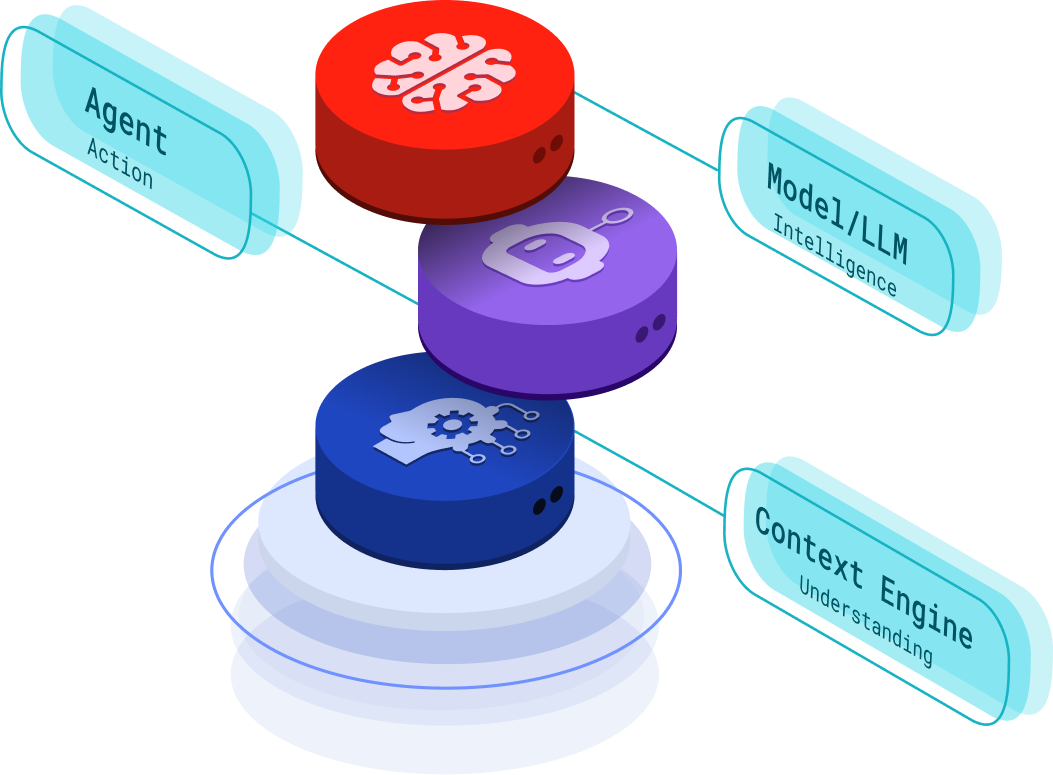
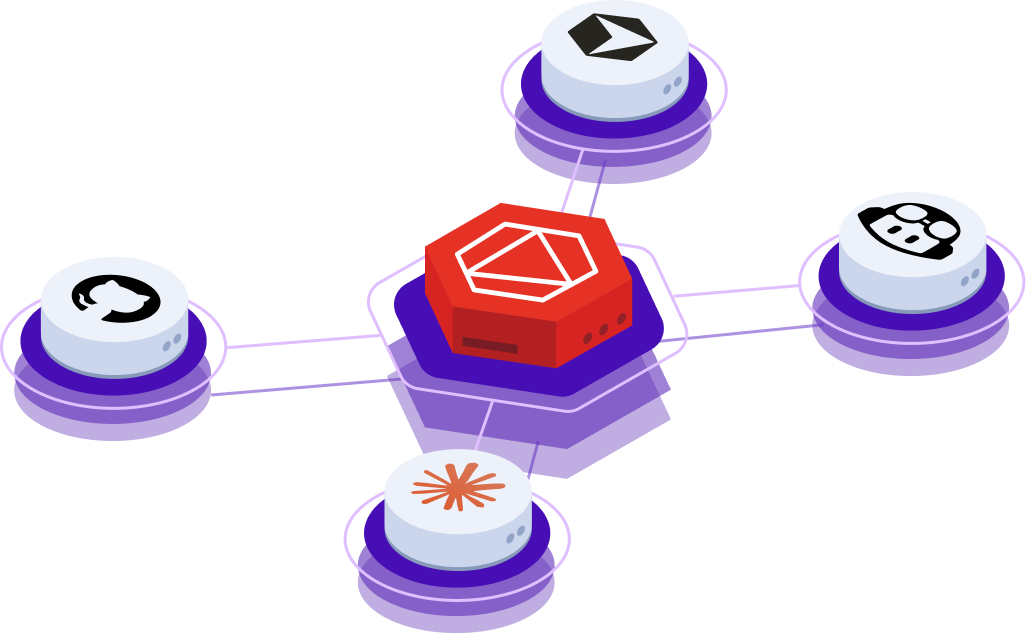
It is also interesting for teams with sprawling internal systems. A generic model may write plausible Java while knowing nothing about the API your company deprecated last quarter. Tabnine’s Context Engine is designed to map repositories, services, dependencies, standards, Jira work, and Confluence documentation into a live organizational view. The company now pitches that memory layer to other agents too, including Cursor, Copilot, and Claude Code. In other words, Tabnine is willing to be the context plumbing even when its own assistant is not the star.
From spooky tab key to control room
The backstory has a pleasing bit of startup recycling. University of Waterloo student Jacob Jackson released TabNine in 2018. Codota, an Israeli company founded by Dror Weiss and Technion professor Eran Yahav, bought it in 2019. Two years later Codota renamed itself after the product. What began as a startling next-token trick became full-line completion, then chat in 2023, then purpose-built agents, governance, and organizational context.
The biggest corporate turn came on July 30, 2026, when testing-software company Tricentis acquired Tabnine. Financial terms were not announced. Tabnine said existing customers would keep receiving support and that its Context Engine would become part of the Tricentis Agentic Quality Engineering Platform. The fit is easy to see: code-generating agents create more work for testing and verification, while testing becomes smarter when it understands the code, tickets, dependencies, and house rules around a change.
“It knows what we need to write every line by line.”A January 2026 Gartner Peer Insights reviewer, praising the suggestions
What you get after the demo
Completion and chat
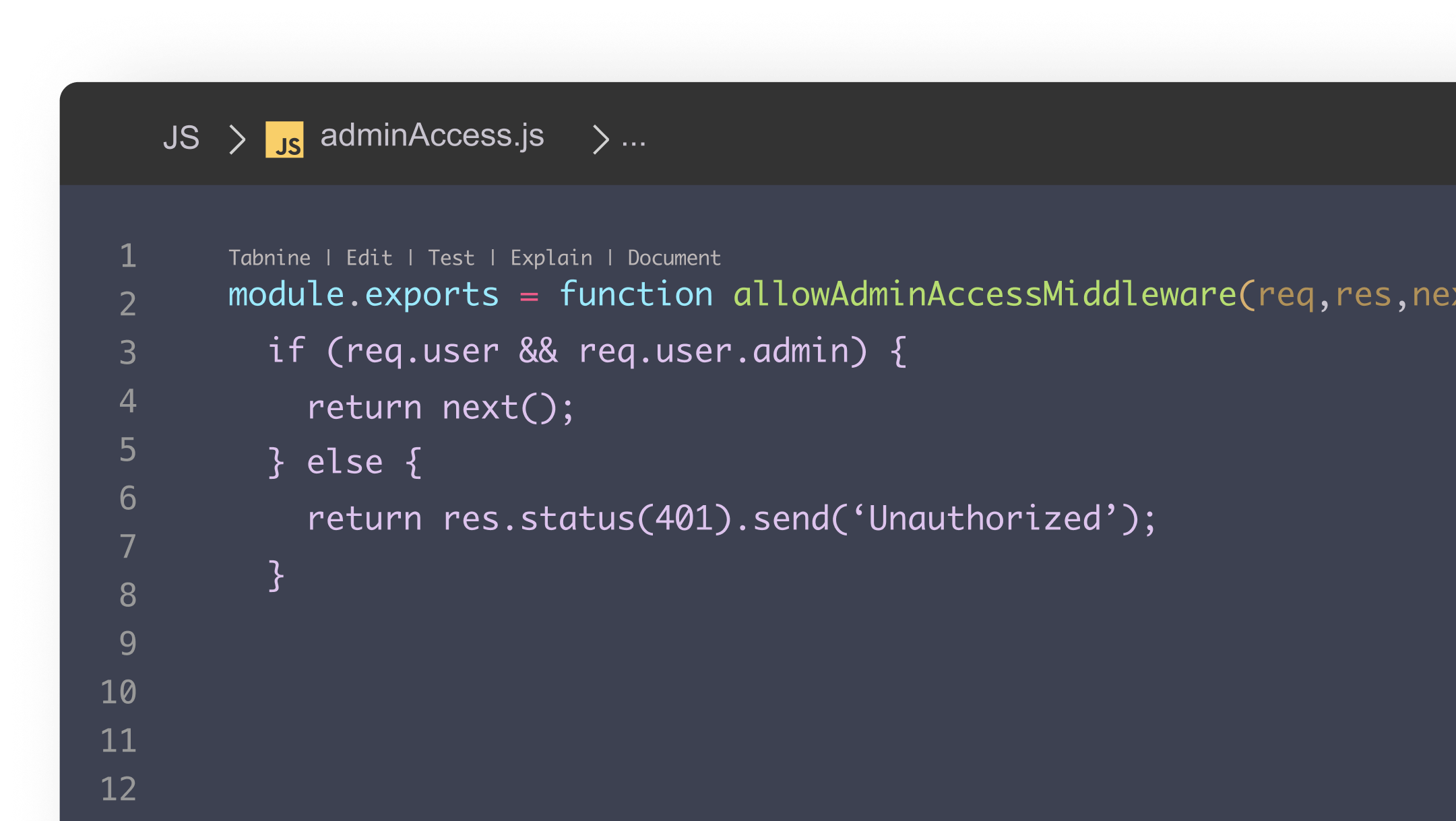
Inline suggestions handle the repetitive typing. IDE chat can explain unfamiliar code, draft tests, document functions, propose fixes, and refactor.
Agents and CLI
Agentic workflows can modify files, run commands, validate results, create branches, and prepare pull requests with optional human oversight.
Context Engine
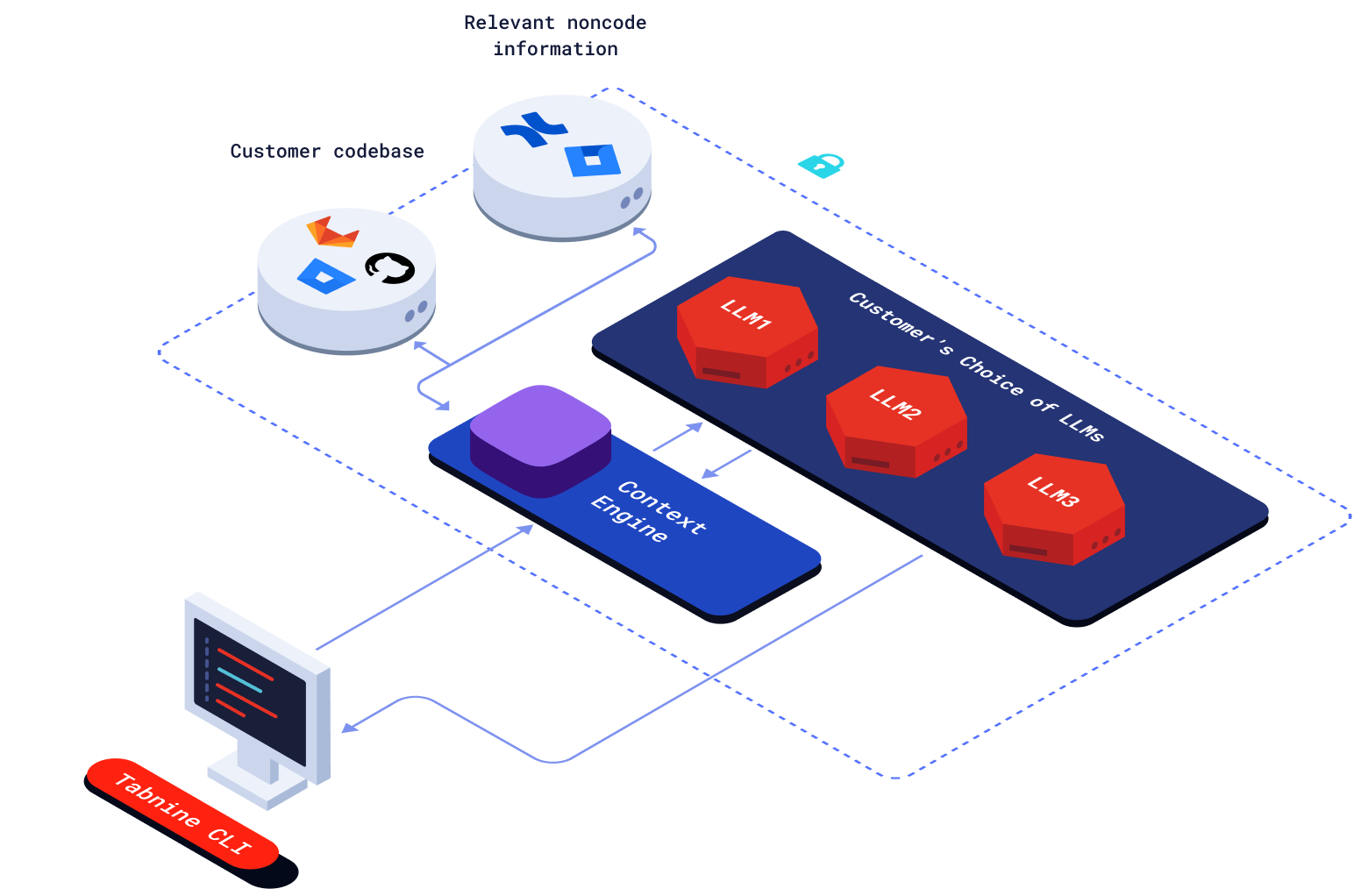
Graph and vector retrieval connect local work to repositories, APIs, tickets, documentation, dependencies, and organizational conventions.
Governance
Admins can restrict models, MCP tools, terminal commands, and spending while monitoring adoption and tracing the sources behind generated output.
Model choice is deliberately broad. Current documentation and release notes describe proprietary Tabnine models alongside offerings from Anthropic, OpenAI, Google, Meta, Mistral, NVIDIA, and others. Early 2026 releases added Claude Opus 4.6 and GPT-5.4 support, and “bring your own AI” lets an enterprise route to its chosen endpoint. That keeps the platform from being married to whichever model tops this month’s benchmark.
Price, friction, and the honest comparison
The public price is $39 per user per month, billed annually, for code completion and chat. The $59 Agentic Platform includes agents, CLI access, and the Context Engine. Using your own LLM endpoint is described as unlimited; using Tabnine-provided LLM access adds reserved-token consumption at the provider’s price plus a 5% handling fee. Headless agents are another add-on. There is no free individual plan on the current pricing page, so this is a sales-assisted enterprise purchase, not a casual download-and-forget subscription.
| Option | Natural fit | Control story | Buying catch |
|---|---|---|---|
| Tabnine | Regulated or IP-sensitive teams | SaaS through air gap, model choice, governance, provenance | $39 or $59 per seat annually, plus possible model usage |
| GitHub Copilot | GitHub-centered organizations | Enterprise policy and GitHub ecosystem integration | Evaluate required GitHub plan and deployment constraints |
| Cursor | Developers wanting an AI-native editor | Strong repository workflow inside its own editor | Editor change and enterprise data review may be required |
| Claude Code | Terminal-first agent users | Powerful command-line workflows and model capability | Governance and hosting needs differ by setup |
Do not turn this table into a horse race. Run the same real repository task through each candidate. Measure accepted code, review time, defects, latency, compute cost, and how often the agent needs rescue. Then test the awkward cases: a private package, a retired API, a policy violation, an offline network, and a prompt that asks for a forbidden command. Tabnine’s advantage should show up in those constraints. If it does not, you may be paying enterprise prices for controls your team does not need.
Reviews come with both applause and laptop fans
Public feedback is mixed in the useful way. Gartner Peer Insights displayed a 4.5 rating from 14 reviews when we checked, a small sample that included praise for line-by-line TypeScript help and a complaint about developer dependency. A 2025 Reddit comparison called Tabnine “really good at understanding your codebase context over time.” Another widely shared Reddit roundup dismissed it as a lesser Copilot. Eclipse users have been warmer about its ability to create files, while older threads complain about suggestion quality, resource use, and autocomplete getting in the way of native editor suggestions.
Those contradictions sound believable because coding assistants are intensely contextual. Language, repository size, editor, network, model, and tolerance for interruption all change the experience. A University of Oulu review analysis found performance complaints overrepresented in Tabnine extension feedback, including CPU and RAM use, freezing, and latency, while also noting positive comments about support. Treat smooth demo footage as an invitation to pilot, not proof.
A sensible pilot, not a faith ceremony
Pick 15 to 30 developers across two or three representative stacks. Include skeptics, maintainers of older systems, and at least one security engineer. Give the pilot a month. Configure Coaching Guidelines and connect only the repositories and work systems needed for the test. Compare the $39 assistant with the $59 agentic tier, because autocomplete savings and multi-step automation are different products hiding under one name.
Ask Tabnine to document its data path for every deployment option, list which features work offline, show how model requests are routed, explain log retention, and demonstrate provenance on a generated change. Confirm whether your chosen IDE has feature parity. Price expected token volume, not only seats. Finally, inspect generated code exactly as you would a human contribution. Governance reduces risk; it does not make an incorrect patch correct.
Set a pass line before anyone grows attached to the tool. A practical scorecard might give equal weight to developer time saved, review effort avoided, security requirements met, and total monthly cost. Record rejected suggestions too. A completion that saves three keystrokes but breaks concentration is not productivity. For agent tasks, note every manual correction and rerun. Ask developers one blunt question at the end of each week: would you notice if Tabnine disappeared tomorrow? The answers will reveal whether it has become useful infrastructure, decorative autocomplete, or an expensive source of extra pull-request comments. Procurement meetings become much shorter when the pilot has receipts.
The YesPress verdict
Tabnine is easiest to recommend when control is a product requirement, not a procurement afterthought. Its $59 tier makes a coherent case for organizations that want agents, company context, and guardrails under one roof. Small teams chasing maximum model intelligence per dollar should compare it aggressively. Enterprises with private infrastructure should do the same, but they may discover that the short leash is precisely what lets the dog into the building.