MarsCode was built for a particular little misery: the hour before the work starts. The runtime is wrong, the package manager is sulking, a sample repository needs three environment variables, and the person who said “just try the demo” has wisely left the room. ByteDance’s answer was to put the workshop in a browser. MarsCode arrived in 2024 with a cloud IDE, an AI assistant, project templates, repository import, a terminal, live preview, storage, API testing, and deployment. The pitch was refreshingly concrete. Get in, ask the code what it does, make a thing, run the thing.
There is one fact every prospective user needs before anything else: MarsCode is now a chapter, not the title of the book. In April 2025, the coding assistant was renamed Trae Plugin and folded into ByteDance’s Trae product family. The marscode.com address still carries legacy product material and a workbench, but active development, new agent features, model choices, and current pricing live under Trae. Anyone shopping today should compare Trae with Cursor, GitHub Copilot, Windsurf, Replit, and JetBrains AI Assistant. Anyone trying to understand how ByteDance got there should keep reading.
Who it was for, in plain clothes
MarsCode made most sense for learners, prototype sprinters, product people who occasionally touch a software development kit, and developers working away from a carefully tuned machine. A beginner could import a Git repository and ask for explanations. A frontend developer could edit beside a run preview and integrated console. A small backend experiment could move from function to test to deployment without assembling six services first. The local extensions gave committed VS Code and JetBrains users a less disruptive route.
The poor fit was equally legible. A team with custom compilers, elaborate containers, hardware dependencies, or strict repository controls would need to inspect the boundaries carefully. Cloud convenience is still cloud dependence. Secrets, source access, retention, regional availability, runtime quotas, and extension permissions belong in the first conversation, not in the footnotes after a pilot.
The good idea hiding under the AI label
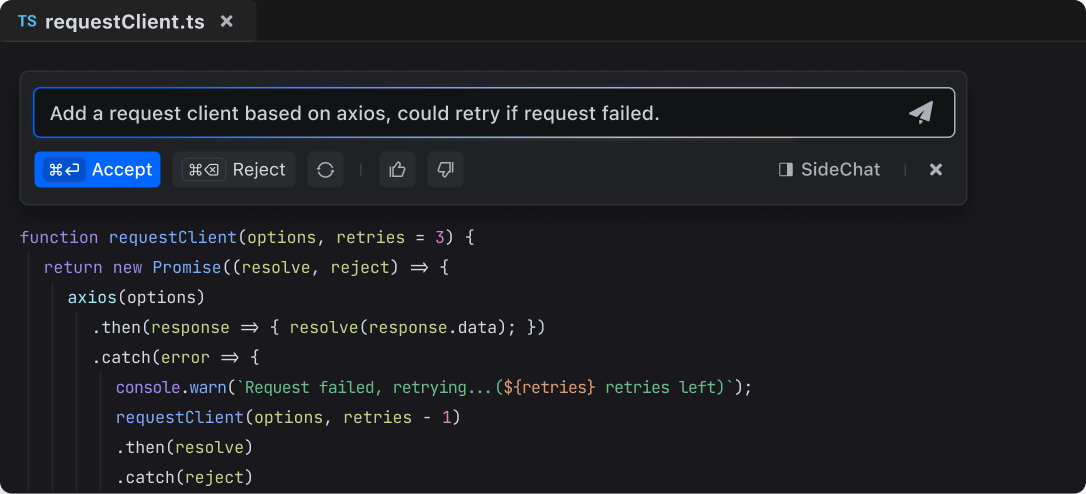
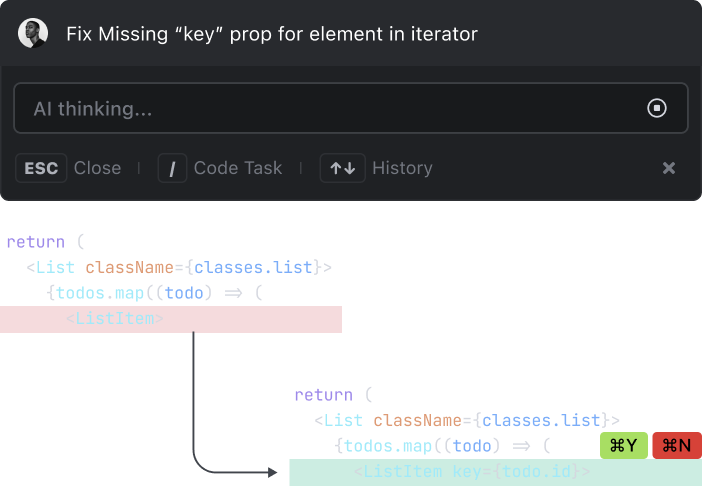
MarsCode’s assistant could complete a line or function, generate code from a comment, explain a project, answer questions, review changes, and suggest bug fixes. Launch material advertised more than 100 programming languages across mainstream local IDEs. Those features placed it in the same crowded aisle as Copilot and other assistants. The cloud workspace was the more distinctive half.
Templates and Git import reduced the ceremony of starting. For cloud functions, MarsCode bundled automatic schema work, API test-data generation, KV and file storage, and one-click elastic deployment. That arrangement mattered because AI-generated code is much more useful when you can immediately run it, inspect the console, and discover what it misunderstood. Generation without a feedback loop is just a confident draft.
“MarsCode makes it easy for me to see the frontend rendering in a single place.”Alex Cho, product manager, writing on Product Hunt
That comment gets closer to the product’s real charm than the old “GPT-4-powered” tagline. MarsCode gave non-specialists a contained place to inspect code and see an outcome. It also gave specialists a disposable bench for experiments. You did not have to believe an AI could replace a developer. You only had to value a shorter distance between curiosity and a running preview.
What the assistant knew, and what we know
The “latest model” question has no clean MarsCode answer because the brand changed while the model market kept moving. Global launch material called the assistant GPT-powered, and the Product Hunt launch explicitly promoted GPT-4. A separate 2024 research project, MarsCode Agent, discussed GPT-4o and Doubao Pro. Later Trae releases added a changing menu of built-in and custom models. Treat a model name attached to old MarsCode copy as a timestamp, not a permanent specification.
The research agent is worth noting, with a bright line around it. MarsCode Agent was an automated bug-fixing framework, not simply the autocomplete pane in the consumer IDE. It used multiple roles, code knowledge graphs, Language Server Protocol navigation, static diagnostics, and Docker-based debugging. The system planned, reproduced bugs, localized faults, generated patches, and validated candidates.
In the paper’s 300-task SWE-bench Lite evaluation, MarsCode Agent solved 102 instances. It correctly found the files requiring modification in 265 instances, or 88.3%. These are research results on a defined benchmark, not a promise that one in three bugs in your repository will disappear.
The five-minute buying test
Start with the work, not the model menu. If you want a teaching bench, open a public repository, ask for a map of its entry points, and verify three explanations against the source. If you want a prototype bench, begin from a template and time the path to a working preview. If you want a coding partner, give it a small issue with an existing test suite and judge the patch, test behavior, and explanation together.
| Need | MarsCode-era route | Watch closely |
|---|---|---|
| Learn a repository | Git import, project Q&A, code explanation | Hallucinated relationships and stale library knowledge |
| Prototype in a browser | Templates, terminal, preview, cloud resources | Runtime limits, package support, export path |
| Build a cloud function | API tests, schema, storage, deployment | Vendor coupling, secrets, observability |
| Stay in a local editor | VS Code or JetBrains extension | Permissions, latency, code sent to services |
Then do the unglamorous checks. Can you export cleanly? Does source control show exactly what changed? What happens when the assistant stalls? Are generated tests meaningful or merely green? Which data leaves the machine? MarsCode’s 2024 terms said users retained ownership of their content while granting broad rights needed to provide the service, and noted that content could be shared with third-party model or API providers. Read the current Trae terms before using private code because the old terms are not a substitute for today’s policy.
Price, then and now
MarsCode launched free within resource limitations. That was a potent offer: browser compute, AI assistance, and extensions without an immediate subscription decision. No durable standalone paid MarsCode price sheet surfaced in the official material reviewed for this guide. The successor is different. Trae introduced subscriptions in 2025 and moved to token-based tiers in February 2026, keeping a Free plan and listing paid levels from $3 to $100 per month, with optional usage charges. Those figures describe Trae, not a bill that was hiding inside 2024 MarsCode.
User scale needs similar discipline. MarsCode’s Product Hunt page records 381 points and 364 followers, useful evidence of launch interest but not adoption. A third-party traffic report estimated 790,000 domestic website visits in November 2024, which counts visits rather than people or active developers. The official LinkedIn page describes the product and its team size, not its customer count. There is no audited cumulative user number to print with a straight face.
The name changed faster than the habit
Jiemian reported that Doubao MarsCode grew from an internal ByteDance need and became the company’s first large-model product aimed at developers. Product leader Li Dongjiang described it as a bottom-up project aligned with ByteDance’s interest in developer services. The logic was that programming languages are more constrained and predictable than ordinary language, making code a tempting field for model-assisted work.
By April 2025, ByteDance consolidated the assistant under Trae. The old split became simpler: developers attached to traditional editors could use the Trae plugin, while people wanting a more AI-shaped workflow could use the standalone Trae IDE. Since then, Trae has expanded through Builder and agent modes, custom models, Model Context Protocol integrations, larger context windows, and a broader paid service. MarsCode’s cloud-first instinct survived; the sign above the door did not.
The YesPress verdict
MarsCode deserves to be remembered as a practical bridge between the browser IDE and the coding agent. Its useful move was proximity: question beside code, code beside preview, preview beside deployment. Its weakness today is identity. A new customer cannot sensibly “choose MarsCode” without immediately meeting Trae, current plans, and current policies. Use the MarsCode story to understand the product’s roots. Use Trae’s present documentation to make the purchase decision.
Questions people actually ask
Is MarsCode still available?
The legacy site and workbench remain reachable, but the assistant was renamed Trae Plugin in April 2025. Trae is the active product family to evaluate now.
Was MarsCode free?
Yes. It launched free within cloud-resource limits. Trae now has Free and paid membership tiers, so check current pricing before committing.
Could it replace a local IDE?
For tutorials, prototypes, repository exploration, and some cloud-function projects, it could. Complex toolchains, private code, and tightly controlled environments still demand closer evaluation.
Which editors did the extension support?
Visual Studio Code and JetBrains IDEs were the named destinations, with support advertised across more than 100 programming languages.
What should I test first?
Import a non-sensitive repository with tests. Ask for an explanation, request one contained change, inspect the diff, run the suite, and check exactly what data and permissions the service uses.
Follow the paper trail
The useful links are split between the original MarsCode material and the Trae product that followed it. The research paper is the place for architecture and benchmark details; the launch reporting and first-party post capture the original promise.