Valerie Huynh
She left a venture desk at NEA to build the software her mom always needed. Now she runs Reviva, the AI-native platform medspas and wellness practices actually want to use.
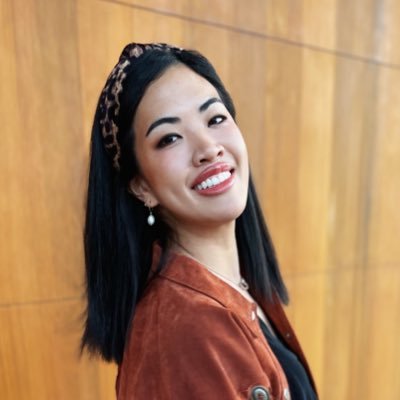
The CEO building unglamorous software on purpose
Walk into a busy medical spa on a Saturday and you will find the future of beauty running on the past of software. Bookings in one tab, charts in another, payments on a card reader that talks to none of it, and a front-desk person who has memorized which buttons not to press. Valerie Huynh looked at that mess and decided it was a product, not a punchline.
Reviva, the company she co-founded and runs as CEO, is a single platform for the things a wellness business does all day: scheduling, charting, payments, and client management, stitched together and wrapped in generative AI. The pitch is almost rude in its simplicity. One login. Month to month. No contracts. No training weekend. One of Reviva's own customer testimonials puts it plainly: onboarded with zero training and not a single headache.
What separates Reviva from the dozen booking apps that came before it is the word Huynh keeps returning to: vertical. This is not horizontal software bent to fit a salon. It is built for the specific, regulated, slightly awkward world of opt-in medical services that insurance does not cover - the injectables, the facials, the therapeutic massage, the integrative-medicine visit. That world has rules. Reviva is designed to know them.
Why is so much of running a small business still done by hand?
What Reviva folds into one platform
A pharmacy counter, a sandwich cafe, and a hunch
Creating Reviva is deeply personal to me. It was inspired by watching a wellness provider up close and personal growing up: my mom.
Huynh's mother runs a specialty pharmacy and integrative-medicine practice. Her co-founder Jane Jeong's mother ran a sandwich cafe. Both founders are daughters of immigrants who built small businesses by hand and treated technology as something complicated that happened to other people.
That detail is not branding. It shows up in the product. Scroll Reviva's homepage and one of the testimonials comes from Tina Huynh of Allen Family Drug - an integrative health practitioner and compounding pharmacist - praising the software for the notes it no longer makes her write by hand. When your first reference customer shares your last name, you tend to know the workflow cold.
The founding insight was less a market-size slide than a daughter's irritation: the people who keep these businesses alive were doing the most repetitive work themselves, every day, because nobody had bothered to build for them. Reviva is the answer to a grievance held since childhood.
Investor, operator, then founder
Two degrees, one campus
A B.A. in Economics and an M.S. in Management Science & Engineering, both from Stanford. The economics tells her where value pools; the engineering degree tells her how to build the thing that captures it.
Inside NEA
She invested at New Enterprise Associates, one of the oldest and largest venture firms. Sitting on the funding side of the table is useful training for the founder who later has to walk up to it.
Scaling at Assembled
On the go-to-market team at Assembled, she learned how modern B2B software actually gets sold and adopted - the unsexy machinery behind every clean SaaS dashboard.
Hyundai Card
A stint on the Digital Strategy & Product team, an early taste of turning strategy decks into things customers tap on.
BASES
Co-President and board member of the Business Association of Stanford Entrepreneurial Students - the founder reflex showed up well before the cap table did.
Reviva
Co-founder and CEO. The role where every previous job stops being a line on a resume and starts being a tool she reaches for daily.
How she got here
$2M to bet on small business
Reviva's pre-seed was led by Bling Capital and Village Global, the kind of early backers who write checks on conviction about founders, not spreadsheets about revenue. The announcement drew hundreds of reactions and a public call for the first hires.
Funding stage: Seed / pre-seed • Total raised: $2M • HQ: San Francisco, California
Self-described “huynhfluencer” on X
First reference customer shares her last name
Two founders, both small-business kids
Make the interface a sentence, not a spreadsheet
Reviva's design bet is that the front desk should not have to learn software. Generative AI does the heavy lifting in the background - drafting the chart note, sending the follow-up, surfacing the right client - while the person up front mostly just asks for what they want.
It is a HIPAA-conscious build for a category that lives at an odd intersection: real medical work, but elective and cash-pay, sitting outside the insurance machine that funds most healthcare software. That gap is exactly the territory Reviva planted its flag in. The big EHRs were built for hospitals. The booking apps were built for haircuts. Almost nothing was built for the practice in between.
An all-in-one vertical software that enables wellness SMBs to thrive.
Strip away the jargon and the ambition is old-fashioned: give the small-business owner back the hours that software was supposed to save in the first place. Huynh is building for the version of her mom who never had this - and the thousands of owners who still don't.
Things that don't fit in a pitch deck
@huynhfluencer
Her X handle is a pun on her own surname. A founder who builds serious medical-grade software and still names her social account like a meme is telling you something about the energy in the room.
Mom is QA
When your prototype has to satisfy the integrative-medicine practitioner who raised you, the feedback loop is short and the standards are unforgiving. Most startups would kill for a beta tester this honest.
She's seen both sides
Few founders pitch VCs having sat in the VC's chair. At NEA she learned what makes investors lean in - useful intel when you're the one doing the leaning back.
Pharmacy meets cafe
One co-founder's mom dispensed medicine, the other's served sandwiches. Reviva is what happens when two daughters of immigrant entrepreneurs compare childhood notes and find the same software problem.