Five business days is a short interval in which to discover whether your new company has a future. Valerie Christopherson needed no longer to win its first account. Global Results Communications opened on September 2, 2005, starting from zero. A little over a month later, its first employee arrived to find four accounts already on the books. Referrals had done much of the introducing.
The revealing detail is what came before that first week. Christopherson had spent years inside wireless communications, working at Qualcomm and agencies including Porter Novelli and Mesa Communications. She knew a field in which the vocabulary could make an outsider reach for the exit. Her business would depend on helping people understand why they should stay.
That remains an unusually useful way to read her career. The devices change. The subjects move from mobile networks toward satellites and spacecraft. Somewhere between the specialist with something to explain and the person with very little time to hear it, a conversation has to begin. Christopherson has made that awkward space her working address.
The lawyer who took a different brief
Law was the original destination. Communications classes and internships changed the route. Christopherson studied English and communications at California State University, Fullerton, with a public relations emphasis, and later completed a social media certificate program at the University of California, Irvine. The appeal of PR emerged through practice: the pressure of an immediate question, the need to respond, the possibility that communication could accomplish something useful.
Her account of the profession in the mid-1990s has the texture of an office supply cupboard. There were fax machines, pagers, paper press kits and desk phones. A laptop belonged to the executive class. Work that now follows a person home once required staying late beside equipment that could not travel. The technology industry was already selling mobility; its publicists were still rather attached to their desks.
This history matters because it gives her a long view of what a new tool actually changes. Distribution becomes faster. The working day becomes more portable. The obligation to understand the subject survives. For someone trained across language and communications, each technical development offers another translation problem, with consequences beyond finding a more attractive adjective.
GRC launches
Within five business days
the first employee joins
Four accounts, then a first colleague
When Christopherson opened GRC, mobile communications and international PR were its two stated specialties. The name spelled out the proposition. Global described a market without neat geographic boundaries. Results described the intended outcome. Communications described the work. There was little room left for anyone to ask what the initials meant.
An early interview captured a business with 12 people and more than 17 clients worldwide. Its roster included the Mobile Marketing Association, Nuance Communications and Quattro Wireless. These were specific relationships in a specific market. The foundation was technical familiarity, followed by the practical work of planning media outreach, advising executives and dealing with analysts.
Years later, Christopherson described the original ambition as quality rather than growth. In her 2021 account, some clients had stayed since 2005. Retention gives the opening month a different meaning. Winning a first assignment proves someone will take a chance on you. Keeping a relationship across changing products and changing markets asks whether the original confidence continues to make sense.
She also credits the people around her: colleagues who respect one another, clients with goals to meet, and editorial relationships built over time. The founder occupies the named position at the top. Her explanation of how the business works puts several other people in the picture.
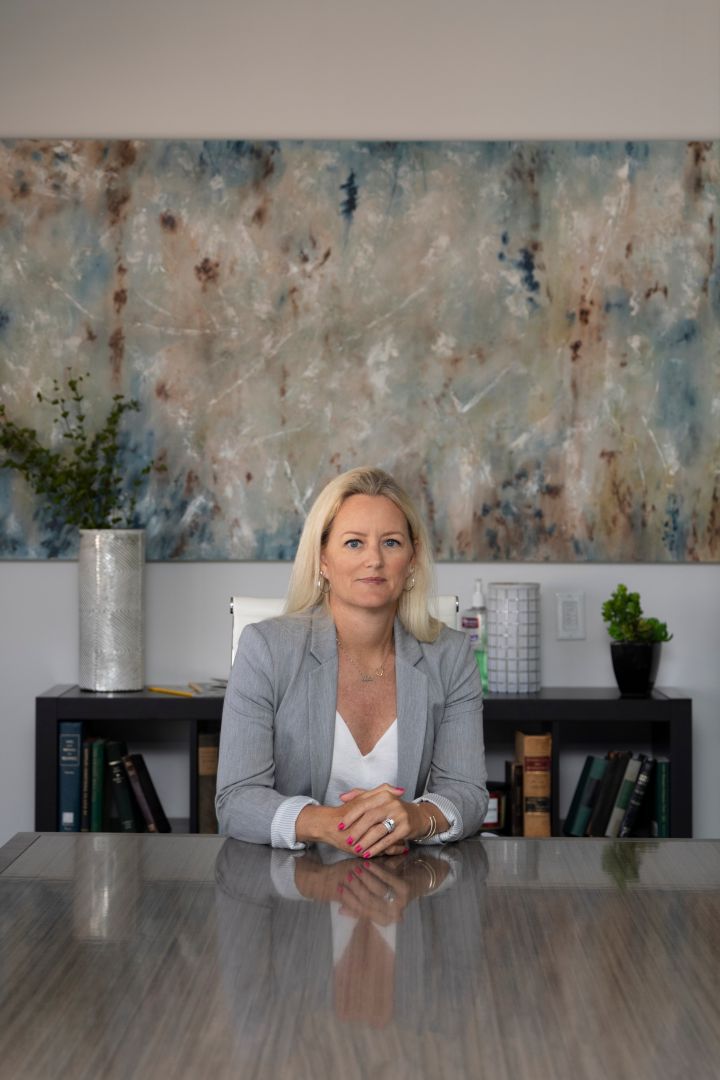
The reporter has a job, too
The relationships are more interesting when they include a little history. Jim Manis, the Mobile Giving Foundation founder and former global chair of the Mobile Marketing Association, recalls meeting Christopherson on opposing sides of a dispute over air interface standards. They later worked together in association communications and mobile giving. A technical disagreement became the beginning of a professional connection.
That is a more plausible account of a network than the usual diagram of smiling faces joined by arrows. People encounter one another while trying to get something done. They learn how the other person behaves. Years later, another problem arrives, and the earlier experience becomes useful. Manis describes returning to Christopherson for her industry knowledge, leadership and team.
Her advice to publicists follows the same logic. Read, watch and listen to the journalists you approach. Learn what would help them. A reporter covering a subject has an assignment, an audience and a limited number of hours. Sending a pitch without understanding those conditions is rather like turning up at someone else’s meeting and distributing your own agenda.
Christopherson has also put her thinking into published work, with articles on storytelling, making news and communicating futuristic concepts. Her Forbes Council archive spans these subjects. They belong to the same professional puzzle: a company may have something consequential to say and still need considerable help discovering the form in which another person can use it.
“Listen first, then develop your strategy.”Valerie Christopherson
Waiting until episode 200
There is a pleasing detail in GRC’s own media history. Its founder first appeared on PR 360 at episode 200. The November 29, 2023 conversation looked back at the show and the agency’s first 18 years. A communications executive who helps other people find an audience had allowed a substantial run of conversations to happen before taking the guest chair herself.
The episode’s agenda ranged from staying flexible to listening to technology clients and considering how human intelligence fits alongside AI. It also addressed why meeting client needs matters more than billing. Those subjects are a useful corrective to the notion that running an agency consists chiefly of having excellent ideas in a room. There are relationships to maintain and decisions to make about what a client actually needs.
Hosted by Tod Perry, the conversation offers another way into her thinking: a founder considering the habits that let an organization continue learning. The value lies in the continuity. After years spent speaking for clients, an agency can still benefit from sitting down, asking questions and allowing a conversation enough room to go somewhere.
The machine enters the inbox
By 2025, that question had acquired a new urgency. GRC’s third annual international journalist survey covered more than 1,500 respondents. Eighty-one percent said they relied on PR professionals at least occasionally for material or sources. Ninety-four percent preferred pitches by email. Only 12 percent responded positively to AI-generated pitches. These figures describe the survey’s respondents, rather than every journalist everywhere.
The combination is instructive. Reporters still need access to companies and people with knowledge. Their preferred route remains an inbox that can also receive an unlimited quantity of unhelpful prose. Making prose cheaper does very little, by itself, to solve that problem. A pitch still needs a reason to exist for the person receiving it.
Christopherson’s response has been to describe AI as a partner in thinking. It can help investigate a subject, summarize patterns or try out language. The publicist must then read the relevant work, judge the opening and understand the reporter. In her account, the availability of more information can create an opportunity to be more considered about an approach.
It is a practical position for someone whose career began among fax machines. She has already watched the machinery of communication change. The next machine earns its place through what it helps a person understand. The final responsibility for a claim, a choice of words or a poorly timed message still sits with someone who can be asked to explain it.
An inbox full of possibilities
From wireless to orbital
The subject matter keeps expanding. In 2025, GRC announced its appointment as Globalstar’s agency of record, with work spanning media engagement, messaging, product launches and analyst relations. Satellite connectivity brought the familiar question of communications into places where ordinary infrastructure cannot be assumed. The audience included industries and people operating far beyond a convenient signal.
A 2026 announcement added Zenno Astronautics and Kall Morris Inc., or KMI, to the space practice. Their assignments concern spacecraft control technology and orbital debris systems. Christopherson described the agency’s task in terms of helping investors, customers and policymakers understand why the developments matter. The destination is farther away; the explanatory job remains recognizable.
These assignments give her career an arc without requiring a tale of sudden reinvention. Wireless was an early specialty with many possible destinations. The work has followed technologies into new settings, asking who needs to understand a development and what evidence will help. Space offers an expansive backdrop. A usable explanation still has to fit into an ordinary working day.
A cashier, a concert, a map
Asked about her first job, Christopherson names the Del Taco cash register. Asked about life beyond work, she lists concerts, travel and her son’s sports. She has also spoken of wanting to visit every US state, with roughly 42 or 43 already visited at the time of that interview. It is a suitably concrete ambition for someone whose company name begins with Global.
Her choice of mentor is closer to home: her mother, whom she describes as practical. Her desired legacy is fairness. These answers sit comfortably beside her board service, including Golden Rule Charity, Bradley’s Beautiful Bouquets and the Ace of Hearts Project. They suggest an interest in what professional experience can contribute outside a client engagement.
The aspiration is modest enough to be demanding. Being fair requires attention to the other person’s position, including when the answer would be easier without it. Christopherson’s career has repeatedly returned to that act of attention: to a colleague, a client, a reporter, a new technical idea. Before a headline appears, someone has to hear what is worth saying.
Keep the conversation going
Profiles, conversations and further reading.