The useful thing v0 does is remove the small eternity between “I have an idea” and “here, click this.” Describe a scheduling dashboard, paste a screenshot, point it at a Figma file, or hand it a GitHub repository. The agent plans, writes, runs and previews the code in a browser. For product managers who have spent a career translating a thought into a ticket into a meeting into a wireframe, that shortening feels mildly illegal.
This is why v0 matters to people who do not introduce themselves as developers. A founder can test whether a feature deserves a company. A designer can make the interaction behave instead of annotating how it might behave. A salesperson can tailor a demo before the call. A developer can skip an afternoon of scaffolding and arrive at the interesting problem sooner. The result is real code, usually shaped around React, Next.js, Tailwind CSS and shadcn/ui, with a route into GitHub and Vercel deployment.
From component vending machine to software co-worker
The original v0 arrived in 2023 with a narrower, wonderfully legible trick. You described an interface; it produced React code using Tailwind and shadcn/ui; you selected a version and copied it into your app. One hundred thousand people joined the waitlist in three weeks. The early name made sense: v0 was the first draft, ready before anyone could open a blank design file and sigh at it.
The scope kept expanding. Chat replaced one-shot generation. Images and files joined text. Full-stack previews, databases, payments and authentication followed. The domain changed from v0.dev to v0.app in August 2025, a two-letter promotion from developer tool to general-purpose builder. In February 2026, Vercel rebuilt the product around sandboxes, existing repositories, branches and pull requests. By August, the v0 API let other products summon the whole app-building agent programmatically.
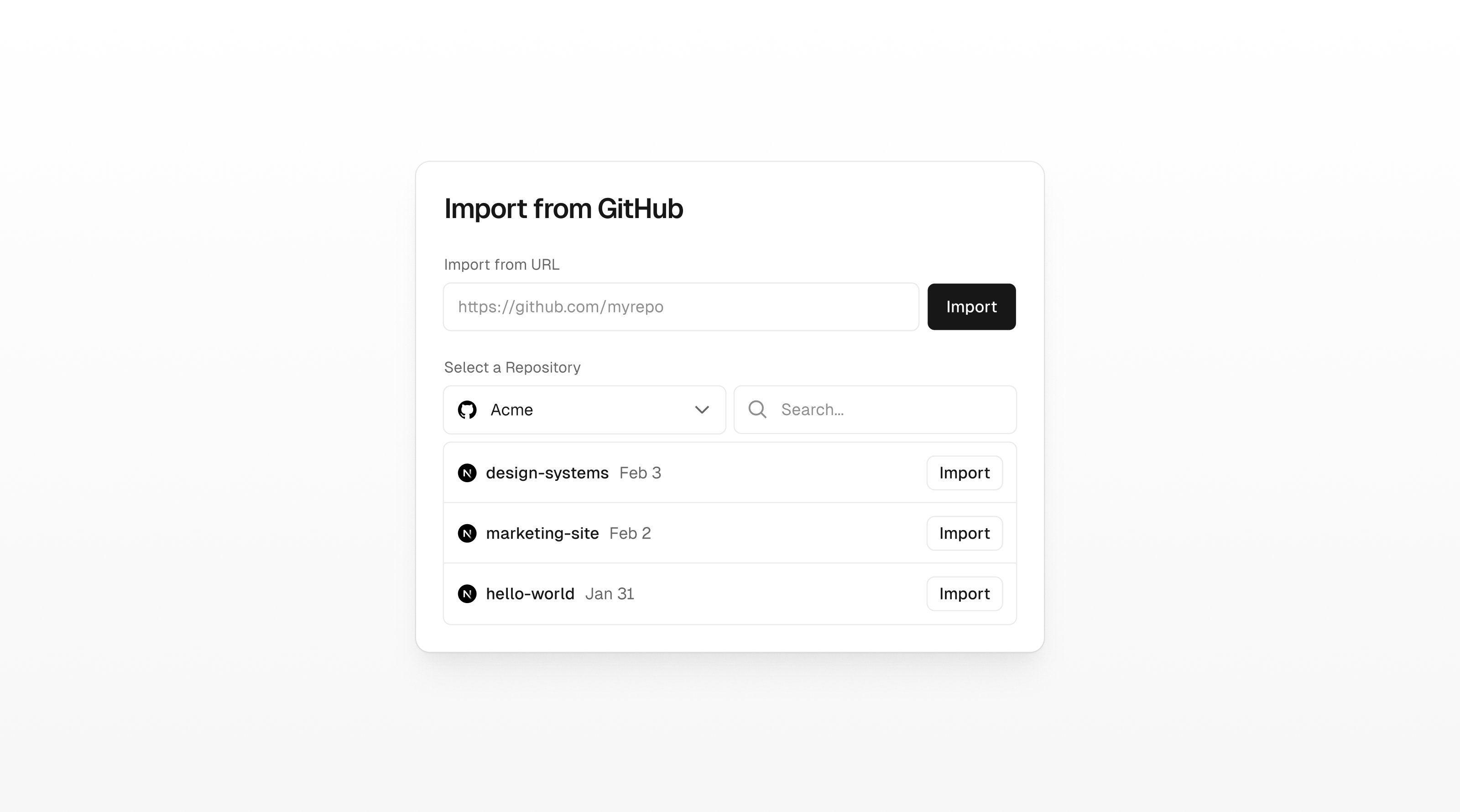
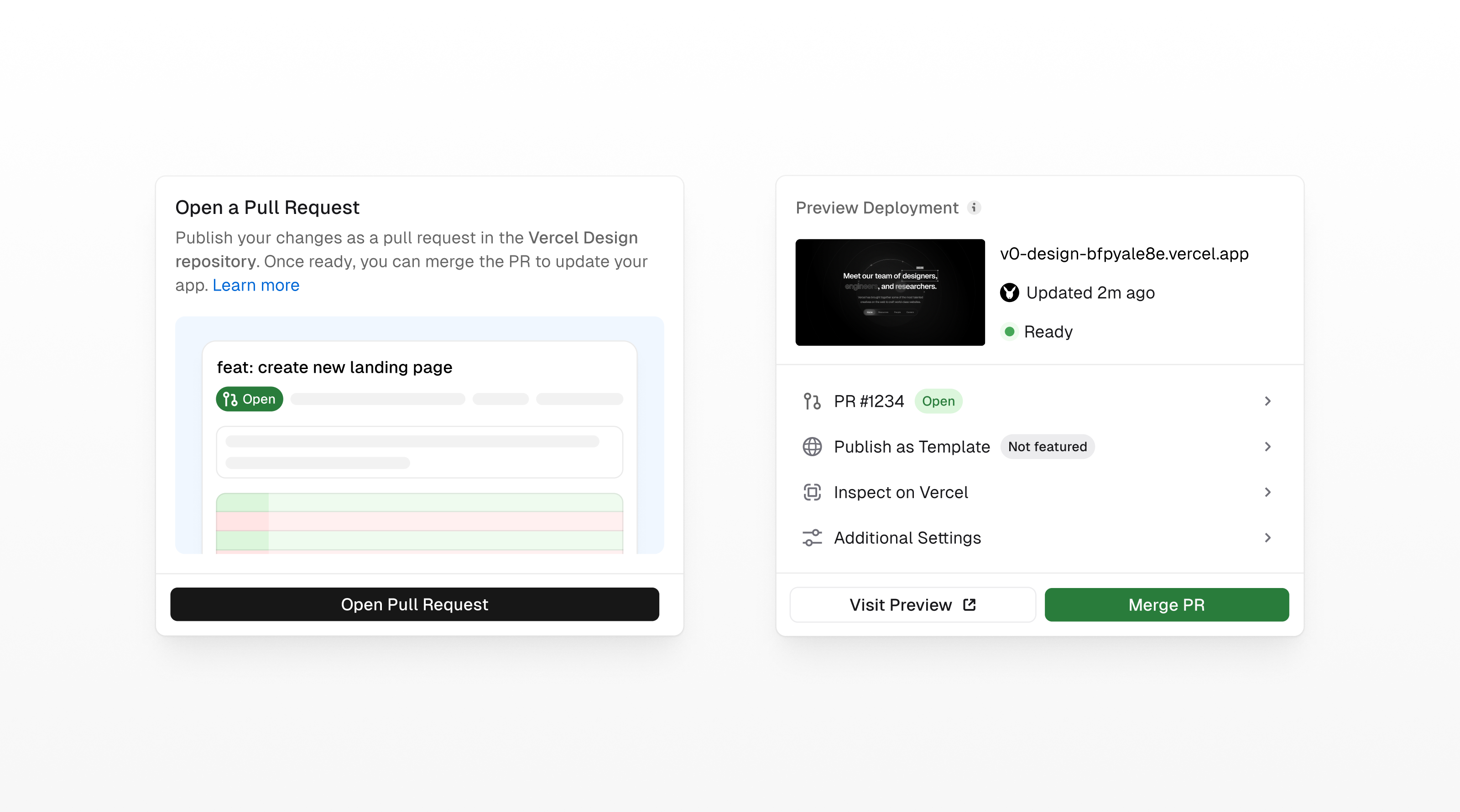
That history explains the current personality. v0 still has strong visual instincts, especially inside Vercel's preferred stack, but now wants to stay for the deployment. It can import a repository, pull configuration from Vercel, work in an isolated environment, inspect the running result and ask for approval when required. In September 2026, a unified Publish action began handling the normal branch-to-pull-request-to-merge-to-production path while keeping repository checks intact.
“I use it to create interfaces, then I implement them using Cursor.”A concise working arrangement from an r/nextjs user, August 2025
Who should invite v0 into the meeting?
The sweet spot is a cross-functional team that already ships web software. Designers and product people gain a medium they can touch. Engineers gain a concrete proposal instead of a paragraph with the phrase “make it pop.” Everyone can comment on the same running thing. Agency Code and Theory says it replaced wireframes and requirement documents with live prototypes, cutting time-to-prototype by 75 percent and deployment timelines by more than half.
Solo founders also fit, particularly when their destination is a conventional SaaS interface: landing page, onboarding, dashboard, settings, forms, charts and a database. The free plan is enough to discover whether the conversation clicks. Experienced React developers may get even more value because they can recognize a reasonable component boundary, spot a suspicious effect and take over cleanly when the agent begins rearranging furniture it was not asked to touch.
“Turn this Figma flow into a responsive Next.js prototype using our design tokens.”
“Import this repo, add the empty state on a branch, run it and show me the diff.”
“Build a marketplace with payouts, identity checks and regional tax handling.”
“Make it better,” repeated until the credit balance develops stage fright.
A complete beginner can publish something, but “published” is not a synonym for secure, accessible, maintainable or legally compliant. Authentication, permissions, billing and destructive database actions deserve deliberate tests. A 2026 academic evaluation of app-building agents found a broad production-readiness gap across the category, including polished interfaces sitting in front of incomplete backend behavior. v0 reduces the distance to working software. It does not remove the need to understand what “working” must include.
What happens after you press Enter
The v0 production relay
or repo
generate
preview, fix
and publish
Under the friendly chat sits a fairly opinionated workshop. Each build runs in a Vercel Sandbox. The agent reads and edits files, starts a development server and checks whether the preview renders. Vercel says isolated language models can emit errors as often as ten percent of the time. Its answer is a composite pipeline: a dynamic system prompt supplies fresh framework knowledge, a streaming layer called “LLM Suspense” massages output in flight, and deterministic plus model-driven fixers attempt repairs.
The model menu now separates v0 Mini, Pro, Max and Max Fast, and can also expose outside models. Raw model prestige matters less than the loop around it. A coding model that writes plausible code but never boots the app leaves you with a handsome receipt. v0's useful engineering choice is to count a generation as successful when the website actually appears in the preview.
The bill arrives one token at a time
The current pricing page starts with Free: $5 in monthly credits, seven messages a day, Design Mode, GitHub sync and Vercel deployment. Plus costs $30 per user each month and includes $30 monthly credit plus $2 in daily credit when that person logs in. Business costs $100 per seat, carries the same listed generation allowances and adds training opt-out by default. Enterprise pricing is negotiated. The old $20 Premium plan is being sunset and is unavailable to newcomers.
Credits pay for model tokens, including the prompt, answer, chat history, source files and other context. Larger projects therefore make even a short follow-up expensive. Reddit complaints surged after the 2025 move to usage-based pricing: users described spending credits asking the agent to repair mistakes from a previous generation. Those accounts are anecdotes, but the pattern is coherent. An agent that re-reads and rewrites a large codebase can turn vagueness into a bill.
| Tool | Natural home | Choose it when | Watch for |
|---|---|---|---|
| v0 | React, Next.js, Vercel | UI quality, live prototypes and Git-to-deploy continuity matter | Token cost on long chats; generated backend needs review |
| Lovable | Guided full-stack SaaS | A nontechnical builder wants an integrated editing flow | Platform conventions may shape the architecture |
| Bolt.new | Browser development workspace | Framework choice and a visible coding environment matter | Complex builds can consume tokens through repair loops |
| Cursor | Local, existing codebases | A developer wants precise control inside an editor | It expects more engineering judgment and setup |
The practical defense is project hygiene. Start with the smallest testable slice. Name the stack, routes, data shape, visual references and acceptance criteria. Ask v0 to plan before changing files. Keep GitHub connected and commit a good state before a large request. Open the diff. Test the unhappy paths. Begin a fresh chat when history has become a novel. Use Mini for cheap, simple work and reserve heavier models for reasoning that earns the tariff.
Figma in, software out - with caveats attached
v0's design advantage is more than the familiar shadcn look. It can read a complete Figma file, including frames, tokens, layout, text, imagery, styles and developer resources, then compare built screens with frame images. Design Mode permits visual selection and editing, with layers and spacing measurement. This turns a static artifact into a negotiable implementation. The catch is fidelity: a screenshot can reveal appearance, not the unwritten rules behind an interaction. Tell the agent what should happen, not merely what it should resemble.
The full-stack kit is increasingly concrete. New apps needing data and identity default to Neon, Drizzle and Better Auth. Integrations cover Stripe, AI providers, Shopify, Snowflake and many other services. Vercel AI Gateway can give generated apps zero-configuration access to models. These conveniences make demos feel finished quickly, which is precisely when careful teams slow down. Check schemas, roles, rate limits, secret handling, failure states and the eventual cost of each service.
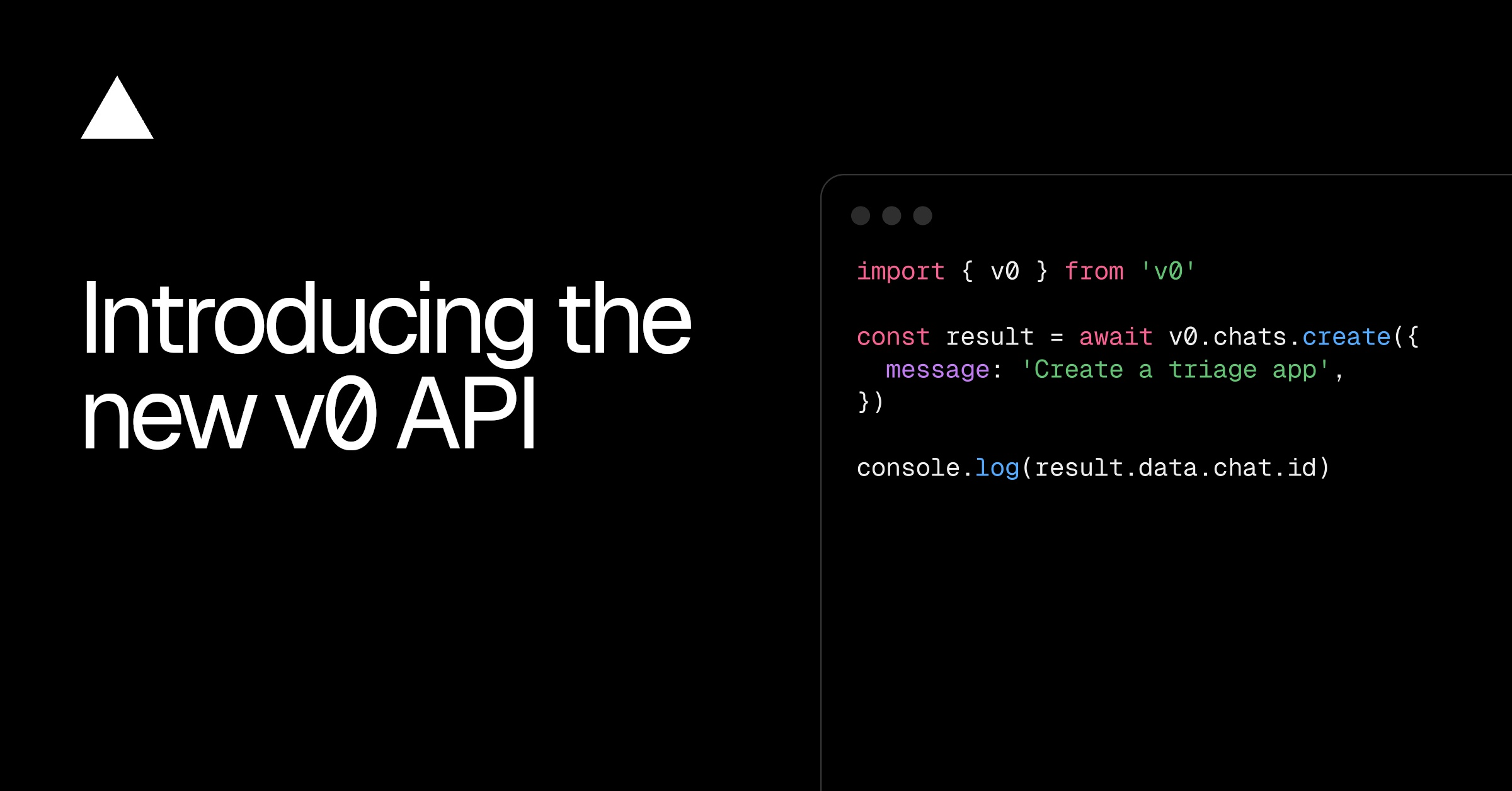
The headless API is the quietly consequential addition. A company can start a chat from its own interface, stream the work, embed the live preview, continue editing the same workspace and deploy through one more call. The public TypeScript SDK is generated from an OpenAPI specification. That turns v0 from a destination into infrastructure for internal builders, customer-facing site generators, automated prototypes and agents that need to make runnable software.
The killer feature is not instant software. It is instant evidence: a team can test the idea while everyone still remembers why they wanted it.
Our recommendation: make it earn the next prompt
v0 deserves a place in the first half of a web product's life. It makes the blank page less ceremonial, gives nondevelopers leverage and produces code that an engineering team can inspect. Its path through GitHub and Vercel is unusually coherent. The visual output often arrives with enough polish to provoke useful feedback instead of apologies.
Treat each prompt like a small contract. State the outcome, constraints and test. Review what changed before asking for more. Export or connect the repository early. If a repair loop starts, stop spending and inspect the code. For a landing page, dashboard, internal tool or prototype in the React orbit, v0 can buy back days. For a sensitive production system, it should sit beside experienced humans, not in their empty chairs.
That balance is less cinematic than “one prompt, whole company,” but it is more useful. v0 has matured from a component dispenser into a capable software workshop. A careful customer still arrives with a blueprint, checks the wiring and knows when to pick up a screwdriver.