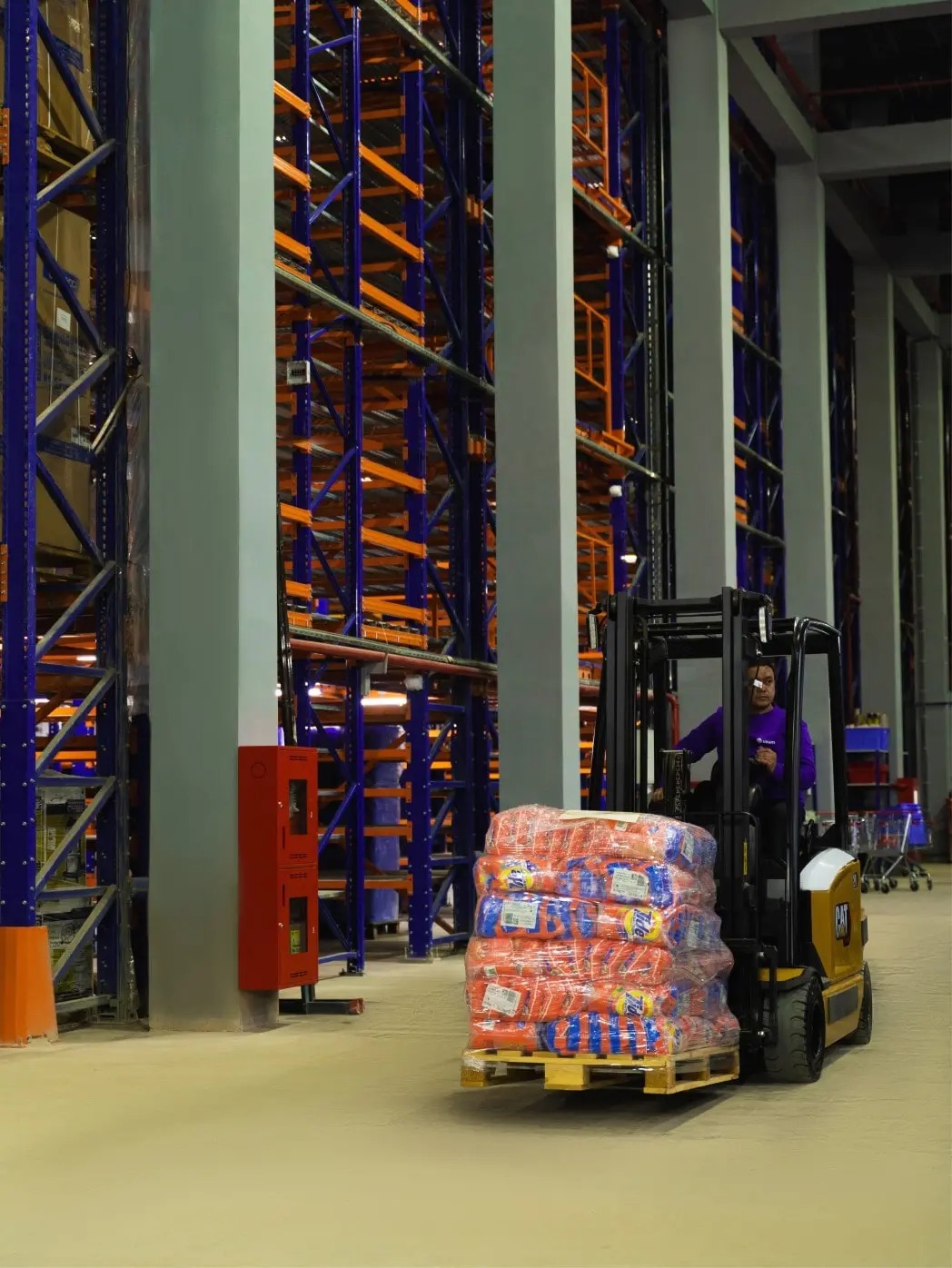
A grandmother wanted to buy phones for her grandchildren. What arrived first was confusion. In a 2023 interview, Uzum founder Djasur Djumaev recalled ordering the gifts while visiting family in Tashkent. Three couriers contacted him about one purchase; one asked him to change a handset because it was unavailable. The online shop had accepted an order its underlying operation could not reliably fulfil.
That experience gave Djumaev a business problem with unusually clear edges: make the stock on the screen correspond to something that can actually reach the buyer. Uzum’s answer eventually encompassed shopping, payments, banking and delivery. The company’s name means grape in Uzbek. Its founder likened the services to fruit growing from a common stem. The horticulture is charming; the operational demands are considerable.
By July 2026, Uzum said it had invested more than $500 million in infrastructure. A company founded in 2022 was now building the physical and financial machinery needed to support its own demand. Calling it a shopping app leaves out the warehouses, the credit decisions and the people handing over parcels. Those are the parts that make the screen believable.

Before the basket, build the warehouse
Uzum’s chronology starts with construction. Work on its first fulfilment centre began in February 2022, eight months before Uzum Market launched in October. The digital bank Apelsin was rebranded into the group, and instalment provider Paymart joined as Uzum Nasiya. Existing financial businesses helped the new marketplace avoid having to invent every capability at once.
This matters when judging the speed of the company’s growth. Uzum combined newly built commerce operations with established businesses and their experience. Its achievement was partly one of assembly: bring complementary services into a common commercial system, then build the missing connections. The familiar startup story of an empty room and a freshly written app does not quite describe it.
By July 2026, the company counted more than 2,100 pickup points, in-shop locations and franchise outlets across 626 cities and towns. Nine regional cross-docking facilities helped move goods through the network. The next expansion includes a sorting centre and storage for oversized inventory, with planned capacity to process as many as 600,000 items a day. That last figure is a capacity target, not a daily sales tally.
The appeal to a shopper is straightforward: more choice without having to personally solve the delivery problem. For a seller, shared distribution offers a route to buyers beyond the immediate neighbourhood. A pickup counter also gives an otherwise remote transaction a physical destination. In a business conducted through tiny screens, a place with an actual person behind the counter has practical value.
The second purchase is a financial product
Uzum Market gives consumers a place to buy goods; Uzum Nasiya lets eligible customers spread payments. Uzum Bank supplies digital banking and payment services. Uzum Tezkor handles deliveries from restaurants, cafes and shops, while Uzum Business brings services together for entrepreneurs. Different occasions bring people into the group: a household purchase, lunch, a transfer, or the administration of a small business.
The intended commercial connection is explicit. Uzum says shoppers who arrive for deals can become users of its financial products. Its business overview reports that its own fintech solutions process more than half of payments in the group’s e-commerce services. Discounts on Uzum Bank card purchases provide another reason to use the financial side of the business.
This is where the model differs from a standalone marketplace. Each order can support several relationships: the seller pays for access and services, the buyer uses a payment product, and an instalment purchase introduces financing. The same customer need can sustain more than one business. That does not make every activity profitable by itself; group results combine businesses with different economics.
For 2025, Uzum reported more than $500 million in e-commerce gross merchandise value, $11.1 billion in payment volume and $176 million in net profit. The results were unaudited. These numbers describe different things: goods sold through platforms, money moving through payment services, and earnings after costs. Treating any of the first two as company revenue would turn a substantial business into a misleadingly enormous one.
The commercial logic of Uzum’s connected services. Simplified illustration.
The technical work extends beyond processing a payment. Uzum reports using machine learning for credit screening, risk management, pricing and personalisation. These are decisions with financial consequences: which borrower qualifies, what exposure the lender accepts, and what a customer sees. The relevant expertise spans software engineering, banking risk and the mechanics of retail distribution.
A checkout has a price on both sides
The seller’s bill is more complicated than a single commission. Uzum Market’s August 2026 agreement says remuneration depends on product price and category. Commission is separate from logistics, storage, payout-schedule services, urgent withdrawals and other additional services. Advertising is also among the services covered by the agreement. A merchant has to calculate the whole bill against the margin on the product.
The operating choices have widened. In October 2024, Uzum introduced selling from merchants’ own warehouses. In May 2025, it added a Delivered by Seller model, allowing merchants to handle delivery themselves. This is a useful evolution: a platform that invested heavily in logistics can still accommodate sellers whose own arrangements suit particular goods or customers.
For a prospective merchant, the copyable move is modest and measurable. Start with a product whose demand and margin can be tested, choose the fulfilment arrangement, and calculate fees before committing inventory. Uzum’s seller onboarding calls for business documentation and a bank account. Access to a large audience is an opportunity to compete for orders, not evidence that a particular product will sell.
Consumers face their own distinction. The ability to split a payment changes its timing, not the need to pay. Comparing the complete purchase price and the applicable instalment terms remains part of shopping. The interface can make a transaction convenient; the household budget still has to absorb it.
The merger that did not happen
Expansion has not followed every announced route. In June 2023, Uzum and payment company Click publicised a prospective merger. Click was to become one of the main entry points into the combined ecosystem. The proposal offered a shortcut to a broader payments audience and an even larger collection of services.
A year later, Uzum abandoned the plan. Its stated explanation was a preference for developing fintech and e-commerce within its own platform, preserving control over the product, brand and strategy. The company also pointed to a stronger fintech team and the completion of other asset integrations. The decision turned an acquisition-led ambition into a commitment to internal development.
That reversal is more revealing than a frictionless corporate timeline. Combining audiences is attractive, but integration changes who controls the customer experience and how teams make decisions. Uzum’s public rationale put those questions ahead of the proposed combination. Click should consequently be understood as a payments alternative, not casually included in a list of Uzum subsidiaries.
Competition also varies by the job a customer wants done. The Sellers Association of Uzbekistan lists Wildberries and Yandex Market alongside Uzum as marketplace options. A local shop or bazaar remains another way to buy. Uzum’s proposition is the connection between commerce and finance; the test is whether that connection makes an individual transaction easier or better value.
“We didn’t start from scratch”Djasur Djumaev · 2023
The bill for building all this
The funding history shows several kinds of money supporting different needs. In March 2024, Uzum announced $52 million of Series A equity and $62 million of debt. FinSight Ventures led the equity round, joined by Xanara Investment Management and senior management. The transaction took the company past a $1 billion valuation and into the small club labelled unicorns.
In August 2025, nearly $70 million in equity followed, led by Tencent and VR Capital with FinSight participating. Uzum reported an approximately $1.5 billion post-money valuation. Planned uses included digital lending, deposits, expansion of its Visa card programme and financial infrastructure. The investor story had become as much about banking products as online shopping.
March 2026 brought more than $130 million in strategic investment anchored by sovereign entities of Oman, with existing shareholders participating. This combined primary equity and structured capital. Its $2.3 billion figure was a pre-money valuation reference, with conversion terms tied to the next qualifying financing. It is not directly interchangeable with the previous round’s post-money valuation.
In May, the Eurasian Development Bank signed a separate $70 million investment loan agreement to expand Uzum’s fintech business. These disclosures should not be added to infrastructure spending as though they were separate costs. Financing describes where money comes from; the company’s reported investment in infrastructure describes where money goes.
Selected announced investments. The 2026 transaction combines primary equity and structured capital. Debt agreements are excluded. Bar lengths are approximate.
A bigger network needs people, too
The work behind the platform includes distinctly physical jobs. Uzum’s frontline recruitment page describes warehouse staff assembling, scanning and packing orders on rotating day and night shifts. Pickup administrators handle orders, returns and stock records. Free meals, uniforms and training appear among the advertised benefits for warehouse roles. The parcel’s journey requires a workforce as well as software.
Its wider careers material promises development tied to results, opportunities to learn from experienced colleagues and flexible arrangements for suitable roles. Those are the employer’s stated offers, rather than a verdict on every employee’s experience. Uzum Academy’s merchant training adds a further operational task: teaching businesses how to participate in the system being built around them.
Product expansion keeps returning to the reliability of information. In May 2026, Uzum Avto launched a car-listing app in test mode in Andijan, Namangan and Fergana. Users could enter a registration number, photos and a price; the service would populate other details. Uzum described automated moderation intended to block fake, duplicate and inaccurate listings. The old problem of whether an advertised item really exists had found a new vehicle.
The broader lesson is conditional. Owning logistics makes sense only if enough orders use it; lending requires repayments as well as demand; shared products need customers who find the connection worthwhile. A business without capital, delivery density or lending expertise cannot reproduce Uzum simply by adding buttons to an app. What it can copy is the sequence: identify the part of a transaction that disappoints the customer, make that part dependable, and expand from there.