Consider a hotel with a perfectly respectable staffing plan. The hours add up. The budget balances. Then a guest asks for towels, a room needs inspection, and someone calls in sick. The spreadsheet remains perfectly respectable. The hotel has acquired a different problem: getting the right person to the right piece of work, now.
That gap is where Unifocus has built its business. Its software forecasts demand, schedules employees, records attendance and coordinates hotel operations. The interesting part is the connection between those jobs. A staffing decision can look economical in the office and prove expensive at the guest’s door.
- Forecast the work, then build the schedule around it.
- Connect shifts to housekeeping, maintenance and guest requests.
- Measure service alongside labor savings.
01 / Before the algorithm, a pocket calculator
Unifocus began in 1998, but its underlying education started earlier. Brothers Mark and Ken Heymann had worked in hospitality consulting before turning their methods into software. In a GAIN Momentum interview, Ken described the original equipment: “paper, pencil, and pocket calculators.” The ambition was to make technology do work they already understood.
That origin matters. A hotel’s labor requirement is a collection of small judgments: how much work demand creates, how long that work should take, and which employees can do it. Unifocus’s expertise sits in translating those judgments into standards, forecasts and schedules. Consulting remains part of the offering. Buying the software does not eliminate the need to understand the operation.
02 / The roster meets the room
The product begins upstream, with demand forecasting and labor budgeting. Automated scheduling turns staffing requirements into shifts. Time and attendance records what actually happened, while mobile tools let employees handle schedule changes and managers respond to exceptions. These are different views of the same day.
For employees, the phone is a practical part of that connection. Seeing a schedule, requesting time off and responding to an open shift all affect whether the plan survives contact with real life. ShiftGenius, introduced in 2021, lets managers offer openings to everyone or selected groups. Attendance and compliance tools add another layer: a shift has rules as well as a start time.
In September 2021, Unifocus acquired Knowcross, which brought hotel task management into the picture. Housekeeping, maintenance, inspections and service requests could now sit alongside workforce planning in the company’s offering. The strategic logic is straightforward: knowing how many people should work is more useful when you can also see the work awaiting them.
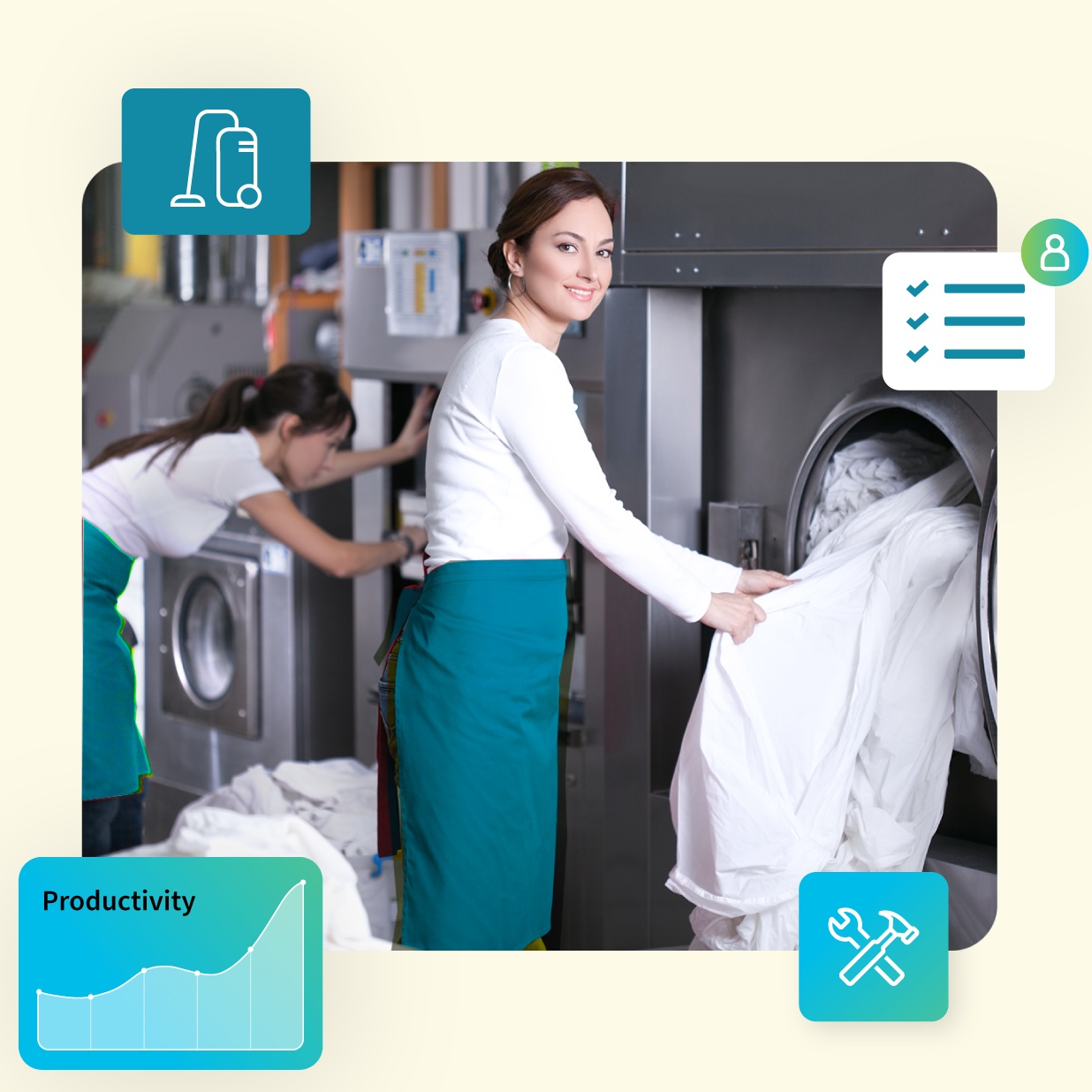
A guest-message integration with Nonius, announced in June 2024, extends that logic. Guest conversations can connect to the creation and updating of operational requests. The useful unit becomes a request someone can act on, rather than a message someone must remember to pass along.
- 01ForecastWhat work is coming?
- 02ScheduleWho can cover it?
- 03ExecuteWhat needs doing?
- 04MeasureDid service improve?
A conceptual map of the product’s scope, not a measured performance chart.
03 / What persuaded the customer
The 2016 announcement that Hawaiian Hotels & Resorts had selected Unifocus offers a revealing detail. The operator already had labor-management and attendance capabilities. Its managing director, Jansen Medeiros, said it needed something more robust for the resorts’ size and complexity.
“Integrating labor management and time and attendance was a critical next step for us.”
Jansen Medeiros · Hawaiian Hotels & Resorts · 2016
The existing arrangement had reached a limit. That is the documented bottleneck, rather than a dramatic software collapse. Medeiros anticipated that vacation approvals alone could take as much as 80 percent less time. That was an expectation at selection, not a published measurement after implementation. The distinction is essential when assessing a software purchase.
DiamondRock Hospitality supplies a different kind of evidence. A Unifocus case-study page reports returns of 7:1 and 8:1 at two properties. Another company-published account says annual hours worked fell by more than 200,000 at DiamondRock’s largest asset. These are reported customer outcomes, tied to particular operations and changes.
ROI reported at two DiamondRock properties
Vendor-published customer case study. Results are property-specific.They are not a price list. Unifocus sells subscription software through a sales process, with pricing available by quote. A buyer needs a property-specific proposal, implementation scope and baseline to calculate its own return. Hours removed from a schedule mean little without knowing what happened to service.
04 / The next interface is a question
Riverside invested in December 2020, providing backing for a subscription business and further development. The Knowcross deal followed the next year. In 2025, Unifocus added Inventory, the XiQ feedback product and a Staff Collaboration Suite combining chat, mobile training and an AI knowledge assistant.
Then, on September 15, 2026, it launched Claira. The announced platform brings labor and operations together with Performance Insights and Ask Claira, a natural-language assistant designed to give answers, recommend actions and act in real time. The launch specifically addresses select-service hotels as well as broader hospitality organizations.
The new interface sits on a long mobile history. Unifocus’s anniversary retrospective dates an app for Nokia’s Symbian platform to 2005 and a BlackBerry app to 2007. The devices changed; the operating question persisted. How does information reach an employee who is cleaning a room, fixing equipment or moving between departments? A system used only at a desk sees a limited version of hotel life.
The promise is less navigation between disconnected records. A manager should be able to ask about an operational problem and reach a useful next action. That is the company’s stated direction; an announcement alone does not establish how consistently it happens on a busy property.
05 / A crowded market, a useful test
Unifocus occupies the space between hotel labor planning and daily execution. Actabl’s Hotel Effectiveness also offers hotel labor management; UKG supplies broader hospitality workforce and human-capital tools. Integration is a competitive argument shared across this market. Unifocus’s case rests on its hospitality detail and the reach of its connected offering.
The practical lesson is available before purchase. Choose a department. Define its demand drivers and realistic service standards. Compare planned hours, worked hours, unfinished tasks and guest feedback. Investigate the handoffs. Then test whether a change improves both cost and service.
This approach depends on reliable inputs and staff actually recording the work. Poor forecasts, unrealistic cleaning standards or ignored requests can defeat a sophisticated system. A small operation with simple needs should also compare the cost of a broad platform with the problem it needs solved.
A guest experiences the result of the shift. Unifocus’s wager is that managers can improve that result when the plan, the people and the unfinished work are visible together.