At a hotel, the front desk is where a thousand small exceptions go to become somebody else’s problem. A guest arrives early. Another has lost a key. A third wants to pay cash. A fourth has been assigned a room whose lock has stopped speaking to the rest of the building. The impressive part of a front desk is rarely the counter. It is the person who knows what to do when the neat sequence of booking, paying and sleeping comes apart.
Aavgo, the San Mateo hospitality technology company operated as Parshva Corp, has built a business around that untidy truth. Its Smart Reception combines a lobby kiosk, payment and key hardware, hotel-system integrations and a remotely available agent. A guest can check in alone or ask for live help on screen. The company also sells guest-facing software and a staff operations platform. The ambition is plain: move routine reception work away from a permanently staffed counter without leaving a traveler to negotiate with a mute touchscreen.
The short version
- Aavgo began with in-room tablets for guest requests, then moved into remote front-desk operations.
- Its kiosk handles check-in, check-out, cards, cash and key delivery, with a human agent available.
- Hotels buy a combined technology and service offer; current Smart Reception pricing is quoted property by property.
First, a tablet and a tube of toothpaste
The earliest public version of Aavgo was smaller than a lobby redesign. In 2017, co-founder Mrunal Desai described a service that put tablets in guest rooms so people could ask for food, extra pillows, maintenance or toothpaste without phoning or visiting the desk. TechCrunch reported that the guest-to-staff service had launched at five hotel brands. The Row Hotel and Hotel Strata were among the named properties. The price then was $5 per room per month.
That product attacked a familiar hotel irritation: the call that rings, gets transferred and quietly dies. An in-room screen could turn a request into a visible task. It could also let staff talk to one another. Aavgo’s current staff platform still bears that family resemblance, with digital housekeeping assignments, maintenance work, lost-and-found records, shift notes and translation between employees.
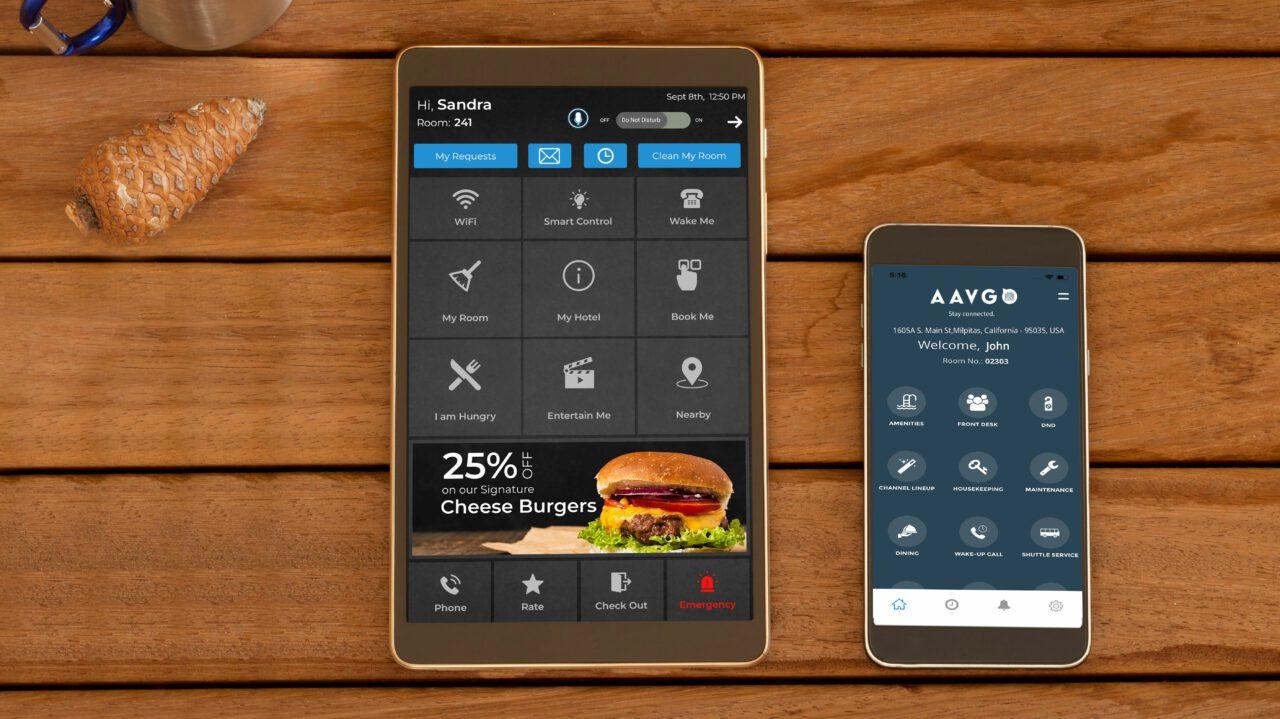
But a room tablet lives on the guest’s side of the lobby. It cannot accept a cash deposit or place a working RFID key in someone’s hand. Aavgo’s later product moved closer to the hotel’s operating nerve center. The public record does not pin that turn to a single failed pilot or epiphany. What it does show is a clear change in the work Aavgo chose to take on: from relaying a request to completing a check-in.
“We’re trying to eliminate the need of a phone call.”Mrunal Desai, Aavgo co-founder, speaking in 2017
The kiosk is only the visible employee
Aavgo calls the newer offer Smart Reception or Virtual Front Desk. The kiosk has a screen, camera, microphone, payment terminal, scanner and key dispenser. The company says it can process walk-ins, check-ins and check-outs; accept cards and cash; issue RFID or mobile keys; extend stays; and print or email folios. Its remote agents can answer guest questions, incoming phone calls and reservations, and run night audits. That last item is revealing. Night audit is invisible to the guest, but painfully real to the operator. Aavgo is selling the shift, not merely the greeting.
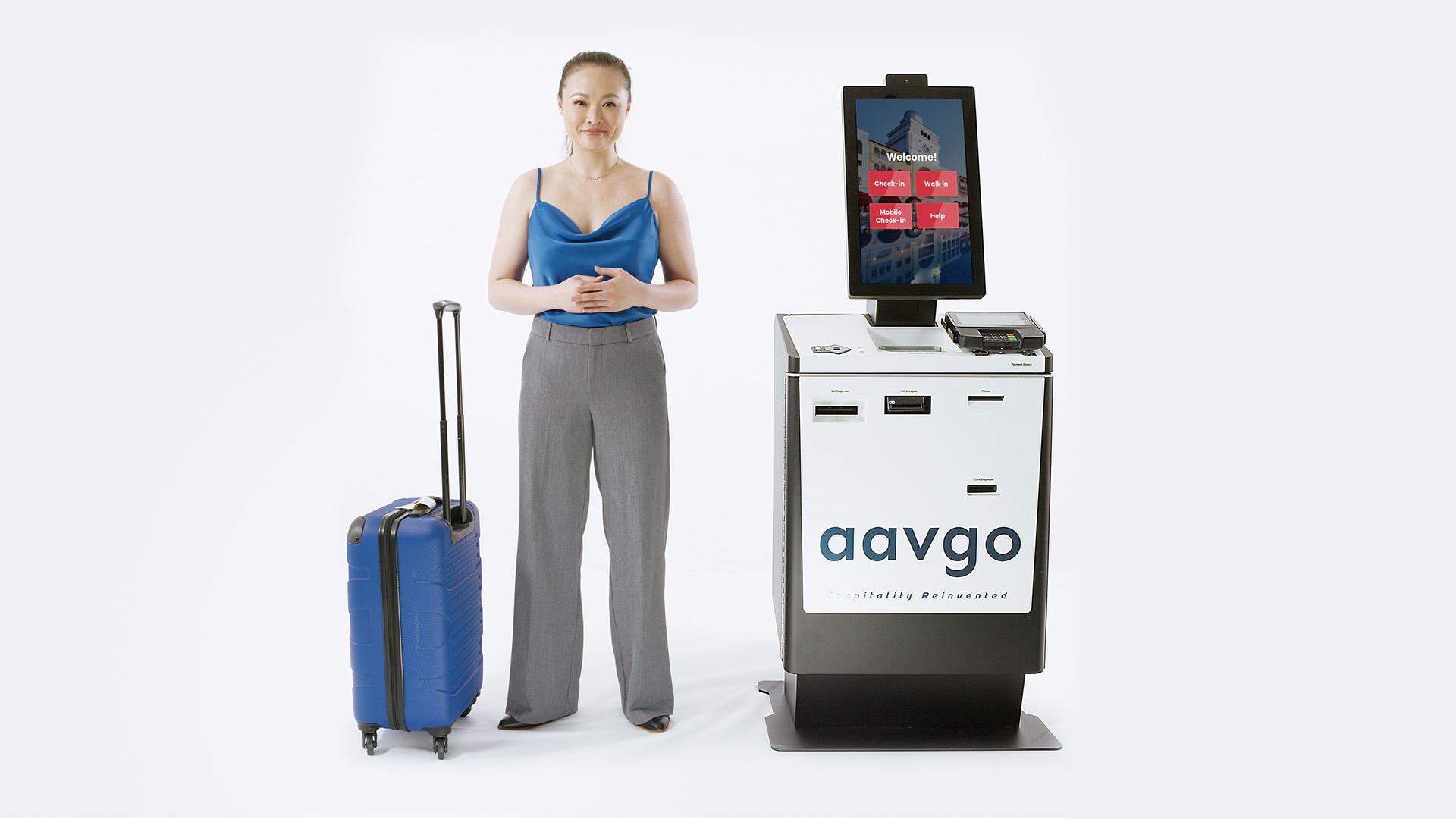
Those four steps explain why this market is harder than a screen design exercise. A kiosk must agree with the property management system about the reservation. It must agree with the lock about access. It must settle the bill. It must offer a sensible escape hatch when any of those systems refuses. Aavgo’s pitch is that it ties these pieces together while preserving a live agent for the awkward moments.
What the hotel actually buys
The buyer is a hotel owner or operator, especially one weighing coverage costs against the standard of service it promises. Aavgo names independent properties, management companies and brands as customers. Its public material shows deployments or relationships with Stay Cal Hospitality, InnTech Management, Peppertree Hospitality Group and MKL Resorts. An MKL Resorts partner described Aavgo human-assisted kiosks operating at eight North Carolina properties in a SkyTouch newsletter.
The commercial offer appears to combine hardware, cloud software and a recurring remote service. Aavgo’s own referral brochure refers to a monthly service fee and an onboarding fee. A 2023 company FAQ says Smart Reception pricing varies by hotel and requires a quote. The old $5-per-room figure belongs to the 2017 tablet product; applying it to today’s kiosk and remote-agent bundle would be like pricing a hotel stay by the cost of its soap.
Cumulative figures shown on the company website; Aavgo does not publish a time period or independent audit with these counters.
Those numbers are useful as a signal of activity, with that limitation attached. A more grounded view comes from named installations. In 2024, Stay Cal Hospitality said The Row Hotel and The Catrina Hotel deployed Aavgo with devicethread smart access. Guests could check in at a kiosk unaided or reach a remote person; the lock integration handled room access. Earlier, Visual Matrix joined its property management system to Aavgo’s front desk, staff and guest products. Akia connected its no-download Mini Apps to Aavgo’s physical key pickup using a QR code. Each partnership solves a piece of the unromantic handoff between reservation and room.
The desk becomes a service
The broader hotel-tech market already offers mobile check-in, messaging, kiosks and digital keys. Operators can also simply keep a staffed counter. Aavgo’s distinctive combination is a remotely staffed reception service attached to physical lobby equipment. The same company also gives staff tools for housekeeping, preventive maintenance and shift handovers. It is closer to an operating layer for a hotel than an elegant check-in button.
That distinction matters because the cost of a front desk is not only wages. It is the duplicated work when a room status lives in one system, a maintenance task in another and a guest complaint in somebody’s memory. Aavgo says its PMS integration can remove duplicate entries. Its staff app lets a housekeeper report a repair from a personal device, and a maintenance worker can open a cleaning task once the repair is done. Two-way translation and shared shift notes aim at the ordinary communication failures from which terrible reviews are made.
The company’s history also cautions against confusing a legal date with an origin story. California records show a 2024 filing for Parshva Corp doing business as Aavgo, and the current privacy policy names Parshva Corp. Yet Aavgo was plainly operating in 2017, when Desai spoke publicly about the tablet product. LinkedIn later announced Sudhakar Patel as CEO in 2024. These dates describe different corporate chapters, not a startup born from nowhere in 2024.
In 2026, Aavgo described an AI Front Desk beta and said more hotel operators were considering centralized reception. The sensible test of that idea will be the same test its kiosk faces: whether the guest gets into the room when the booking is odd, the card fails or the lock is stubborn. The hotelier who wants to copy Aavgo’s playbook should start with a map of those exceptions, then decide which can be self-served, which need a remote agent and which still need someone on site.
That is the quietly useful lesson here. In 2017, the company tried to spare a guest a phone call. Now it tries to spare a hotel an empty shift while still answering when the guest calls anyway. The counter was never the service. The service was what happened when somebody picked up.