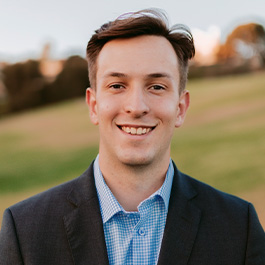
Ulysse Saltiel joins the Office of the CEO at Armada ◆
Coastal Capital Summit grows from 50 to 350+ attendees ◆
Summa cum laude: finance and philosophy, Pepperdine '25 ◆
Researched a $1.5B endowment before graduating ◆
Olympia, Washington to San Francisco's edge-computing scene ◆
"Opportunities don't come to those who are passive" ◆
Profile • Operator • Builder
Ulysse Saltiel
He sits in the Office of the CEO at Armada - the company wiring up compute and connectivity for the planet's hardest-to-reach places. He got there by building things nobody asked him to build.
The double major who reads a balance sheet and the philosophy of religion in the same sitting.
$1.5B
Endowment he researched
350+
Summit attendees, 2025
2
Majors, one degree
Summa
Cum laude, Pepperdine '25
The Dispatch
A self-starter who builds the room before he walks into it
San Francisco, California
Most people graduate and look for a seat at the table. Ulysse Saltiel kept noticing the table was missing and went off to build one.
At Armada, the San Francisco company that calls itself the global leader in edge computing, Saltiel works as an Associate in the Office of the CEO. Armada's whole pitch is unglamorous and enormous: drop modular, ruggedized data centers and connectivity into the places the cloud forgot - oil fields, mines, disaster zones, defense outposts - so AI workloads can run where the wires don't reach. The Office of the CEO is the nerve center of a company like that, the room where strategy, operations and the founder's priorities collide. It is a long way from Olympia, Washington, where he grew up.
The path there is the interesting part. Saltiel is a 2025 Pepperdine graduate who double-majored in finance and philosophy and finished summa cum laude, with an induction into Phi Sigma Tau, the philosophy honor society, on the way out. His academic soft spot was the philosophy of religion - not the obvious warm-up act for a career in capital. But the two halves fit together better than they look. Finance is about where value goes. Philosophy is about why it should go there at all. He has spent his short career refusing to pick one.
Before the diploma was even in hand, he was doing research on Pepperdine's roughly $1.5 billion endowment as an investment associate in the university's Office of Investment Management. Then came Bordeaux Wealth Advisors, where he signed on as a wealth advisory analyst in the firm's Silicon Valley office, working with the kind of high-net-worth clients who make the Bay Area's startup economy run. And now Armada, where the spreadsheets give way to satellites, GPUs and the messy logistics of putting infrastructure on the edge of the map.
"We have such a talented and purpose-filled student body that any firm would be remiss to not look here."
- Ulysse Saltiel, on why he built the Coastal Capital Summit
The Build
He decided Pepperdine deserved a seat on Wall Street. Then he made one.
As a sophomore, Saltiel noticed something that bothered him. Pepperdine had talented, hard-working finance students and no real pipeline to put them in front of the firms that hire. The target schools had structured recruiting, alumni funnels, on-campus interviews. Pepperdine students were talented and largely on their own.
So he started building infrastructure of a different kind. First came the Pepperdine Finance Society, an organization to give students the technical skills and the connections the recruiting cycle quietly demands. As it grew, the bigger idea arrived: the Coastal Capital Summit, launched in 2023. It started with about 50 people. By 2024 it was near 200. By the third edition, on September 13, 2025, it pulled more than 350 students, alumni and industry professionals to Mullin Town Square, with speakers from Charles Schwab, BNP Paribas, Morgan Stanley and Thiel Capital, and a fireside chat that put Saltiel on stage with author and journalist Rob Copeland to trade generational takes on leadership.
The scoreboard is the part that matters to him: students who came through the summit landed roles at JP Morgan, Citigroup Los Angeles and Sherwood Financial Partners. An idea that lived in one undergrad's head turned into a recruiting ground with a track record.
The Summit, by the numbers
2023
~50
2024
~200
2025
350+
Attendance, Coastal Capital Summit
The Track Record
From the endowment office to the edge
2023
Founds the Coastal Capital Summit after launching the Pepperdine Finance Society.
2024
Investment associate at Pepperdine's Office of Investment Management, researching the ~$1.5B endowment.
2025
Graduates summa cum laude; joins Bordeaux Wealth Advisors as a wealth advisory analyst in Silicon Valley.
Sep 2025
Leads the third annual Coastal Capital Summit, 350+ attendees.
2026
Associate in the Office of the CEO at Armada.
Off The Clock
A camera, a SoundCloud, and a soft spot for the big questions
He runs a photography Instagram under the handle @photosbyulysse - the analyst has an eye.
There's a SoundCloud page making music as Ulysse Saltiel. Spreadsheets by day, tracks by night.
His main academic interest in philosophy was the philosophy of religion - the questions that don't fit on a pitch deck.
He grew up in Olympia, Washington, a long way from the San Francisco edge-computing scene he now works in.
He shared a stage with journalist and author Rob Copeland at the 2025 summit, talking leadership across generations.
Filed Under
operatorfounderedge computingarmadapepperdinefinancephilosophywealth managementcoastal capital summitsan franciscoself-starterphotography