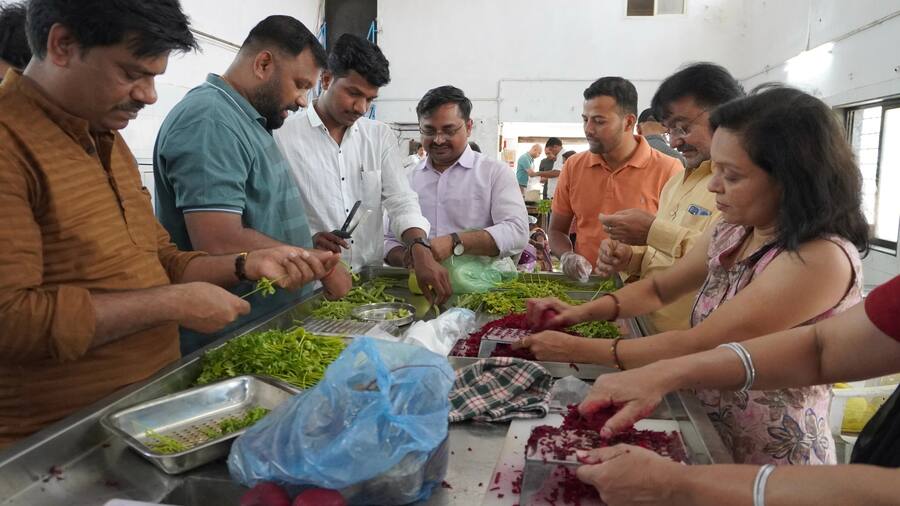
The vegetables have arrived. Now comes the business lesson. In Udyogwardhini’s industrial dehydration workshop, participants work through sorting, chopping, blanching and loading produce onto trays. The published schedule eventually reaches product costing and margins. Between the raw ingredient and the selling price sits an entire enterprise, and this Nashik academy has made that space its classroom.
Its catalogue is an appealingly specific answer to the vague instruction to “be your own boss.” There are courses in fruit dehydration, solar entrepreneurship, export-import management and warehouse operations. A prospective business owner can study how to choose equipment, calculate a project’s costs, identify customers and navigate the paperwork that follows an idea into the real world.
Founded by Sunil Chandak in 1995, Udyogwardhini occupies the practical end of entrepreneurship education. It sells short courses, offline workshops and longer mentorship, with business-support services alongside them. Its audience includes people starting from scratch and owners trying to improve an existing operation. The interesting product is a way to ask better questions before committing money.
A business idea meets the drying tray
Food processing shows the method clearly. The online dehydration course covers the production chain from raw materials and pretreatment to drying, pulverizing, packing and storage. It also includes different dryer types, product costing, branding and routes into business-to-business and consumer markets. Someone interested in onion powder has to think about considerably more than onions.
The instructors make the combination tangible. Sudesh Desai, identified by the academy as founder of dehydrator manufacturer Aarana Solution, teaches the technical side. Other listed mentors bring export, subsidy, sales and packaging experience. That mix matters because the operating problem changes as a product moves from machine to packet to buyer.
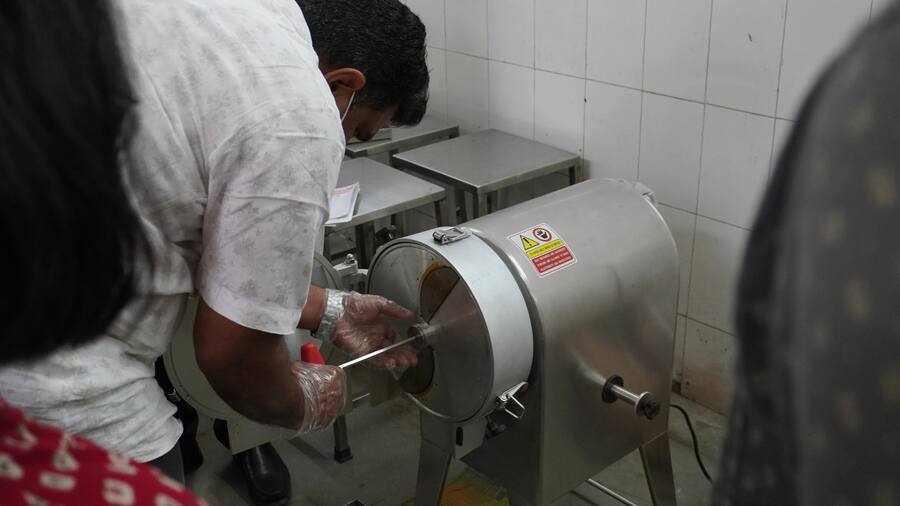
For those wanting physical practice, the two-day industrial workshop advertises work around a 100 kg batch. Its second day includes raw-material selection, cleaning, chopping, tray loading and temperature checks, followed by quality assessment and costing. The timetable also reserves space for a conversation with an entrepreneur who has established a dehydration business. Questions can follow the process while it is still in view.
A longer version stretches that logic across six months. The dehydration mentorship lists 24 weeks of learning and ten days of field activities, including practical work in Pune, industrial and market visits in Gujarat, and sessions in Nashik. The assignments include buyer and supplier databases, a market-validation report and technical and financial project reports. Those are useful things to bring home.
- 01Understand the product
- 02Try the process
- 03Choose the technology
- 04Meet the market
- 05Cost the project
- 06Prepare to launch
The trainer who had to learn to teach
Chandak’s own training did not begin smoothly. His published biography describes growing up around a family grocery business, then entering entrepreneurship training through MITCON. During a six-month training placement, he struggled to deliver the required lectures and considered leaving. A ₹2 lakh employment bond stood in the way. He stayed, sought help from a capable lecturer and practised.
The same account identifies another turning point: a serious accident in 1994. During recovery, Chandak reconsidered his job and the limits it placed on delivering practical instruction. He subsequently left and established Udyogwardhini. The founding story gives its current emphasis a personal explanation: teaching people how to operate a business was the work he wanted more freedom to do.
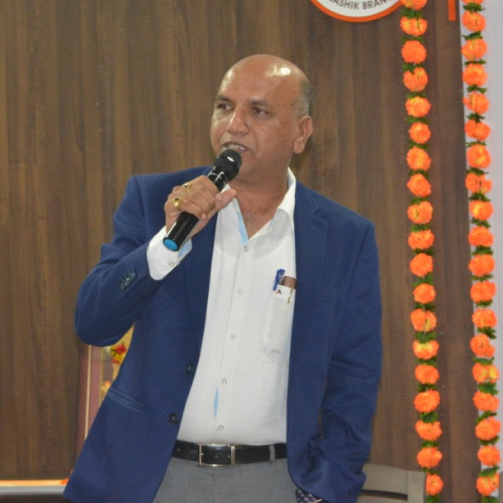
That operating emphasis remains visible in the flagship Entrepreneurship Development Program. Its syllabus connects personal skills and project selection with market surveys, feasibility, working capital and business models. Later modules move into reaching first customers and completing launch formalities. Learners are asked to connect the attractive idea with the less photogenic work needed to make it function.
₹7,200 buys the course. The enterprise comes separately.
The flagship program’s published price is ₹7,200 for four weeks of live online learning. Its page advertises evening sessions, Hindi instruction, recordings, study material and continuing support. For a person testing whether self-employment suits them, that is a defined educational purchase. It also has a defined time commitment: showing up, asking questions and doing the work beyond the session.
Prices vary with the subject and format. At the September 10, 2026 check, the solar course listed ₹4,500 for three weeks; export-import listed ₹7,200 for three weeks; and warehousing listed ₹9,600 for three weeks, including a practical visit. The industrial dehydration workshop’s headline fee was ₹10,000. Its FAQ distinguished ₹9,000 without accommodation from ₹10,000 with a stay and specified meals.
Listed September 10, 2026. Different formats and inclusions; fees can change. Tuition is separate from business setup costs.
The longer dehydration mentorship makes the distinction between training and investment explicit. It says participants explore technologies, suppliers, buyers and business models before their final investment decisions. Its project-report work includes machinery, utilities, staffing and working capital. Accommodation and food for ten days are advertised as included; transport is excluded. Even the learning journey has costs outside the classroom.
Udyogwardhini’s commercial model follows those offerings: paid training, mentorship and advertised business services. It also describes government- and corporate-supported skill-development projects. The services catalogue reaches into accounting, compliance, marketing, export support and machinery setup. A participant can therefore encounter the organization as a student, a person seeking advice, or an owner with a specific operating problem.
The warehouse is also a classroom
The warehouse course captures the academy’s position in the market. It addresses builders, landowners, engineers, consultants and industrial professionals, then takes them through location selection, layout, inventory, operating costs and sales. An offline visit accompanies the online teaching. The intended customer might want to run a warehouse, lease one or advise somebody else doing so.
Solar training uses a similar pairing. Its curriculum moves from photovoltaic components and system design into installation, maintenance, pricing and project economics. Export-import teaching connects product selection with buyers, transport, documentation and payments. Across these subjects, technical competence and commercial judgment appear in the same course. The academy is teaching entry into a trade as much as entry into entrepreneurship.
Its alternatives depend on the learner’s problem: an entrepreneurship-development institute, a technical training centre, an independent consultant or an online course. Udyogwardhini’s distinctive combination is industry detail, live access to practitioners and continued guidance. The practical visit and the opportunity to question an operator are concrete features a prospective student can compare.
A refused loan belongs in the story, too
The academy’s alumni accounts are most informative when they include friction. Its story about Powercab Industries founder Vaibhav Kapadne describes repeated loan refusals before an eventual approval. That episode matters more than a generic success slogan. Training can help someone prepare a business proposal; the decision to finance it still belongs to someone else.
Another account, published on Udyogwardhini’s LinkedIn page, follows exporter Sandeep Hire. He studied overseas distribution, documentation and payments through market visits, and shifted his attention toward onions after observing demand. The academy says he joined its entrepreneurship program in 2019. The transferable lesson is the sequence: investigate the market, notice what buyers want, then reconsider the product.
“Democratizing Entrepreneurship”
Udyogwardhini’s stated ambition
These are company-published accounts, best read as individual experiences. The broader audience is more varied: students, career-switchers, existing business owners, farmers and women exploring self-employment. Svakarma Finance’s partner interview describes joint programs for women entrepreneurs and Paithani weavers, as well as counselling for micro-enterprise customers. That is a different constituency from a room exclusively preparing venture-capital pitches.
The organization’s declared mission is to help create 100,000 sustainable enterprises. Its current website reports more than 75,000 aspirants supported, a cumulative company claim rather than a measure of how many businesses remain active. Its stated ambition is large, but the useful unit of assessment remains small: one learner, one business decision, one problem made clearer.
The homework worth taking home
Udyogwardhini says it began online webinars and training on March 24, 2020. Its timeline records more than 3,000 paid beneficiaries during 2020-21. Today, live online sessions coexist with physical workshops and extended mentorship. The format makes room for people beyond Nashik while retaining activities that require a visit, a machine or a face-to-face conversation.
The public teaching culture emphasizes practicing entrepreneurs, questions during live sessions and a community that remains available afterward. The academy’s careers page similarly stresses skill development and social impact. For the learner, the relevant test is whether those promises translate into access: an instructor who understands the sector and guidance specific enough to act on.
A reader can borrow the order of work without copying any particular business. Select a product and customer. Investigate suppliers and competitors. Compare technical choices. Estimate setup and running costs. Put those assumptions in front of people who buy, make or finance the thing. The mentorship’s assignments offer a useful discipline: produce a report or a database, not merely a feeling of readiness.
That approach demands participation. Someone unable to attend practical sessions will miss part of a hybrid program; someone expecting a course fee to cover machinery or secure customers will be budgeting for a different purchase. The academy can organize instruction and introductions. The learner still has to test demand, find resources and operate the enterprise. The drying tray is a good place to start asking how.