The first useful clue to Tyler Sweatt’s career is a telephone. It was not secure, expensive or particularly grand. It was an Afghan cell phone, carried during one of his two tours in Afghanistan. By Sweatt’s telling, it was the best piece of kit he had. Much of the rest merely had the decency to be heavy while failing to work.
There is a whole management education inside that complaint. Institutions often confuse the purchase of a thing with the arrival of a capability. Soldiers enjoy no such luxury. The thing either helps now, under the conditions at hand, or becomes luggage. Sweatt left the Army with an appetite for difficult problems and a suspicion of elaborate systems that deliver usefulness late.
He now runs Second Front Systems, the public-benefit software company that sits between commercial applications and government networks. The company handles the unromantic middle: security controls, accreditation, hosting, deployment and continuous monitoring. Sweatt calls it the “picks and shovels” of software-defined warfare. The metaphor is accurate, though perhaps unfair to shovels, which require less documentation.
The day the curriculum changed
Sweatt grew up in Clinton, New Jersey, and entered the United States Military Academy as an economics student. He belonged to West Point’s Class of 2005, commonly called the class of 9/11. The attacks came just after its freshman summer. Sweatt has recalled walking to math when an officer ran down a hallway with the news that the country had been attacked and was at war. The announcement converted an abstraction into an itinerary.
The instructors around that class would become more than lecturers. Some later advised Congress and shaped military strategy; cadets became comrades. After graduating, Sweatt served as an Army engineer officer and deployed twice to Afghanistan. The experience formed his view of leadership less through pristine order than through disorder made manageable. The military, he likes to remind interviewers, is not the punctual machine imagined by civilians.
“The biggest parallel between the military and working at a startup is just being able to make decisions with imperfect information.”Tyler Sweatt
Imperfect information is not a temporary defect to him. It is the weather. Leaders state the intent, give people room to act and revise as the terrain changes. That makes the Army-to-startup comparison more convincing than the usual talk of discipline. Startups rarely suffer from an excess of marching. They do, however, make consequential choices before the evidence has finished arriving.
years
18–24 months
weeks
A career in the connective tissue
Sweatt’s civilian résumé looks varied until one notices that every job occupies a border. At Toffler Associates, the strategy firm descended from futurists Alvin and Heidi Toffler, he advised government and corporate leaders on emerging technology and security. By 2014 he was its corporate development director; he later led its emerging technology and security practice. The work demanded translation between a future that sounded plausible and an organization capable of meeting it.
In 2019 he founded Future Tense, advising dual-use startups, investors and government leaders, then sold the firm. He joined the founding team at CalypsoAI, moving from special projects to head of national security. In 2020 he joined Second Front, first on growth, then as chief revenue officer. The company’s founders had encountered the same mismatch he had: commercial technology improved quickly, while the machinery for getting it into national-security environments moved ceremonially.
- Graduates from West Point, then serves as an Army engineer officer.
- Moves into leadership at Toffler Associates.
- Founds Future Tense and joins CalypsoAI’s early team.
- Joins Second Front to lead growth.
- Becomes chief executive.
- Adds chairman of the board to the job.
Second Front’s flagship platform, Game Warden, is built around reuse. Instead of requiring every software company to invent its own secure route into a government environment, the platform provides a managed route with controls already in place. Sweatt’s preferred sentence is concise: he wants government paying for impact, not infrastructure.
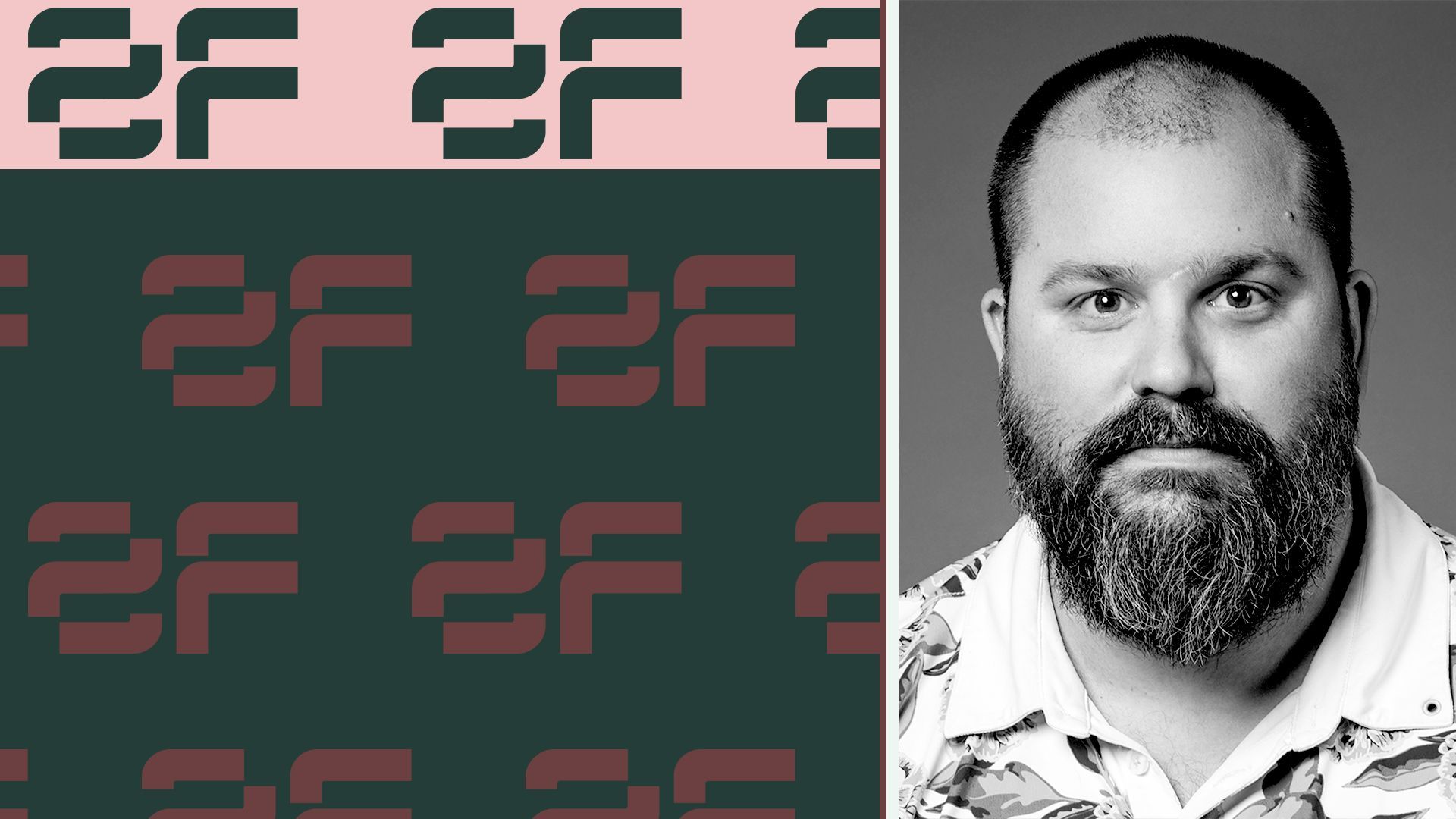
Selling the wait out of the system
Software makes delay unusually costly. A ship or aircraft is expected to persist for decades. An application may change several times before a traditional approval cycle ends. Sweatt has described technology acquisition taking 18 to 24 months for compliance, then stretching toward five years once procurement joins the queue. In that interval, the problem, product and people can all move on.
This is why his argument is about time more than code. A reusable path can turn approval from a bespoke expedition into an operating process. The company serves software vendors, while government users sit at the far end. That two-sided position requires Second Front to be credible to engineers, security officials, acquisition officers and investors at once. Each group owns a veto; none owns the entire trip.
The commercial case became visible in the numbers. Second Front announced a $40 million Series B in November 2023. Ten months later came a $70 million Series C led by Salesforce Ventures, with Battery Ventures and existing investors participating. The company said revenue had risen 475 percent and customers by more than 350 percent in 18 months. Headcount approached 130, and the ambition extended beyond the United States to allied governments and additional regulated networks.
Sweatt became CEO in July 2023, succeeding founder Peter Dixon, after driving growth and revenue. In 2025 he also became chairman. The promotion matters because he is not one of Second Front’s founders, though stray databases occasionally grant him the title. His authority was earned inside the company through the less mythologized work of turning an idea into customers, capital and repeatable delivery.
The translator at the table
Ask Sweatt about his favorite part of the job and he talks about convening technologists, operators, capital allocators and regulators. The skill he names is empathy, but with a hard edge: understanding the reality in which the other person must act. A government security official cannot simply wave through an application because its interface is elegant. A startup cannot rebuild its product for every office and remain much of a startup. Translation begins by respecting both constraints.
He is blunt about the government side. The Defense Department has many innovation offices and pockets of technical talent, but fragmented ownership makes newcomers find the right individual by folklore. In 2025, he argued that someone must clearly own the department’s technical opinion and its relationship with commercial technology. The advice was organizational, not theatrical: do not create another office; give an existing leader responsibility.
“I like hard problems and stuff that matters.”Tyler Sweatt
The bluntness comes with a comic valve. His public vocabulary includes “heck yeah,” rocket emojis and the occasional “Beat Navy.” He hosts All Quiet on the Second Front, where military and technology leaders discuss the bureaucratic machinery usually cropped out of innovation stories. In one episode with a former acting defense secretary dressed in a Hawaiian shirt, Sweatt joked that he had expected a video-game session. The solemn business of national security, he seems to believe, can survive a sense of proportion.
Protect the mission from the mission statement
Second Front is a public-benefit corporation, a fact that could become decorative language if nobody guarded it. Sweatt says he is protective of the company’s culture, team and mission, and extends that caution to board seats and capital. In the firm’s 2025 review, he wrote that it exists to serve a public mission, not only a balance sheet. The tension is real: private investors expect growth, government customers expect security, and national-security rhetoric can excuse nearly any inefficiency if left unattended.
His activities outside the company repeat the bridge-building theme. He is a partner at the nonprofit Silicon Valley Defense Group, which connects policy, operational, technical and investment communities. He sits on the board of the Johnny Mac Soldiers Fund, supporting education for military families and children of fallen or disabled veterans. On his Medium page, he writes about leadership, service and institutional speed. These are separate commitments, but not separate subjects.
There is also a private measure behind the work that he has made public: leaving the world in better shape for his children. He frames accelerated technology delivery as a tool of deterrence and stability, not an appetite for conflict. Better software belongs in the same sentence as quality of life because readiness, in his view, is supposed to prevent the worst day rather than merely perform well during it.
The clock he can control
Sweatt wakes at 4:05 on mornings when he is home. He uses his calendar and inbox as a task system, briefly fantasizes about deleting the email twice a day, then reads it, returning to inbox zero on Sundays. This is funny in precisely the way executive routines should be funny: small rituals pretending to negotiate with infinity.
Yet the routine fits the career. He has spent two decades noticing where time goes. At West Point, history accelerated without asking a freshman class. In Afghanistan, equipment arrived without usefulness. In government technology, approvals can outlive the software they are meant to protect. At Second Front, he is trying to make the wait reusable, observable and shorter.
He once described defense modernization as his Sisyphean task. The comparison is melodramatic but self-aware. Bureaucracy reliably rolls downhill overnight. The difference is that Sweatt’s boulder leaves a trail: a customer on a classified network, an approval completed sooner, a software company that can keep updating after the first deployment. Progress is not the summit. It is less hill each time.