Tyler Bosmeny had helped build a company that connected schools to learning software. Then came an awkward discovery: some of the children could not type the password. The adults had reduced a tangle of accounts to a single login, and a small pair of hands had exposed the remaining flaw. There is a particular indignity in being defeated by the first screen.
The eventual answer was a printed card with a QR code. A child could hold it up to a camera and get into the lesson. Bosmeny had reservations about turning Clever into a business that printed badges when the product arrived in 2016. Paper was an amusing destination for a software business. It was also what worked.
That episode offers a useful way into Bosmeny’s career. The Harvard math student became a salesman, the salesman became an education entrepreneur, and the entrepreneur became a teacher of selling. Along the way, he kept encountering a practical requirement: pay attention to what the other person is actually trying to do.
The newspaper had bills to pay
At Harvard, Bosmeny studied applied mathematics and statistics, earning a bachelor’s degree in the former and a master’s in the latter. His education also included the advertising side of The Harvard Crimson. A newspaper requires readers, writers and someone willing to ask businesses for money. He worked on that last problem, eventually becoming its associate business manager.
His early business experience had a distinctly local scale. In 2007, while still a student, he helped start PaperG with fellow student-newspaper people, including Roger Lee. Its Flyerboard product put small advertisements on a digital corkboard. Local businesses could buy space for as little as $10 a week, an alternative to banner placements that could cost upwards of $1,000.
By May 2008, Flyerboard appeared on sites including boston.com, HarvardSquare.com and The Crimson. PaperG had won $5,000 in Harvard’s i3 Innovation Challenge that April. These were modest sums beside the transaction that would eventually define Bosmeny’s résumé, but the underlying interest was already visible: make a cumbersome system accessible to people it had priced out or overlooked.
Finance had seemed a likely destination. He had completed an investment-banking internship and expected a career in that world. Instead, he joined the work of selling advertising technology to newspapers. It gave a mathematically trained student an education in a different kind of uncertainty: whether the person at the other end of the conversation wanted to buy anything.
A school’s problem, in plain sight
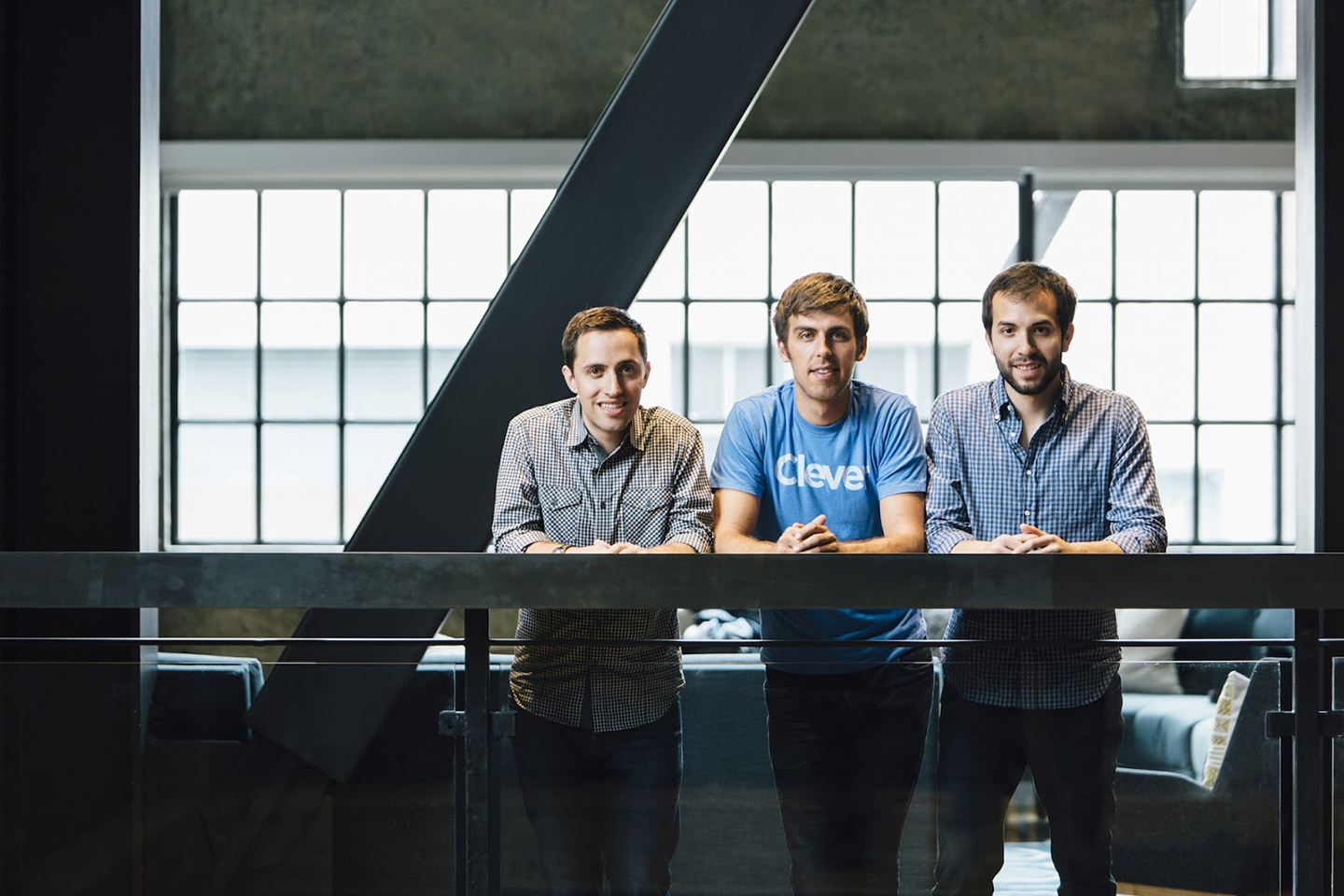
Clever began in 2012 with Bosmeny, Dan Carroll and Rafael Garcia. Carroll had been a teacher and a school technology director in Denver. The problem came from his working life: using educational software meant getting school information into different applications, keeping it current and helping teachers make the systems cooperate. Each promising new tool could bring another administrative chore.
The commitment had a suitably improvised ceremony. Carroll visited the Bay Area in February 2012 and stayed on Bosmeny’s couch because his school travel budget did not cover a hotel. A conversation in a rental car turned toward starting a company. Soon afterward, the three friends reviewed their bank balances, agreed to leave their jobs and signed a napkin. Corporate stationery could presumably wait.
The three left their jobs to build common infrastructure for that work. Clever’s early proposition was an API for schools, a way for educational applications to connect to student information systems without reinventing the connection each time. It was the sort of idea that sounds abstract until a teacher has to do the alternative by hand.
Bosmeny took responsibility for sales. The company joined Y Combinator’s summer 2012 batch, and he later described contacting more than 400 companies during his first two months there. The work involved finding prospective partners, asking for conversations and following up. It also involved going to conferences where the customers actually gathered, with meetings arranged before the trip.
By Demo Day, Clever had signed up 1,000 schools. An API was a fairly dry proposition for a presentation stage; a thousand schools made the proposition easier to understand. There was demand for the plumbing. Bosmeny and his co-founders were finding the people who had already grown tired of dealing with the leak.
The sales lesson with less talking
As Clever grew, Bosmeny began explaining sales to other founders. His 2014 startup lecture and 2018 Startup School session made the work sound considerably less theatrical than its reputation. Founders already had useful advantages: they understood the problem and cared about the product. They still had to find customers and learn how to hear them.
“Sales is about listening,” he told the 2018 audience. His practical example was the balance of a call. An excited founder might spend 70 percent of it talking. The effective salespeople he had watched reversed the ratio, leaving most of the conversation to the prospective customer. The demo could wait long enough for a question.
At Clever, conference-call software reported how much each participant spoke. That created an inconvenient little audit of a supposedly excellent meeting. A salesperson could emerge delighted with the performance; the numbers could suggest the customer had barely been allowed to participate. For someone trained in statistics, it was a pleasingly measurable check on enthusiasm.
The lesson carries a small rebuke to the usual founder fantasy. Knowing every feature does not mean knowing why someone would pay for it. The person taking the call has a working day, an existing workaround and a reason for being dissatisfied. A useful conversation gives those things room to surface.
The camera beat the keyboard
Clever’s own product gave that advice a fairly stern test. Instant Login, released in 2014, let students use one set of credentials across different educational applications. That removed repeated passwords. It left the youngest children facing a task they might still struggle to perform. Teachers continued helping students sign in, sometimes using handwritten reminders on monitors.
Badges removed the typing altogether. The student presented a printed QR code to a camera, and Clever opened access to the learning tools. Schools could disable a missing badge and print another. The breakthrough depended on understanding the classroom well enough to accept a solution that looked almost comically ordinary beside the machinery behind it.
Carroll led the early badges team during Clever’s October 2015 hackathon. They took a prototype into a school and filmed what happened. Later, a 15-person team received 45 days to prepare the product for its 2016 conference unveiling. Teachers supplied a useful production insight: they already knew how to print and laminate things. Clever could leave the badge factory to them.
“We didn’t want to be a badge printing company.”
Tyler Bosmeny, on Clever Badges, 2016
That is the pleasing irony of the episode. The founder who taught people to listen had to let classroom experience revise his own idea of the business. A company built around connections between software systems found another valuable connection between a camera and a piece of paper. The children could get on with the lesson.
A group project with a talent show
Bosmeny also treated the company’s internal workings as something to design. Early in Clever’s life, a conversation with Alfred Lin, formerly Zappos’s chief operating officer, encouraged him to think deliberately about culture. Clever developed a set of tenets and recognized employees who put those values into practice at weekly all-hands meetings.
The language was deliberately school-adjacent: Always a Student, Leave the Classroom Better than You Found It, Clever Is a Group Project. The annual Camp Clever mixed reflection, hackathons, communication exercises and a talent show. There were employee-invented games, too. Even the people building school infrastructure apparently needed an occasional break from the timetable.
In 2019, Clever made Inc.’s Best Workplaces list. Bosmeny’s account of the recognition emphasized collaboration and employee engagement. He described support staff working closely enough with product teams to become product experts and sometimes move across. The group-project idea had consequences for how people worked together, beyond looking cheerful on a wall.
The sale, and the decision to hand over
In May 2021, Kahoot! announced an agreement to acquire Clever at an enterprise value of $435 million to $500 million, including a performance-based component. The deal closed that September. The price put a large number beside a business built around smaller irritations: moving class rosters, connecting applications and helping someone get through a login screen.
The commercial model mattered. Clever’s core platform was free to schools and districts, with application partners providing the revenue. In its acquisition announcement, Kahoot! reported that Clever had served half of US students across more than 89,000 schools in 2020. Access to a classroom tool had become a substantial business in its own right.
Bosmeny stayed as CEO after the acquisition, then announced in April 2022 that Trish Sparks would succeed him. She had led customer success and sales and had previously been a classroom teacher. He was also becoming a parent. After ten years in the role, he described the timing in terms of the company’s next stage and his own.
By then, 93,000 schools used Clever. He moved into a board and strategic advisory role while Sparks took over as CEO on May 1. The handoff gave the company another leader whose experience included the classroom. Bosmeny had spent a decade helping build the institution; he could now contribute without occupying its central chair.
Back to the first customer
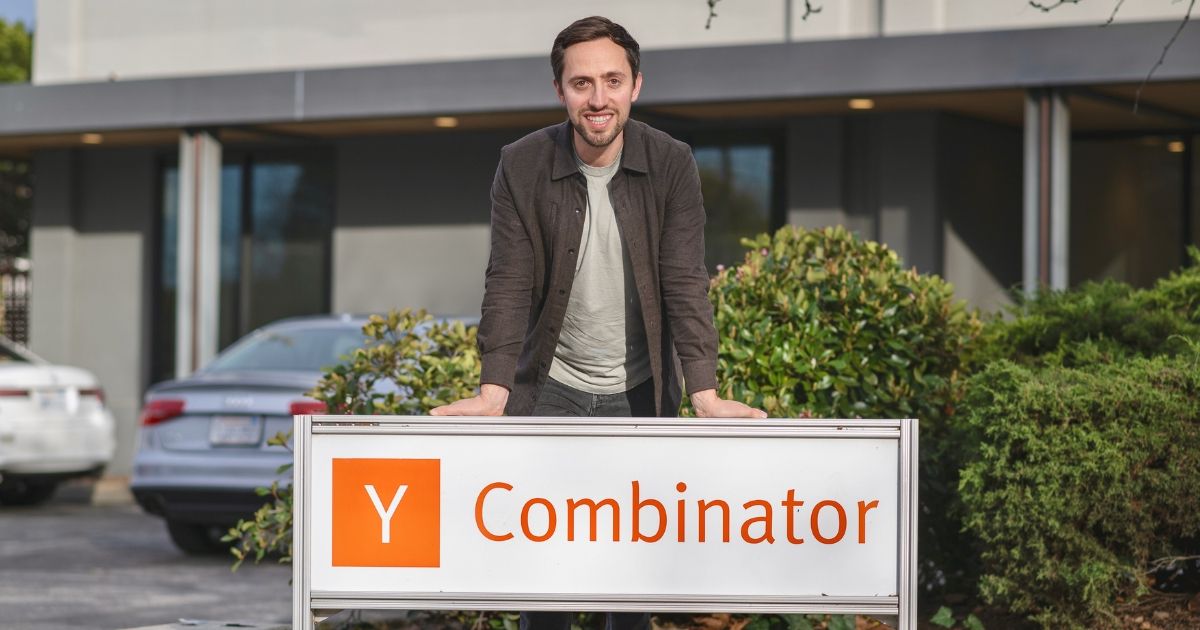
Y Combinator announced Bosmeny’s arrival as a general partner on April 1, 2025. The founder who had brought an API for schools to its summer batch was returning to help other founders. Garry Tan’s welcome singled out his sales experience and the continuing usefulness of his teaching. Clever still lists him as a co-founder and board member.
There was another detail in the announcement: Bosmeny makes gelato and has traveled internationally in pursuit of a better pistachio recipe. It is an agreeable complication in a career usually described through school counts and acquisition prices. Somewhere beyond the sales funnel lies a dessert that apparently still requires work.
His public teaching returns to the early, uncomfortable part of building a business: finding someone with a problem and learning whether your answer helps. The badges story remains a particularly good demonstration. There was already sophisticated software. There was still a child waiting to begin. Sometimes the next useful thing is a question. Sometimes it comes out of a printer.
Keep the conversation going
- How to Sell - Bosmeny’s 2018 Startup School session ↗
- Sales and Marketing - the Stanford startup lecture ↗
- The Harvard Crimson: PaperG’s student beginnings
- Education Week: How K-12 Schools Tamed Silicon Valley
- EdSurge: Clever’s printed-card solution
- EdWeek Market Brief: The hackathon behind the badges
- Bosmeny on Clever’s workplace culture
- Bosmeny’s letter on the CEO handoff
- Kahoot!’s 2021 acquisition announcement
- Y Combinator’s 2025 partner announcement