Before there was a deck, there was a bag. Roger Wittenberg had a breadcrumb business and a problem familiar to anyone who has unpacked a delivery: plastic packaging with nowhere useful to go. He began experimenting with discarded film and wood fiber. The unlikely destination for this mess was somebody’s backyard.
- The product: wood-alternative decking that reduces sanding, staining and sealing.
- The engine: recycled inputs, manufacturing know-how and a wide dealer network.
- The catch: the installed price, local conditions and workmanship still matter.
The breadcrumb clue
There is something pleasingly domestic about the origin of Trex. Wittenberg’s material combined two things people routinely discarded. Wood contributed fiber; polyethylene contributed plastic. Together, they could become a board that resisted some of the outdoor punishment that makes ordinary lumber a continuing assignment.
Mobil acquired the technology in 1992. In 1996, Wittenberg and three other executives bought the business. Robert Matheny, Andrew Ferrari and Anthony Cavanna joined him in making Trex independent. The company went public in 1999 and added manufacturing in Nevada. A backyard product had acquired an industrial footprint.
The important invention was a usable material. The important commercial judgment was where to put it. A deck gives customers a recurring reminder of wood’s demands. Sell them an alternative, and the benefit can be measured in chores avoided. That is a more persuasive proposition than asking someone to admire your recycling process.
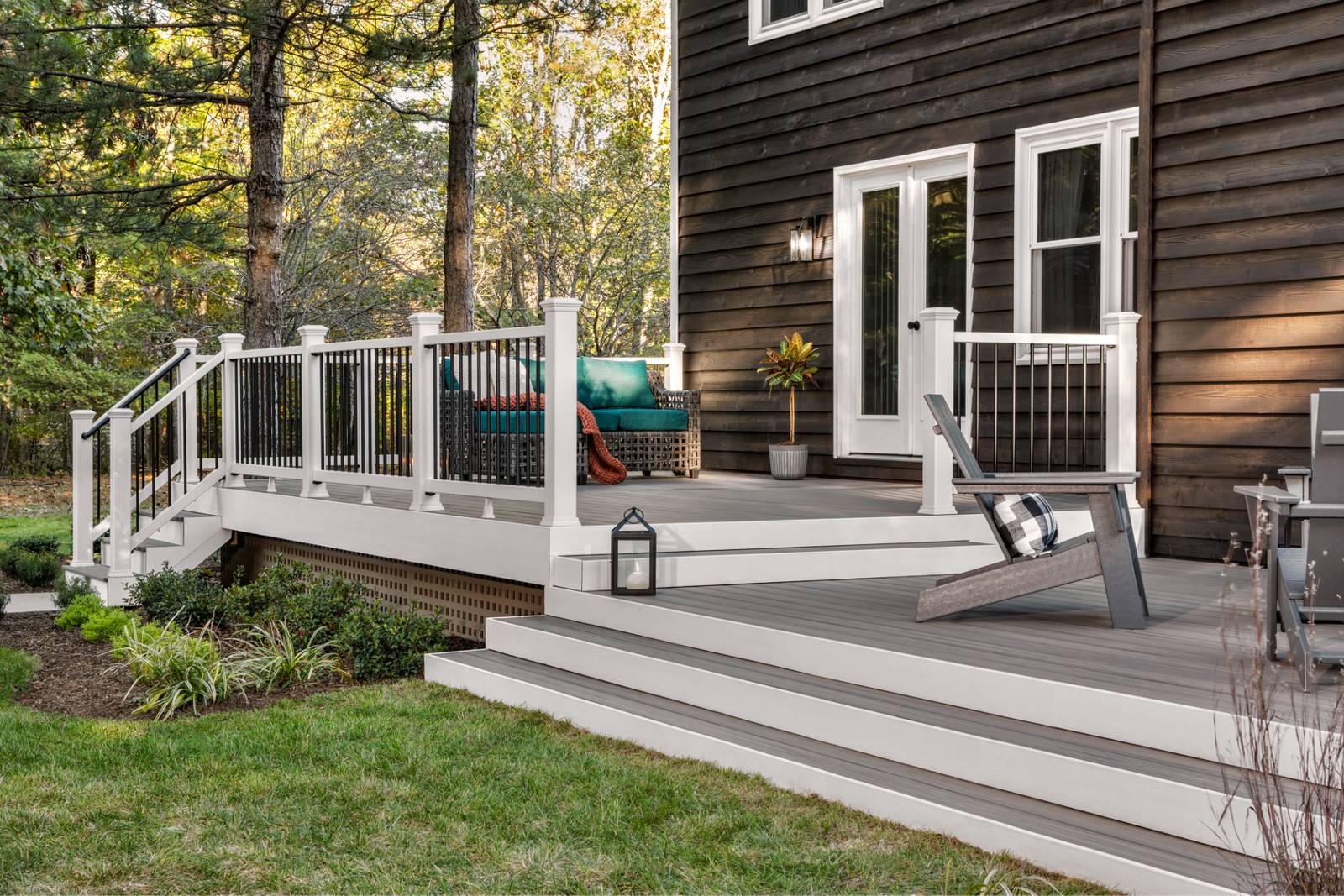
The board had to earn its weekends
A clever origin does not exempt a product from weather. Early composites could stain, scratch and change color. Trex’s own account of that generation acknowledges the limitations. A hamburger spill could leave an unwelcome souvenir. Outdoor furniture could leave another.
There was also a specific manufacturing defect. Certain boards made in Fernley, Nevada, between 2002 and 2007 and sold in western states suffered surface flaking. A 2010 settlement provided replacement boards and a portion of replacement labor. That history matters when comparing a decades-old installation with today’s product.
Trex launched Transcend nationally in January 2010 with a protective shell designed to resist fading, stains and wear. Its launch announcement described testing with 1,500 consumers. Their desired attributes were wonderfully unromantic: color retention, easier upkeep and resistance to stains. Trex stopped making early-generation composite decking by 2014.
“Our founders challenged the status quo by developing a better alternative to wood.”
Adam Zambanini, August 2026
The invisible half of the product
Now consider the journey in reverse. A homeowner wants a deck. A contractor needs boards, fasteners, instructions and a supplier who can deliver. The material must pass through a remarkably practical chain of decisions before anyone puts a chair on it.
Trex sells through wholesale distributors, lumber dealers and home centers, including Home Depot and Lowe’s. Its annual filing describes a building-products business whose immediate buyers and eventual users occupy different points in that chain. Brand advertising reaches the homeowner; product availability helps the builder finish the job.
The range stretches from Enhance and Select to Transcend, Lineage and Signature. Railing, lighting and hidden fasteners make the deck more complete. Beyond manufacturing, licensing extends the name into adjacent purchases. Trex Outdoor Furniture, for instance, is made and sold by Poly-Wood under license. The chair and the board share a brand, but their materials and manufacturing arrangements differ.
recycled + reclaimed content
Company-reported composite decking figure
+ WOOD FIBER→PROCESS
+ FORM→DECK
BOARDS
A calculator before a cocktail
For a buyer, the first useful distinction is between materials and a finished project. Trex’s decking page estimates materials at $15-$30 per square foot, including substructure, decking, hardware and fasteners. That is a planning range, not a builder’s installed quote.
Apply that range to 200 square feet and the arithmetic gives $3,000-$6,000. Labor, railing, stairs, permits, demolition and site complications can change the bill. Premium selections also need their own pricing. Compare complete proposals with matching scope; a cheaper board does not necessarily produce the cheaper finished deck.
$3,000-$6,000
Illustrative materials allowance. Installation and project extras excluded.
Trex’s alternative is attractive when reducing regular refinishing matters. Wood remains an alternative for buyers who prefer its appearance or different initial economics. Competing composites and PVC products offer other tradeoffs. Even low-maintenance boards need cleaning. Sun-exposed surfaces can get hot, and framing, ventilation, spacing and fastening must follow the installation requirements.
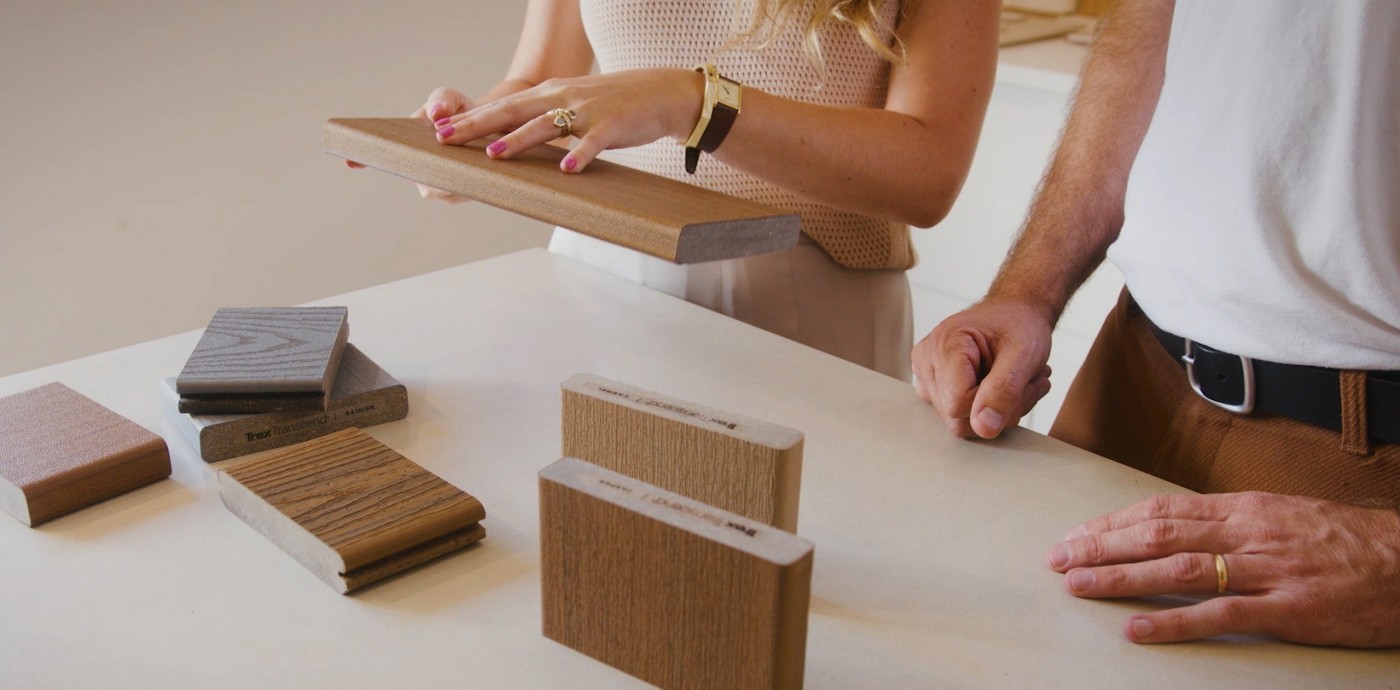
Trex’s Academy tutorials and builder directory help turn that complexity into a sequence of decisions. Start with site conditions and code requirements. Order samples. Inspect the supporting structure. Then choose the finish. A photograph of a beautiful deck tells you very little about the joists beneath it.
The next test is a factory
The scale is now substantial. Trex reported approximately $1.17 billion in 2025 sales. Its annual filing lists $167.8 million of that year’s capital expenditures and intangibles as related to Arkansas construction. A recycled-material business still needs expensive, very physical machinery.
In August 2026, Trex reported second-quarter sales of $418 million, up 8%, and said stronger demand justified bringing its Arkansas decking ramp forward. That is an execution test: capacity must meet orders at the right time. More factory space alone does not produce more customers.
Expansion also means choosing different materials for different conditions. In January 2026, Trex announced Refuge, a cellular PVC line aimed at selected fire-prone regions. Its ignition-resistance ratings address a specific building requirement; they do not make a deck fireproof. Local approval still matters. The familiar brand name now covers products with materially different specifications.
That distinction is useful for anyone shopping the range. Ask which exact board is being proposed, what its warranty covers and whether the installer has priced the required accessories. A limited warranty is a contract with conditions, not a prediction of how many summers every installation will survive.
The environmental proposition deserves similar precision. Trex reports approximately 95% recycled and reclaimed content in composite decking. Its sustainability report also identifies the difficulty of collecting used decking at the end of its life. Recycled inputs and easy recovery are separate achievements. The lesson another business can copy is practical: find an unwanted material, solve a recurring customer annoyance, and build the supply chain that connects them.
Go build something
PLAN / WATCH / FOLLOW